By Tian Jingxin
As negotiations over Iran’s nuclear program stall, tensions in the Middle East have once again been pushed to the brink of war. On Thursday, Feb. 12, the Pentagon formally ordered a second aircraft carrier strike group to prepare for immediate deployment to the Middle East. The move is seen as Washington’s strongest military signal to Tehran, indicating that the U.S. is ready to take further action if diplomatic efforts collapse entirely.
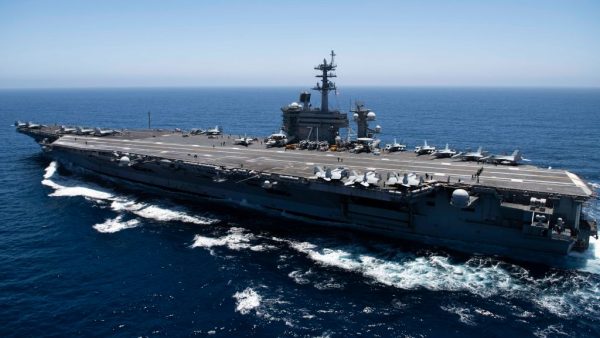
According to The Wall Street Journal and the New York Post, citing three U.S. Department of Defense officials, although former President Trump has not yet signed the final deployment order, the carrier strike group has been instructed to achieve combat readiness on short notice. The Pentagon is actively planning, and the strike group could potentially depart from the U.S. East Coast within two weeks. While the military has not publicly named the specific carrier, sources indicate that the USS George H.W. Bush, currently conducting training exercises off the coast of Virginia, is the most likely to take on this mission, with its original training schedule possibly being accelerated.
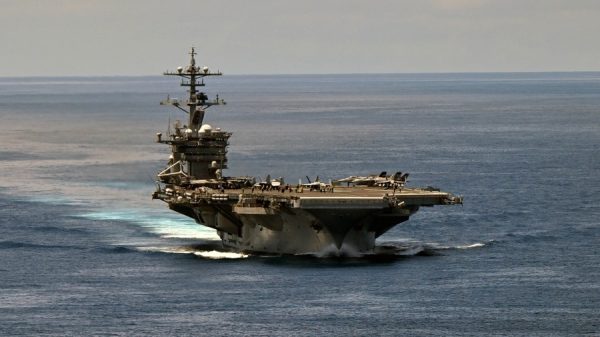
If executed, this order would establish a dual-carrier strike group deterrent in the Middle East. The USS Abraham Lincoln carrier strike group has already been redeployed from the Indo-Pacific region to the area, conducting patrols in the Arabian Sea and surrounding waters. Since March 2025, when U.S. forces took action against Houthi militants, the Middle East has not simultaneously hosted two U.S. carrier strike groups.
This military deployment comes amid a sharp deterioration in U.S.-Iran relations. On Tuesday, Trump stated in an interview that if nuclear talks with Iran fail to produce an agreement, the U.S. would consider military action.
Success
You are now signed up for our newsletter
Success
Check your email to complete sign up
He warned: “We either reach a deal, or we take very strong action, like last time.” The “last time” referred to U.S. airstrikes on Iranian facilities. Trump added, “We have one fleet already on its way, and another might go as well.”
At a closed-door meeting at the White House on Wednesday with Israeli Prime Minister Benjamin Netanyahu, the Iran issue was a central topic. Trump said afterward that, while he still preferred a negotiated solution, military options remain on the table. This strategy of striking if no deal is reached has further heightened tensions in the region.
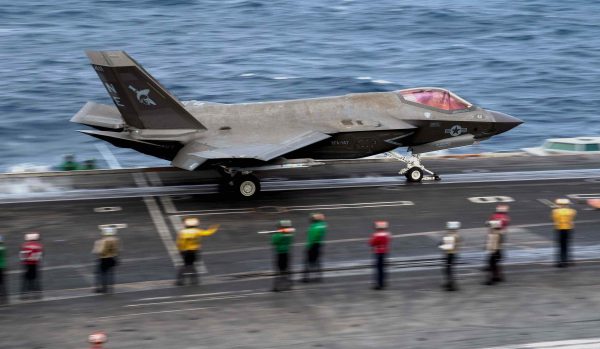
In addition to the carrier strike groups, the U.S. military is strengthening its air presence in the region. F-35A stealth fighters stationed at the UK’s Lakenheath Air Base have begun transferring to the Middle East, with some jets already arriving at Jordan’s Muwaffaq Salti Air Base. These aircraft will join existing regional F-15E Strike Eagles, A-10 Thunderbolt IIs, and EA-18G Growler electronic warfare planes, forming a multi-layered air strike network.
Analysts note that the U.S. is attempting to pressure Iran into concessions at the nuclear negotiation table. However, Tehran’s stance remains firm; Iranian officials have stated that U.S. military deployments will not intimidate them and have drawn clear red lines regarding uranium enrichment. Once the USS George H.W. Bush carrier strike group departs, geopolitical risk premiums in the Middle East are likely to rise further, with global energy and capital markets closely monitoring developments.