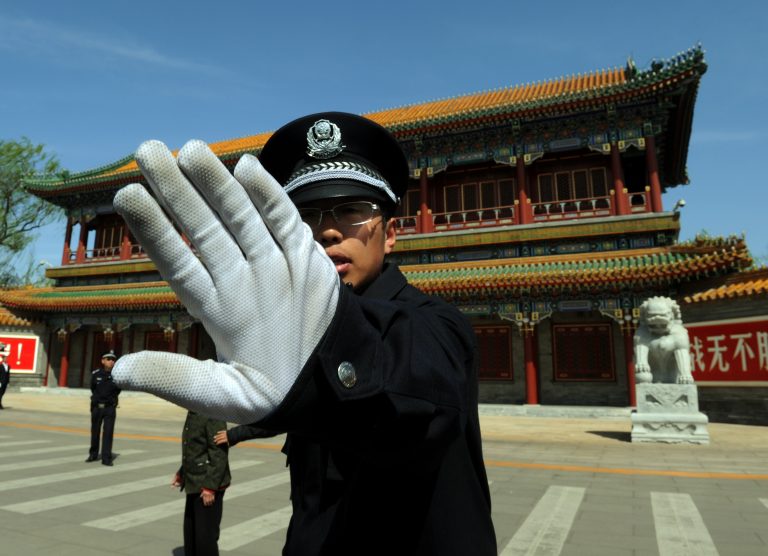

Inside the compound at Zhongnanhai, the seat of the Chinese Communist Party (CCP) leadership in Beijing, the director of the Central Guard Bureau—internally known as Unit 8341—is often called the “Chief Bodyguard.” Yang Dezhong (1923–2020) held that position across five generations of Party rule. His role extended beyond physical protection. He stood at the intersection of security, surveillance, and elite political maneuvering.
He was Zhou Enlai’s ‘close-range monitor’ in his final years
In the 1970s, Yang served as chief bodyguard to Premier Zhou Enlai. Formally, he was responsible for Zhou’s safety. In practice, accounts describe him as a political monitor positioned at Zhou’s side by Mao Zedong and Wang Dongxing. He was also tasked with enforcing sensitive medical directives.
Zhou was diagnosed with bladder cancer in 1972. Mao, acting through Wang Dongxing, reportedly issued four confidential instructions: no additional examinations, no surgery, and no disclosure to Zhou or his wife, Deng Yingchao. As head of security, Yang was expected to ensure compliance. His daily reports covered Zhou’s visitor lists, the substance of conversations, and even details such as diet and physical condition.
During Zhou’s final illness, Deng Yingchao is said to have repeatedly asked that treatment restrictions be eased. Yang operated within the limits set by Wang Dongxing’s authority. Wang reportedly instructed him that any unusual development around the Premier must be reported at once. Conversations Zhou held in his hospital room with Deng Xiaoping, Ye Jianying, and others were therefore often known to Yang and relayed to Mao’s residence at the Zhongnanhai swimming pool compound.
The arrangement placed Yang in a position where proximity meant oversight. Yu Maochun, a scholar at a Washington-based think tank and former policy adviser to the U.S. Secretary of State, has argued that such structures reflected the CCP’s reliance on internal monitoring at the highest levels of power.

When the cunning rabbit dies, the hunting dog is cooked: the 1974 political purge
Success
You are now signed up for our newsletter
Success
Check your email to complete sign up
Party loyalty did not shield Yang from internal rivalry. In February 1974, Wang Dongxing—then director of the CCP Central Committee’s General Office and a central figure in the inner leadership circle—moved to sideline him.
Yang was serving as first deputy director of the Central Guard Bureau and political commissar of the Central Guard Regiment. He had established credibility within military circles. Wang reportedly viewed that standing as a potential challenge to his own authority and suspected that Yang had grown personally close to Zhou Enlai.
Amid the political pressure of the Cultural Revolution, Wang arranged Yang’s transfer out of Zhongnanhai. Yang was reassigned to a military-industrial factory under the Xianyang Military Subdistrict in Shaanxi Province, where he served as deputy Party secretary.
At the time, Jiang Qing and other members of the “Gang of Four” were advancing the “Criticize Lin, Criticize Confucius” campaign, widely seen as indirectly targeting Zhou Enlai and other senior figures. Memoir accounts note that Mao Zedong commented that “the political commissar of the Guard Regiment cannot be a bad person,” but added that “it would be good for him to go down and temper himself.” The remark effectively cleared the way for Yang’s removal.
Before Yang left Beijing, Zhou Enlai and Deng Yingchao invited him to dinner at Xihua Hall. Their discussion lasted four hours. According to this account, Zhou did not openly protest the decision. Observers have interpreted the episode as evidence that, in his later years, Zhou’s control over the surrounding military and administrative apparatus had diminished.
Cheng Xiaonong, a U.S.-based scholar and former adviser to reform-era leader Zhao Ziyang, has assessed Wang’s move against Yang as part of a broader effort to shape the security hierarchy before Mao’s death. In this reading, Wang required figures such as Zhang Yaoci, described as absolutely obedient and without independent ties to senior elders. Yang’s demotion was seen as a setback for Zhou’s network within the armed forces.
After Mao’s death and Wang Dongxing’s fall in 1978, Deng Xiaoping moved to dismantle the “Two Whatevers” faction and reduce Wang’s lingering influence. He recalled Yang to Beijing to resume leadership of the Guard Bureau.

An exchange of interests: how Zeng Qinghong brought the ‘old bodyguard’ into the fold
Back in Beijing, Yang resumed oversight of central security operations. As head of the Guard Bureau, he carried responsibility for protecting the top Party leader, often referred to internally as the “Number One Leader.”
Over time, however, it was Jiang Zemin and his close associate Zeng Qinghong who consolidated Yang’s position within their political network.
In June 1989, when Zeng accompanied Jiang from Shanghai to Beijing, Wen Jiabao was serving as director of the General Office. At that point, Zeng ranked below Yang, who was first deputy director of the General Office. Jiang faced the entrenched influence of the so-called “Yang Family Generals”—Yang Shangkun and Yang Baibing—both senior military figures.
Accounts suggest that Zeng examined Yang Dezhong’s earlier conflicts with Wang Dongxing and the Yang brothers. By invoking those past tensions and raising the possibility that Yang Baibing intended to reshape the Guard Bureau’s leadership, Zeng reportedly created a sense of vulnerability for Yang Dezhong.
Jiang is said to have assured Yang that, if he cooperated, he would be permitted to report directly to Jiang, bypassing the General Office of the Central Military Commission. He also reportedly promised that the political and economic interests of Yang’s family would be protected.
In 1992, Yang allegedly supplied Zeng with detailed intelligence collected through the guard system regarding Yang Baibing’s military activities. Zeng compiled the material and presented it to Deng Xiaoping. Deng was reportedly persuaded that the Yang brothers posed a political risk.
Reports attributed to Yang—including claims that “Yang Baibing privately convened military meetings,” linked to rumors of a so-called “Beidaihe meeting” plot—became a key element in Deng’s decision to curb the Yang brothers’ influence.
In May 1994, Jiang Zemin departed from precedent by promoting Yang, who had no combat command background, to the rank of general. The move was widely interpreted as recognition of loyalty. Combined with reported assistance from Zeng in addressing the economic interests of Yang’s family, the promotion marked Yang’s full integration into Jiang’s political camp.

A meat grinder that inevitably lacks humanity
Control of what Party officials call the “knife handle”—the security and coercive apparatus—remains central to CCP power. Efforts by Jiang Zemin and Zeng Qinghong to secure Yang Dezhong’s allegiance were aimed at ensuring that trusted information channels ran through the security system and into the top leadership circle.
The account presented here describes a political environment shaped by internal monitoring and limited trust. Yang’s shift in alignment—from earlier proximity to the Yang brothers to incorporation into Jiang’s network—appears less ideological than pragmatic. In the CCP’s internal structure, loyalty can be recalculated when authority, security, and personal interests intersect.