By Li Jingyao
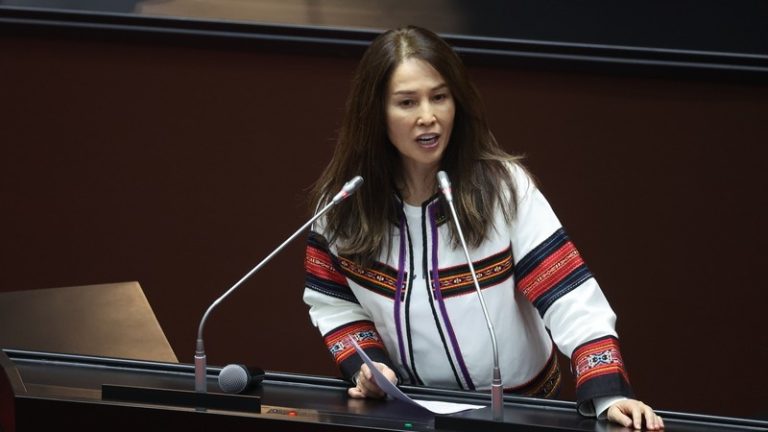
The Taipei District Prosecutors’ Office is investigating independent legislator Kao Chin Su-mei for allegedly defrauding assistant allowances and other offenses. On Feb. 10, the office directed the National Security Bureau to conduct searches in 30 locations and summoned Kao for questioning. Her former chief of staff at the legislative office, now assistant Chang Chun-chieh, was ordered by the Taipei District Court on the night of Feb. 11 to be detained without visitation rights.
Zhang Yu-meng, chairman of the Taiwan Youth Generation Common Good Association, revealed on Facebook that after meeting then-Chinese President Hu Jintao in 2009, nearly NT$100 million was transferred to Kao via the Mainland Affairs Council, with Chang Chun-chieh in charge of disbursing the funds.
According to Central News Agency reports, Kao Chin Su-mei and others are suspected of using “phantom” assistants to fraudulently claim allowances, illegally importing COVID-19 test kits, and defrauding association subsidies. On Feb. 10, the Taipei District Prosecutors’ Office directed the National Security Bureau to conduct 30 separate searches at Kao’s residence, legislative office, and homes of related individuals. Eighteen people were initially scheduled for questioning, and ultimately 17, including Kao, were questioned.
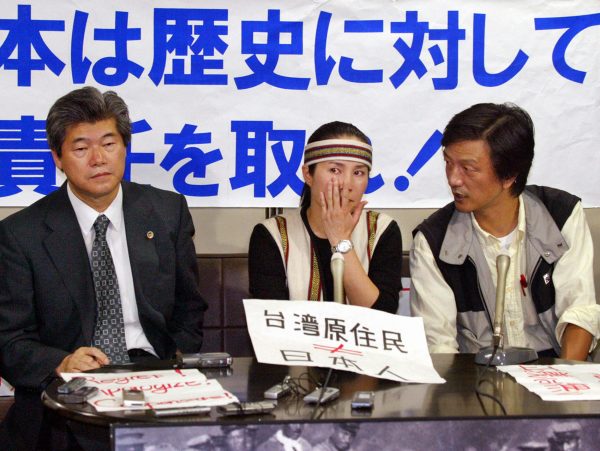
On Feb. 12, Zhang Yu-meng revealed on Facebook that after Typhoon Morakot (August 2009), Kao flew to China less than two weeks later to meet then-Chinese President Hu Jintao. Following the meeting, the Mainland Affairs Council transferred RMB 20 million (approximately NT$100 million) to Kao. However, the funds passed through the Association for Multi-Ethnic Cultural Exchange of Taiwan’s Indigenous Peoples and its boards, committees, and project management committee, which in practice consisted only of Kao and Chang Chun-chieh. The nearly NT$100 million was fully distributed within 48 days.
Success
You are now signed up for our newsletter
Success
Check your email to complete sign up
Zhang stated that after Kao met Hu Jintao, the RMB 20 million transferred by the Mainland Affairs Council was issued by the “Taiwan Indigenous Multi-Ethnic Cultural Exchange Association.” The executive responsible for disbursing the funds was her assistant Chang Chun-chieh, who is now detained. Chang is a close confidant of Kao, often called “Brother Jie.” Kao Chin Su-mei wielded considerable influence in indigenous electoral districts, and one major event was her relief efforts after Typhoon Morakot.
Zhang explained that on Aug. 19, 2009, less than two weeks after the typhoon, Kao flew to Beijing’s Great Hall of the People and met with President Hu Jintao. Hu promised on the spot: “Both sides of the Taiwan Strait are one family. The difficulties of our Taiwan compatriots are our difficulties. We will continue to provide disaster relief support to Taiwan compatriots and assist in post-disaster reconstruction.”
At the time, Mainland Affairs Council director Wang Yi handed over RMB 20 million (approx. NT$100 million) designated for disaster relief in Taiwan—funds given to Kao’s “Taiwan Indigenous Multi-Ethnic Cultural Exchange Association” for distribution to indigenous families affected by the disaster.
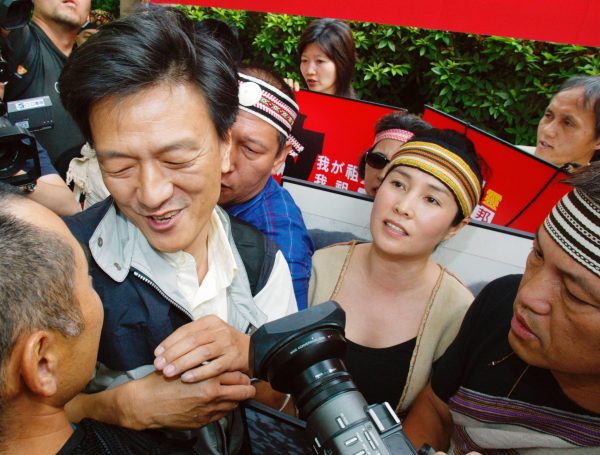
Zhang questioned the process, noting that on the morning of Aug. 25, 2009, the association held a “temporary board meeting” to approve receipt of the Mainland Affairs Council disaster funds. The association also established an “August 8 Typhoon Special Project Management Committee.” Kao herself was a member of this committee. In addition to using NT$100 million as disaster relief, the association allocated NT$1 million for administrative expenses.
Zhang mocked the process, pointing out that the special project committee held its first meeting the same afternoon, appointing Chang Chun-chieh as executive director—the very assistant now detained. The NT$100 million transferred from the Mainland Affairs Council was fully distributed within 48 days, illustrating the close relationship between Chang and Kao.
Zhang noted that the Taipei District Court ruled that Chang Chun-chieh is suspected of “public servant property fraud,” “falsifying official documents,” “aggravated fraud,” “preparing false accounting vouchers,” and “money laundering,” reaching the level of serious criminal suspicion. Zhang added pointedly, “Before the Kuomintang rallies to support Kao, I can only advise them to think twice. Don’t take the wrong path.”