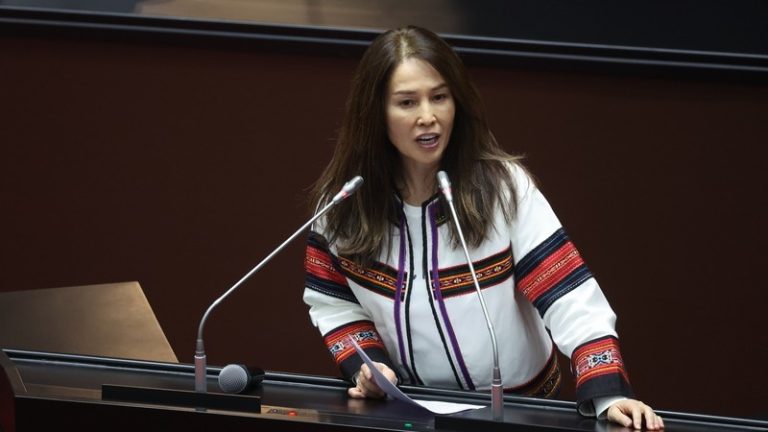
The National Security Maintenance Division of the Ministry of Justice Investigation Bureau received a tip-off alleging that independent legislator Kao Chin Su-mei may have been involved in fraudulent claims of assistant fees, with related financial flows raising national security concerns. On Feb. 10, the Taipei District Prosecutors’ Office directed the Investigation Bureau to carry out a large-scale search, targeting Kao’s residence on Qingshan Road in Yangmingshan, her office in the Legislative Yuan’s Qingdao Second Building, as well as multiple locations of associated individuals. A total of 18 people, including Kao herself and Pingtung County Councilor Yue Qiu-nü, were summoned for questioning.
According to reports, investigators went to Kao’s residence around 6 a.m. to conduct the search, seizing items such as computer hard drives and personal mobile phones. At 9:30 a.m., prosecutors and investigators also searched Kao’s Legislative Yuan office. The operations are still ongoing. Kao has been taken to the Investigation Bureau’s National Security Division for questioning.
Prosecutors and investigators have information indicating that during Kao’s tenure as legislator, there may have been false declarations in the reimbursement process of her assistant fees, potentially violating the “fraudulently obtaining property using official position” provisions under the Anti-Corruption Act. Additionally, there is intelligence suggesting that during past legislative campaigns, Kao may have received financial support from China. If verified, this could involve violations of the Anti-Infiltration Act.
The search was first publicly revealed this morning by KMT legislator Lo Chih-chiang on Facebook, drawing public attention. Regarding the allegations and potential Chinese financial influence, both the Taipei District Prosecutors’ Office and the Investigation Bureau have responded cautiously, stating that under the principle of non-disclosure during investigation, they will not confirm or provide further details at this time.
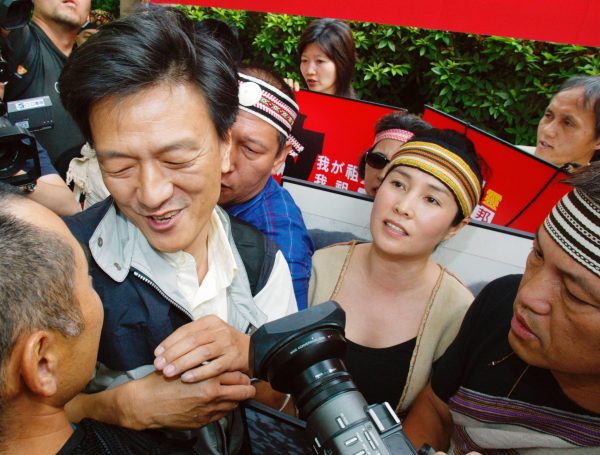
Kao Chin Su-mei’s pro-China interactions draw attention
Kao, originally an entertainer, entered politics in 2001 and was elected in 2002 as an independent legislator representing the mountain indigenous constituency. She has served seven consecutive terms (5th to 11th Legislative Yuan), spanning over 20 years, with various political affiliations over time, including independent, Non-Partisan Solidarity Union, and People First Party caucus. Since 2020, following the dissolution of the Non-Partisan Solidarity Union, she resumed independent status but joined the KMT caucus in the Legislative Yuan, actively participating in negotiations and votes, and is considered a de facto KMT member.
Success
You are now signed up for our newsletter
Success
Check your email to complete sign up
According to Liberty Times, Kao’s interactions with Chinese officials have long been controversial. She met with Chinese Communist Party General Secretary Hu Jintao in 2009 and 2019, and with National Committee of the Chinese People’s Political Consultative Conference Chairman Wang Yang in 2019. She attended the “Cross-Strait Relations and National Rejuvenation Symposium” in 2019, proposing five initiatives with Chinese officials, which drew strong protests from the Indigenous Youth Front.
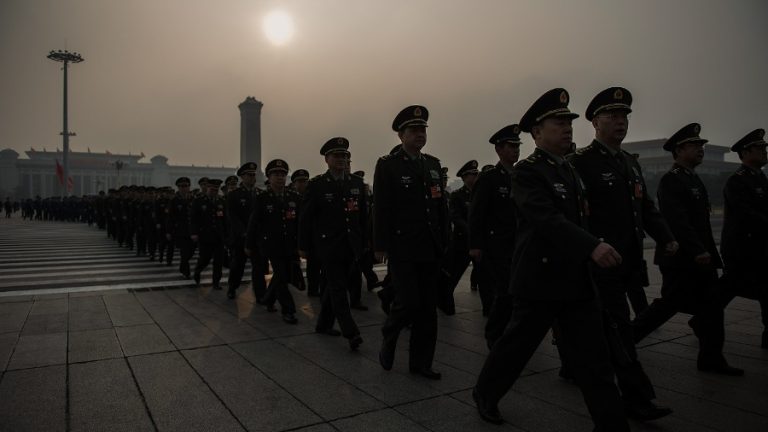
In 2015, she attended China’s Sept. 3 military parade, provoking backlash from indigenous groups. In official Chinese events, she often represented herself as a “Taiwanese ethnic minority representative,” emphasizing rhetoric such as “shared bloodline” and “cross-strait family ties.” Some indigenous groups have criticized her for speaking externally without full internal authorization, potentially undermining indigenous autonomy.
During the 2009 Morakot typhoon disaster, Kao visited China as head of the “Taiwanese Minority Delegation,” returning with NT$100 million in donations. However, questions over oversight and transparency in disbursement drew criticism from legislators and civic groups, who said her actions straddled political and united front gray areas.
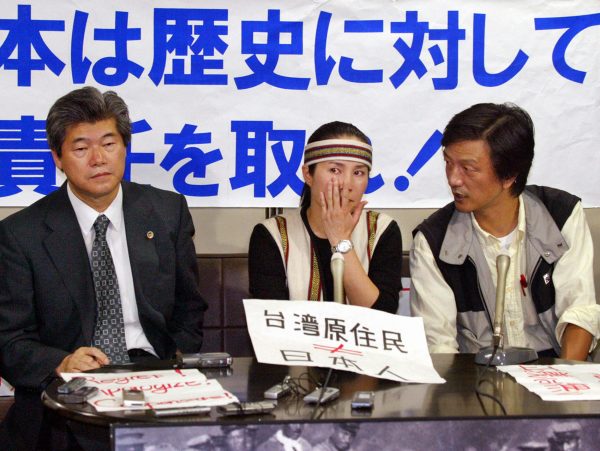
Legislative performance criticized
Kao’s legislative performance has also been criticized. According to the Citizen Congress Watch, as of 2021, she had been listed 15 times on the “Legislators to Watch” list, due to low attendance and limited participation in bills. This data reinforced her image as more of a “political celebrity” than a substantive lawmaker, drawing ongoing debate.
Her past actions have generated multiple controversies, including a 2003 DUI incident; arranging donations of mid-sized buses from Beijing Holdings Group in 2010 and 2012; suspected involvement with Chinese talent shows in 2017; using simplified Chinese presentation materials during a Legislative Yuan inquiry in 2023; and accusing the ruling party in 2024 of smearing parliamentary reform under “instructions from Xi Jinping,” sparking intense cross-party clashes.
According to Liberty Times and Taiwan News, other individuals summoned include Pingtung County Councilor Yue Qiu-nü, Taitung County Councilor Chen Zheng-zong, and Hualien County Councilor Jian Zhi-long. This legislative case has expanded from alleged embezzlement of assistant fees to a national security issue, marking one of the most sensitive investigations targeting the legislature since repeated assistant fee scandals. The Taipei District Prosecutors’ Office continues to investigate, with the scope of further inquiries and potential legal liabilities yet to be determined.