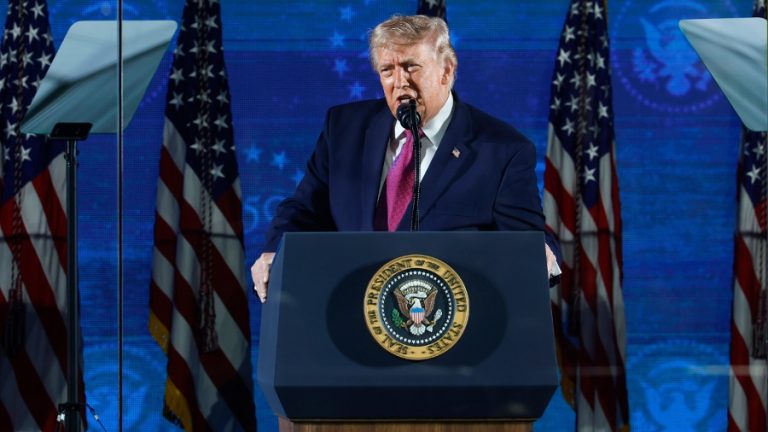

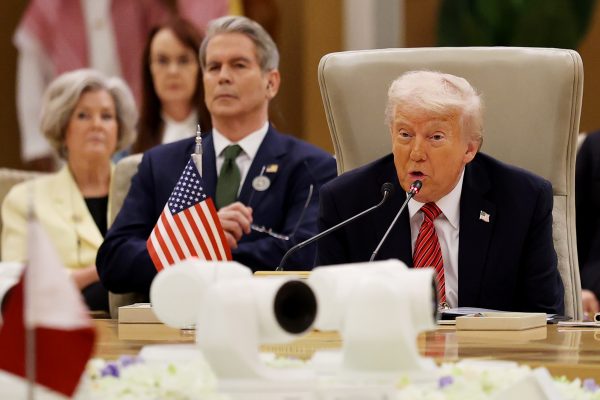
According to Benzinga, U.S. Treasury Secretary Scott Bessent recently confirmed that U.S. President Donald Trump will visit Beijing this April. The trip will focus on reducing China’s large trade surplus and promoting stronger U.S. economic self-reliance.
At the BTG Pactual CEO meeting in Brazil, Bessent said Washington plans to use the summit to directly address what it calls a roughly $1 trillion trade surplus, describing the current trade structure as “unsustainable in the long term.”
He noted that recent mutual visits by senior officials have paved the diplomatic path for the leaders’ meeting. The U.S. sees this visit as an important opportunity to rebalance bilateral relations. Bessent emphasized that while the U.S. seeks to maintain a constructive relationship, the current trade structure must be adjusted.
According to U.S. officials, this meeting is expected to be the first of up to four bilateral talks between the two leaders in 2026, aimed at consolidating the fragile balance established after last October’s trade easing agreement.
US emphasizes rebuilding control over key industries
Bessent stated that another core agenda of the summit is for the U.S. to regain control of strategic industry supply chains. He pointed out that during the COVID-19 pandemic, America’s overreliance on China for medical supplies exposed industrial security risks.
Success
You are now signed up for our newsletter
Success
Check your email to complete sign up
He stressed that the U.S. needs to strengthen control over critical minerals, semiconductors, and pharmaceutical supply chains to enhance national security and economic resilience.
Bessent said the U.S. government aims to promote “fair competition and risk management,” rather than a complete economic decoupling from China. He believes that competition itself can strengthen industries, but the U.S. will no longer accept trade structures that disadvantage domestic labor.
According to CBS, Bessent said at another business conference that U.S.-China relations are currently in a “relatively comfortable” competitive state.
He stated that the two countries can maintain constructive interactions while continuing strategic competition. He reiterated that the U.S. government seeks “de-risking” rather than full decoupling.
Trump recently stated that he had a “long and substantive” phone call with Chinese President Xi Jinping, during which they discussed trade, energy, military issues, and international conflicts. Trump described the conversation as “overall positive” and said the relationship is important for global stability.

Taiwan remains a key sensitive point in bilateral relations
Analysts note that beyond economic and trade issues, Taiwan remains one of the most sensitive political topics in U.S.-China relations. Beijing reiterates that Taiwan is part of China and emphasizes that its position on safeguarding national sovereignty and territorial integrity will not change.
The U.S., meanwhile, maintains unofficial relations with Taiwan and long-term support on security matters. This issue is expected to continue influencing bilateral relations.
Bessent also linked the upcoming diplomatic negotiations to domestic economic policy. He said that through tax cuts, regulatory reform, and an energy independence strategy, the U.S. has strengthened its economic fundamentals, giving it a more advantageous position in international negotiations.
He noted that the dollar’s strength stems from a robust U.S. economic structure, and when the U.S. continues to be the world’s most attractive market for capital, it enhances the government’s strategic leverage in international talks.
Data shows that, as of this week, U.S. stock market performance this year has been mixed: the Dow Jones Industrial Average has risen about 3.7% year-to-date, the S&P 500 has seen modest gains, while the Nasdaq has slightly declined. Analysts say this reflects differing investor expectations about the U.S. economic outlook and adjustments in the tech sector.