By Xiao Guang
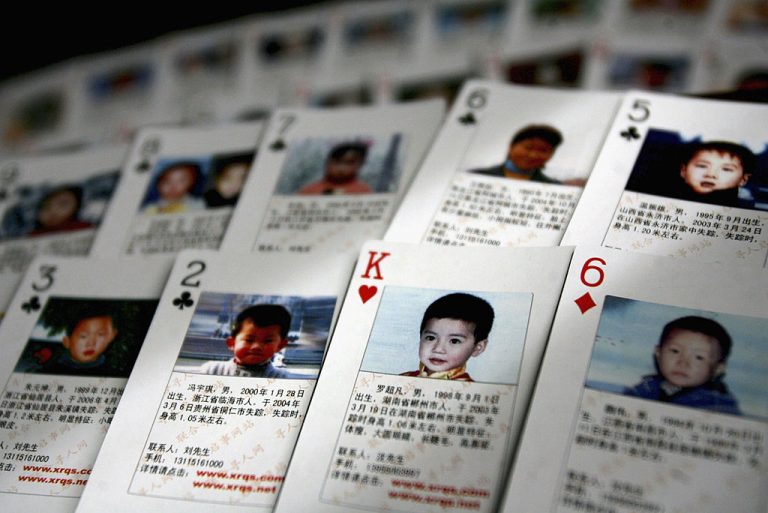
As 2026 begins, reports of missing students and children have continued to surface across mainland China. Online commentators allege that organ trading has become an economic sector covertly supported by the Chinese Communist Party (CCP), and they accuse authorities and police of deliberate inaction. According to these claims, the number of cases is rising. In some instances, families say children who are later found are already dead and missing organs.

Xincai case intensifies scrutiny
On Jan. 8, 2026, a 13-year-old middle school student in Xincai County, Henan Province, died suddenly. When school staff attempted to transfer the body before the parents arrived, family members intervened and stopped the removal. Relatives later reported discovering needle-like puncture marks on the child’s chest.
Authorities described the case as a “sudden death from cardiogenic disease,” stating that the puncture marks were caused by forensic blood extraction. After the official statement was issued, the family reportedly lost contact. Lawyers were said to have been prevented from intervening, online discussion was restricted, and highway entrances leading to Xincai were subject to questioning and blockades.
The case spread rapidly online and was described by netizens as the “first hot keyword of 2026.” Internet memes such as “Parts Defense War” and “Xincai Spare Tire” circulated widely. The episode fueled broader fears over campus safety and rumors related to organ transplantation. Some parents began escorting their children to school personally or transferring them to other institutions.

Reports of missing students across provinces
Success
You are now signed up for our newsletter
Success
Check your email to complete sign up
In the days following the Xincai incident, additional reports of missing students emerged, particularly in Henan Province. On January 11, a 14-year-old boy, Yang Jiahao, from Shangji Town in Nanxi reportedly went missing. On January 12, a 13-year-old boy, Wang Yichun, from Heilong Town in Zhumadian, Henan, was reported missing. The same day, a 14-year-old girl, Xu Mengyao, from Dancheng County, Henan, also disappeared.
As the reports accumulated, videos and posts alleging organ harvesting across China circulated in large numbers online.
On Jan. 15, a Douyin blogger compiled publicly searchable missing-person information for the first half of January 2026, listing 38 verifiable cases.
The list included a 13-year-old boy who went missing on Jan. 3 in Weng’an County, Guizhou, while heading to evening self-study; a 14-year-old boy, Wen Xuebin, who disappeared on Jan. 4 from No. 14 Middle School in Kaili City, Guizhou; a 16-year-old girl who went missing on Jan. 4 in Tongshan County, Hubei; a 10-year-old boy, Wang Yingjie, who disappeared on Jan. 5 in Yuexi County, Anhui Province; a boy named Huang Yang who went missing on Jan. 5 in Hengzhou City, Nanning, Guangxi; a 14-year-old girl, Zhao Xinran, who disappeared on Jan. 5 in Dacheng County, Hebei Province; a 15-year-old girl, Wang Xinyue, who went missing on Jan. 6 in Jianchang County, Liaoning Province; a 16-year-old boy, Li Bolin, who disappeared on Jan. 10 in Changshou District, Chongqing; and a 24-year-old man, Zang Qinghui, from Xianning in Bijie City, Guizhou, who went missing in Zhejiang on Jan. 11.
According to the compilation, these individuals remain missing.
Hunan case draws intense online attention
On Jan. 15, a 15-year-old third-year middle school student, Cai Yingxuan, from You County in Zhuzhou, Hunan Province, went missing on her way to school. The following day, her body was found in a garbage pile near the school.
Her parents reported discovering an external abdominal injury and stated that both kidneys were missing. During the search period, missing-person notices posted by the family were reportedly blocked on domestic platforms. A repost of the notice on the overseas social media platform X received 6.7 million views and 2,800 reposts within two days.

Medical advice spreads over school physical examinations
After the Xincai case, a netizen posted a video claiming that their child had undergone multiple blood draws during a school-organized physical examination without parental knowledge. The video intensified online concern.
Several licensed doctors and nurses subsequently posted videos offering advice to parents on how to respond to school health checks.
In one widely shared Douyin video, a female doctor appeared to be peeling an orange while subtitles read: “Remember this. In the future, whenever the school requires filling out health information for your child, be sure to write ‘allergic constitution.’ Don’t ask why. Just do it.”
When asked for clarification in the comments, one user responded that an allergic constitution relates to the immune system and that organ transplantation may be more likely to trigger rejection in such individuals. Others suggested that listing allergies might reduce potential risk, though not eliminate it.
Parents asked what types of allergies should be specified. Suggestions included eczema, rashes, peanut allergy, milk allergy, dust mite allergy, and drug allergies. One parent wrote, “My child is naturally allergic. No need to fabricate.” Others recommended adding a family history of hereditary disease. The video received hundreds of thousands of likes and reposts.
Another nurse posted a video outlining factors that could influence physical examination results. She described circumstances that may affect blood test indicators.
Staying up late before an exam can influence blood sugar and liver function readings. Intense exercise the day prior, such as running or playing sports, may alter liver function and uric acid results. Alcohol consumption or smoking before testing can significantly affect liver and blood indicators. Taking vitamins, supplements, or traditional Chinese medicine may also influence blood results. Consuming greasy or stimulating foods, including fried dishes, barbecue, hot pot, desserts, milk tea, sugary drinks, meat, and seafood, can affect blood lipids and blood sugar levels.
Blood draws generally require fasting. After eating, blood sugar rises and may appear abnormal. Greasy food increases blood fat content, potentially leading to readings consistent with elevated lipids. Cholesterol and triglyceride levels also fluctuate after meals, affecting clinical interpretation.
Although the nurse emphasized that students should cooperate with school examinations and avoid inappropriate behavior before testing, many comments expressed appreciation. Some users noted that such advice had to be conveyed indirectly to avoid censorship.

Open letters criticize authorities
Ongoing reports and accusations of official inaction have triggered anger online. Two open letters circulated within mainland China directly criticizing the CCP’s governance and calling on citizens to resist.
One letter referenced the accidental death of a student at Tsinghua Garden, stating that public anger stemmed not only from the loss of a child but from the speed with which official conclusions were issued and online discussion curtailed. It argued that the school, education bureau, forensic authorities, and public security and judicial bodies all operate within the same system. The letter accused the regime of suppressing speech, carrying out coercive enforcement, presiding over child abductions, family disappearances, and unexplained deaths affecting 1.3 billion people, and asked whether citizens would accept such conditions.
Children are described as the future of families and the continuation of bloodlines. The text invokes imagery from the classic novel Journey to the West, comparing China to the Kingdom of Wuji, where children are seized by force. It asserts that only by eliminating the “man-eating demons” can children be restored to a safe and peaceful future.