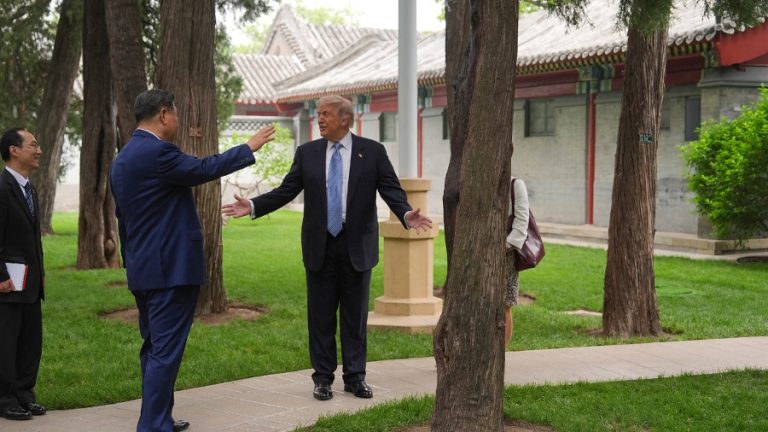
Wang Xiaohong, the minister who runs China’s police and domestic security forces and serves as one of Xi Jinping’s most trusted enforcers, may be seriously ill, according to rumors that swept Chinese-language social media in mid-February 2026. Wang has served Xi longer than almost any other current official, with a relationship dating back to 1993.
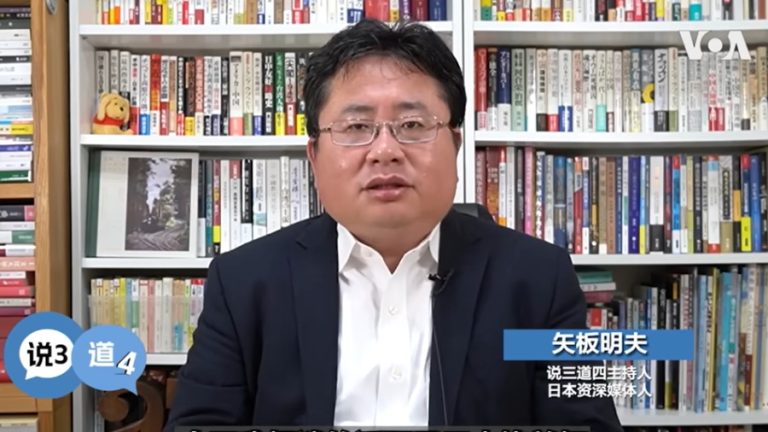
The speculation began on Feb.12 when the X account “China-Japan Political and Economic Review,” run by a blogger known as “Director Lu” who had previously broken the news of Xi Jinping’s extrajudicial seizure of Zhang Youxia, China’s former top-ranking military vice chairman, posted a cryptic message. “A storm is brewing at the Ministry of Public Security,” the post read, accompanied by a photo of Wang. The post triggered a wave of speculation that Wang was about to “have an incident,” the euphemism commonly used when a senior Chinese Communist Party official is purged or detained.
Blogger Li Chengpeng followed up, writing on X: “After verification with Director Lu, Public Security Minister Wang Xiaohong is retiring due to throat cancer. So let’s arrange a role for Minister Wang.” Chinese internet users responded with barbed humor: “Wishing the disease a speedy victory over Minister Wang,” and “Has even heaven decided to give Wang Xiaohong a taste of being silenced?”
The party’s propaganda machine published a denial with no photos
As the rumors intensified on the evening of Feb. 12, the regime’s Xinhua news agency published a report claiming that Wang had delivered a speech at a so-called “National Public Security Organs Party Conduct and Clean Governance Conference,” one of the ritualistic loyalty-performance events that the Party stages to project normalcy. The timing was widely interpreted as an emergency rebuttal.
Yet the report contained no photographs and no audio or video of Wang. U.S.-based political commentator Jiang Feng noted the absurdity: if the entire Chinese-speaking internet was buzzing about Wang having throat cancer, a single on-camera appearance with a few spoken words would have killed the story instantly. Instead, Xinhua produced a text-only report with no visual proof of Wang’s condition, a move Jiang compared to “putting up a sign that says ‘there is definitely no buried silver here,'” invoking a famous Chinese idiom about self-defeating denials.
Success
You are now signed up for our newsletter
Success
Check your email to complete sign up
Jiang pointed out that this pattern of phantom appearances has preceded political downfalls before. In February 2012, just days before Wang Lijun, the police chief of the southwestern megacity of Chongqing, made his dramatic nighttime flight to the U.S. Consulate in Chengdu, the Chongqing Daily published photos of him inspecting local operations. Before that, Zhou Yongkang, the former head of the CCP’s Political and Legal Affairs Commission, the body that controls China’s courts, police, and internal security forces, was still performing the charade of hosting foreign dignitaries just days before his political downfall. “In the CCP’s black-box politics,” Jiang said, “rumors often turn out to be prophecies that arrive ahead of schedule.”
A second source claims Wang has bladder cancer
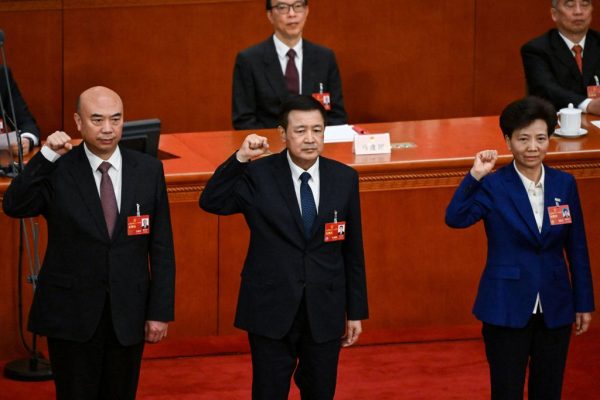
On the same day, Cai Shenkun, a U.S.-based independent political commentator, posted on X that Wang had already exceeded the normal retirement age when he was appointed minister and that, according to sources with inside knowledge, his actual diagnosis was bladder cancer. Cai wrote that Wang, who turns 70 next year, is unlikely to continue serving as minister.
U.S.-based commentator Tang Jingyuan offered a different interpretation. “In my view, the more likely scenario is that Wang’s cancer is political,” Tang said. He argued that the cancer rumors should be read in the context of the intensifying power struggle between Xi Jinping’s faction and an increasingly coordinated anti-Xi coalition. Tang noted that Xi’s decision to seize Zhang Youxia, the former vice chairman of China’s Central Military Commission, the body through which the Communist Party commands all of China’s armed forces, and Liu Zhenli, a former member of the same body, through a sudden extrajudicial strike had left Xi politically exposed, and that the fallout was now reaching his closest civilian allies.
Party elders are reportedly demanding Xi hand over Wang Xiaohong
The seizure of Zhang Youxia has produced an extraordinary backlash. According to leaked accounts, Wang Xiaohong’s Special Service Bureau, a plainclothes security unit within the Ministry of Public Security that functions as a political protection force for senior officials, played a direct role in Zhang’s arrest. Some versions of the story say agents from the bureau grabbed Zhang at his home; others say the operation was a coordinated effort involving the Central Guard Bureau (a Praetorian-style unit that physically controls access to China’s top leaders, overseen by Cai Qi, Xi’s chief of staff and head of the CCP’s General Office), the Central Commission for Discipline Inspection (the Party’s internal purge and enforcement arm, controlled by Li Xi), and Wang’s Special Service Bureau simultaneously.
Whatever the precise sequence, Wang’s involvement has made him a target. As resentment among Communist Party elders, the so-called “red second generation” (children of the Party’s revolutionary founders), and senior military figures over Zhang’s seizure has mounted, so has the pressure on Xi. Recent leaks claim that anti-Xi forces within the military, the Party’s old guard, and the red second generation have confronted Xi directly, demanding that he surrender Wang Xiaohong and other key operatives as a condition for a negotiated exit from power.

Wang Xiaohong’s relationship with Xi spans more than 30 years
U.S.-based commentator Li Muyang noted that Wang Xiaohong is the official who has been at Xi Jinping’s side the longest. Their relationship began in 1993, during Xi’s long posting in Fujian province (1985 to 2002). Wang personally handled Xi’s security detail, and when Xi traveled, his daughter Xi Mingze reportedly stayed at Wang’s home for extended periods.
As Xi rose through the ranks, Wang rose with him: first to head of the Henan Provincial Public Security Bureau, then to head of the Beijing Municipal Public Security Bureau, then into the Ministry of Public Security, and finally to minister. Wang is the only career police officer ever to have climbed all the way to the top of the domestic security apparatus, and he is considered one of the core members of Xi’s “Fujian faction.” Li Muyang stressed that Wang’s unique position makes the current rumors all the more significant. “If even Wang’s position is starting to wobble,” Jiang Feng observed, “it means the cracks have reached Xi Jinping’s innermost protective wall.”
Allegations that Wang sent agents to recruit, then intimidate, an American Olympic champion
The cancer rumors also brought renewed attention to allegations that Wang Xiaohong directed a transnational repression campaign targeting Alysa Liu, the Chinese American figure skating prodigy, and her father Arthur Liu, a Bay Area attorney and former student protest leader during the 1989 Tiananmen Square democracy movement.
According to blogger Li Chengpeng, “Minister Wang sent people to persuade Alysa Liu to take Chinese citizenship, and Arthur Liu refused.” While the specific claim that the operation was directed by Wang personally has not been independently confirmed, the broader facts of the case are well documented.
Alysa Liu became the youngest U.S. figure skating champion at age 13 and won the national championship again and a world championship medal after returning from a brief retirement. Her father, Arthur Liu, was one of the student leaders of the 1989 democracy protests in Guangdong province and escaped China through “Operation Yellowbird,” the covert rescue network that smuggled dissidents out of the country after the regime’s massacre of pro-democracy protesters in Beijing. He has been subject to long-term Chinese government surveillance and harassment.

FBI warned the Liu family about Chinese intelligence operations
In 2021, as 16-year-old Alysa was training for the Beijing 2022 Winter Olympics, a suspect posing as a member of the U.S. Olympic Committee contacted Arthur Liu, requesting passport copies and Alysa’s personal information. The individual urged Alysa to take Chinese citizenship, reportedly offering terms far more generous than the approximately $23 million in endorsement deals that freestyle ski star Eileen Gu received after switching her competitive allegiance to China. Arthur Liu refused, saying his daughter had never considered changing her nationality and had always competed for the United States. The suspect warned that the refusal could “affect Alysa’s travel to China.”
In October 2021, the FBI contacted Arthur Liu and briefed him on a Chinese intelligence operation targeting his family. Liu chose not to tell his daughter, fearing the news would frighten her or distract her from competition. He still allowed her to compete at the Beijing Olympics after the U.S. State Department and the U.S. Olympic and Paralympic Committee guaranteed that at least two security personnel would be assigned to protect her at all times during her stay in China.
Alysa Liu’s performance suffered under pressure at the Beijing Olympics
During the Beijing Games, Alysa told her father that late one night, after her free skate, a stranger approached her in the cafeteria, followed her, and invited her back to his apartment. Given that Wang Xiaohong was already serving as head of China’s police and security forces, commentators noted that an operation of this nature inside Olympic venues on Chinese soil would be difficult to carry out without the knowledge or approval of the security apparatus.
Alysa finished seventh in the women’s singles event, far below her abilities. In a later interview with CBS’s “60 Minutes,” she said she had not been fully engaged at the Beijing Games, using vague language that commentators interpreted as reflecting the psychological toll of the intimidation campaign rather than a simple lack of motivation. She retired shortly after returning to the United States.
Her father once told her: “Dad escaped so that we could have the freedom to choose.” In 2024, Alysa announced her return to competitive skating and committed to representing the United States. She has since won a string of major titles, and at the Milan 2026 Winter Olympics, she helped lead Team USA to the team event gold medal.

Why Wang Xiaohong’s status is a barometer for Xi Jinping’s grip on power
U.S.-based commentator Zhang Tianliang analyzed the situation by identifying three officials whose status determines whether Xi Jinping’s hold on power remains intact: Cai Qi, a member of the Politburo Standing Committee, the seven-man body that rules China without any democratic mandate, who oversees the CCP’s General Office and serves as first political commissar of the Central Guard Bureau, the Praetorian unit that physically controls access to China’s top leaders; Zhou Hongxu, commander of that same unit; and Wang Xiaohong, who controls the Ministry of Public Security’s Special Service Bureau.
Together, these three men are responsible for the physical security, and effective house arrest, of every serving and retired top Party and state official and every member of the Central Military Commission. Their control over this apparatus is what makes a coup attempt extraordinarily difficult, both from within the Party’s senior ranks and from regional military commands.
That is precisely why the Wang Xiaohong cancer rumors carry political weight far beyond a health question. If Wang is truly being forced out, whether by illness, political pressure, or both, it signals that Xi’s core enforcement machinery, the apparatus he has spent a decade assembling to guarantee absolute loyalty, may be fracturing. In the CCP’s system, a leader’s physical condition is never merely a medical matter. It is always a political one.
By Li Deyan