To grasp Mao Zedong’s words and actions, the General Office of the CCP Central Committee tampered with Mao’s daily necessities. The official explanation was “to preserve historical materials.” According to rumors, specially made miniature recording devices were disguised as clothing buttons and were even implanted into his sleeping robe.
On the surface, the reason given was that Yang Shangkun, director of the General Office, deputy director Gong Zirong, and Mao Zedong’s confidential secretary Ye Zilong wanted to accurately record the supreme leader’s speeches to avoid transmission errors. However, the real reason was that frontline Party leaders, including Liu Shaoqi, Deng Xiaoping, and Zhou Enlai, after the disastrous failure of the Great Leap Forward, attempted to grasp Mao Zedong’s true thoughts.
The secret inside the soapbox
In February 1961, on a special train bound for Changsha, Mao Zedong had a private conversation with a service attendant in a compartment. Later, when the attendant was chatting with the train’s communications officer, the officer, in order to show off his technical skills, unexpectedly said, “I know everything you just said to the Chairman,” and repeated part of the conversation.
The attendant was shocked and immediately reported the matter to Mao Zedong. Only then did Mao realize that his self-assumed safest “mobile palace,” the special train, was being monitored around the clock.
Mao flew into a rage and angrily rebuked: “Who told you to record? Who gave the order?” Mao Zedong was extremely furious, declaring: “They are like installing a time bomb beside me. Wherever I go, they follow; whatever I say, they write down. This is not for the Party; this is to monitor me, to catch my handle!”
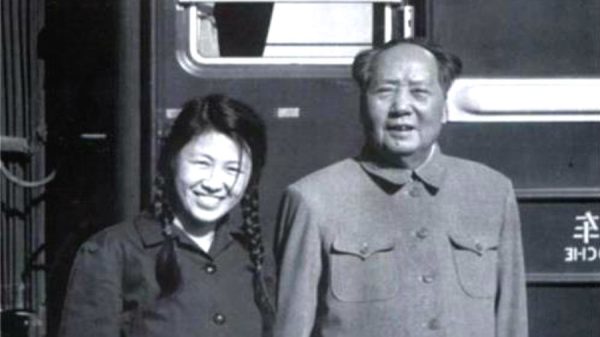
What was recorded on the tapes?
Success
You are now signed up for our newsletter
Success
Check your email to complete sign up
Accounts describe the contents of the recordings as falling into three major categories.
One category was private romantic affairs “by the bedside,” described as the point that most enraged Mao. It is said that recording devices were placed in Mao’s special train bedroom and his Zhongnanhai residence. The tapes reportedly recorded explicit conversations and flirtations between Mao and multiple “celebrities within the red walls” and young female attendants. When Mao Zedong learned that these erotic details were being “appreciated” by Yang Shangkun and others as if listening to a broadcast, he felt deeply humiliated. He believed this was not merely surveillance but a bargaining chip for political blackmail.
A second category was Mao’s “backstage complaints” about Liu Shaoqi and Zhou Enlai. Mao Zedong often vented in private settings to those around him. The tapes recorded Mao’s extreme dissatisfaction after the failure of the Great Leap Forward, when Liu Shaoqi and Deng Xiaoping promoted the “Three Freedoms and One Contract” policy, described as restoring private production to relieve famine. In the recordings, Mao bluntly said: “Shaoqi wants to take charge,” and “Enlai is a nice guy, but he has no backbone.”
A third category was Mao’s real attitude toward deaths by starvation during the Great Leap Forward. In some informal small meetings, Mao’s cold remarks about the three years of great famine were also recorded. This was described as vastly different from the “deep concern” he displayed in public settings. If these recordings had been leaked, they would have completely collapsed his image as the “savior of the people.”

A lecher combined with pathological paranoia: the origins of the Cultural Revolution
It is said that Yang Shangkun installed audio devices in the room next to Mao Zedong’s bedroom and even in the mezzanine of the special train’s restroom. Another rumor states that when Mao Zedong traveled south by special train and was in Changsha or Wuhan, staff around him, said to be a nurse or a guard, discovered that the compartment inside his dedicated soapbox felt unusually heavy while cleaning his toiletries. After dismantling it, they found a sophisticated radio induction device. Such devices were then high-end technology provided by the Soviet Union to China, capable of transmitting indoor sound signals to nearby receivers.
Luo Ruiqing, who was in charge of security at the time, also became the target of Mao’s suspicion because of this incident. Mao suspected that the Ministry of Public Security and the General Office had joined forces to turn him into a figurehead.
Later, Yang Shangkun was demoted. On the eve of the Cultural Revolution in 1965, Yang Shangkun was removed from his post as director of the General Office and sent down to Guangdong. The “secret recordings” were his primary charge, and Ye Zilong, Mao Zedong’s long-trusted confidential secretary, thereafter lost his position at the center of power.
China affairs expert Ming Ju-zheng has repeatedly pointed out in interviews that there is no genuine trust within the CCP system. The recording case in fact reflected the nature of governing the Party through secret agents. Yu Maochun of a Washington think tank analyzed that this incident demonstrated Mao Zedong’s pathological pursuit of “absolute security.” Mao believed that any technological means not under his control was a threat. This recording storm was not only directed at Liu Shaoqi and Deng Xiaoping, but also served as intimidation toward the entire CCP technocratic system, establishing Mao’s absolute authority of being “sacred and untouchable” during the Cultural Revolution.
Finally, Mao Zedong also used this incident to transform what originally belonged to administrative procedure recording work into criminal evidence framed as “contradictions between the enemy and ourselves,” manipulating power tactics to eliminate political opponents. Mao Zedong used this matter to prove that “there is a bourgeois headquarters within the Party,” which became one of his psychological motivations for launching the Cultural Revolution and purging the forces of Liu Shaoqi and Deng Xiaoping. Mao Zedong believed that he was surrounded by undercover agents. This combination of a lechery and pathological persecution delusion ultimately evolved into a political catastrophe for all of China, the Cultural Revolution.
By Fu Longshan