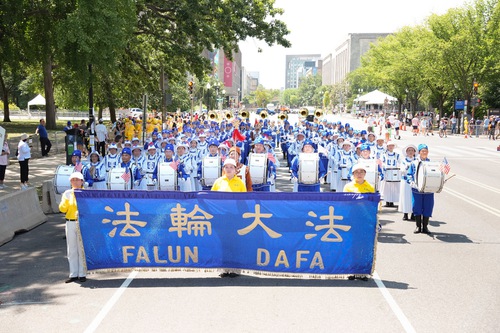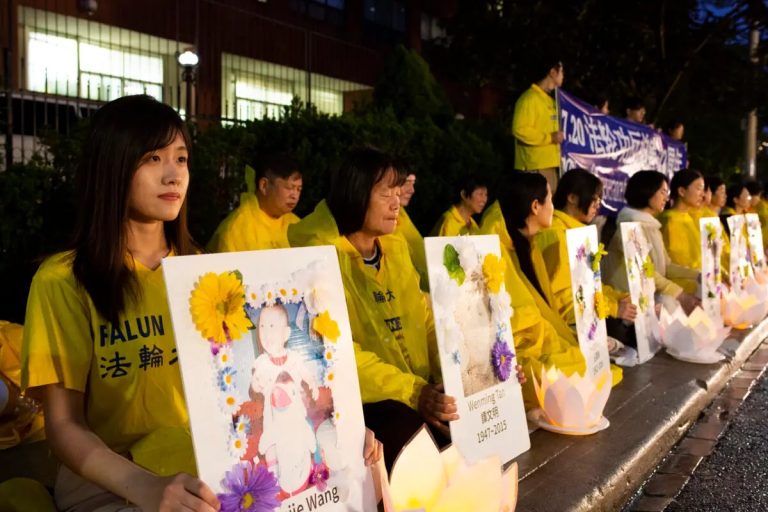
In the night of July 20, 1999, police officers across China leapt into action. They barged into homes and broke down doors, detaining thousands of people in a coordinated mass operation.
The coming weeks and months saw wave after wave of arrests as the Chinese Communist Party stepped up its campaign against Falun Gong, a traditional spiritual discipline that, throughout the 1990s, had attracted as many as 100 million adherents, according to government estimates.
It was the beginning of the Party’s most intensive and longest-running persecution campaign against a single faith group.
So many Falun Gong practitioners were placed in custody that jails and prisons overflowed, prompting authorities to repurpose stadiums as open-air holding grounds. In some cases, convicted prisoners were released to make room for the new arrivals, who were accused of no crime because the persecution itself was illegal.
Going to Tiananmen
Yet instead of retreating, practitioners responded with extraordinary acts of peaceful resistance.
Success
You are now signed up for our newsletter
Success
Check your email to complete sign up
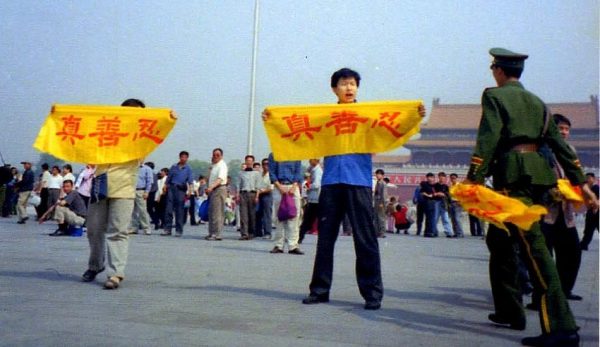
Between 1999 and 2001, tens of thousands traveled from across China to Beijing to “clarify the truth” about their faith — that it was not an “evil religion,” as the regime claimed — to both the Chinese public and the national leadership. Hundreds of thousands staged peaceful appeals, hoping to persuade officials to reverse course. Photos from Tiananmen Square show practitioners unfurling banners reading “Falun Dafa is good” and “Truthfulness, Compassion, Forbearance” as police rushed to arrest them.
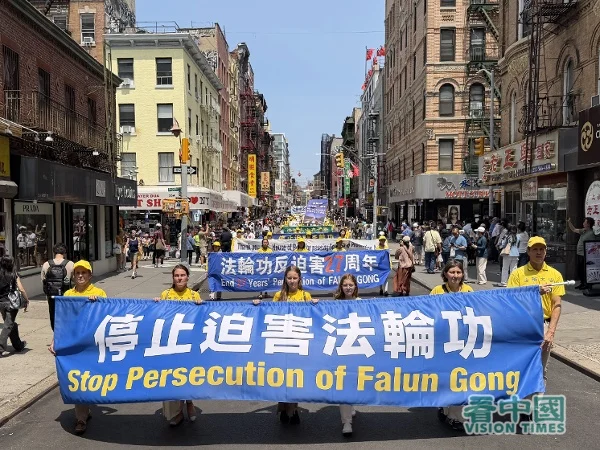
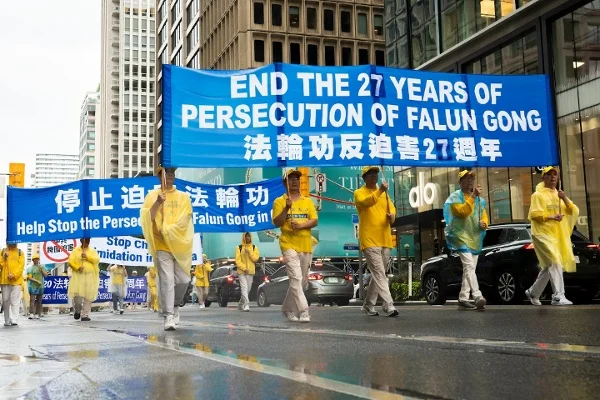
- Falun Gong Parade in New York Marks 27th Year of Persecution in China
- Behind the CCP’s Attacks on Shen Yun and Falun Gong in the US
By Aug. 16, 1999, the first known death of the campaign had already occurred. Seventeen-year-old Chen Ying, detained after appealing in Beijing for the right to continue practicing her faith, died while attempting to escape police custody. Authorities falsely claimed she had committed suicide.
Falun Gong, also known as Falun Dafa (法輪大法), had first been taught publicly by Master Li Hongzhi in 1992. Consisting of five meditation exercises and traditional moral teachings centered on truthfulness, compassion, and forbearance (真善忍), the practice spread rapidly during China’s qigong boom. Unlike many other qigong disciplines, it was taught free of charge and emphasized spiritual cultivation over physical fitness or supernatural abilities.
For millions of Chinese, Master Li’s teachings filled a spiritual void left by decades of Communist rule and the disillusionment that followed the Tiananmen Square massacre. Practitioners often credited the discipline with improving both their health and their moral character. Much like the early Christians in ancient Rome, they gained a reputation for honesty and selflessness at a time when many Chinese believed society had become consumed by the pursuit of wealth.
That popularity ultimately alarmed Communist Party leader Jiang Zemin. Although senior officials — including Premier Zhu Rongji — had expressed support for Falun Gong as recently as April 1999, Jiang viewed its tens of millions of adherents and independent spiritual beliefs as a threat to the CCP’s ideology and his personal authority.
Spiritual awakening and the clash with communism
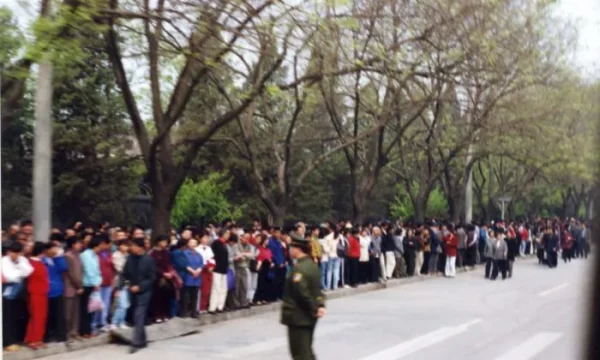
Pressure on the practice had been building for years through hostile state media coverage and other measures. In April 1999, more than 10,000 practitioners gathered peacefully outside the appeals office near the Party leadership compound in Beijing, seeking redress after practitioners in Tianjin had been beaten and arrested. Though the appeal ended peacefully, Jiang soon ordered a nationwide campaign to eradicate Falun Gong.
A special task force known as the “610 Office” coordinated police, courts, and propaganda organs, while state media launched an intensive effort to demonize the practice.
Yet no law could prohibit the practice of Falun Gong, since the Chinese constitution guarantees the freedom of belief and assembly, and Falun Gong did not advocate or engage in illegal activity.
As the persecution intensified, open appeals became nearly impossible. The Communist Party devoted enormous resources to expanding the police state, while the Jiang leadership rewarded officials for aggressively carrying out the persecution. Reform-minded leaders were sidelined, and the campaign became a defining feature of the regime’s domestic policy.
What began in July 1999 was not only an assault on a peaceful faith group, but also the beginning of one of the most remarkable campaigns of nonviolent resistance in modern China. Despite overwhelming repression, Falun Gong practitioners continued to risk imprisonment, torture, and death in an effort to tell their fellow citizens and the world the truth about their faith.
Twenty-seven years later, the repression continues. Countless practitioners have been jailed, tortured, humiliated, and killed for their beliefs. Since 2006, human rights investigators have produced mounting evidence that prisoners of conscience in China, the majority of them Falun Gong practitioners, have been killed for their organs.