Team USA fell behind after Canada scored a shorthanded goal
The United States entered the gold medal game at Milan’s Santa Giulia Arena as heavy favorites. The Americans had dominated the tournament, winning all six games before the final by a combined score of 31-1 and going 16 consecutive periods without allowing a goal. Their only goal conceded before the final came during a group stage match against Czechia.
Canada struck first in the second period, and the goal came in the most demoralizing fashion possible. Despite being shorthanded after a penalty, Canada broke through with a shorthanded goal, ending the Americans’ shutout streak at three hours, 52 minutes, and seven seconds. It was the first time the U.S. had trailed in the elimination rounds.
Knight tied the game with the goalie pulled and fewer than three minutes left
Late in the third period, Canada was awarded a power play that could have sealed the game. The U.S. killed the penalty but still trailed 1-0 with time running out. With roughly two and a half minutes remaining, the Americans pulled their goaltender for an extra skater, a high-risk gamble that paid off immediately. Captain Hilary Knight, positioned at the top of the zone, fired a shot that beat the Canadian defense and tied the game at 1-1.
The equalizer sent the game to overtime. Through 60 minutes of regulation, the shots on goal were nearly even, with Canada holding a slim 29-28 edge.
According to Yahoo Sports, Knight’s goal came at the most critical moment imaginable. The Americans were two minutes from losing the gold medal, and their captain delivered.
Success
You are now signed up for our newsletter
Success
Check your email to complete sign up
Defender Megan Keller scored the overtime winner off a Canadian line-change mistake
In overtime, Canada’s players were caught during a line change, and U.S. defender Megan Keller seized the opening. Keller pushed forward from her defensive position, took a long pass from forward Taylor Heise, and beat Canadian goaltender Ann-Renée Desbiens low to seal the 2-1 victory.
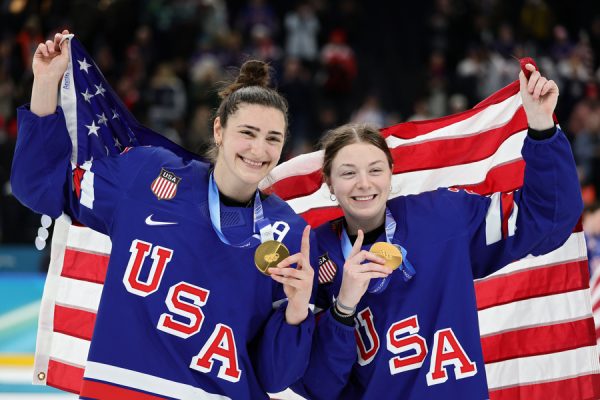
Keller’s goal set off a celebration on the ice. Knight, whose tying goal had kept the Americans alive, finished the tournament as the all-time leading scorer and goal scorer in U.S. women’s Olympic hockey history. The gold medal game was expected to be the final Olympic appearance of her career.
“We couldn’t lose this game,” Knight said after the win. “We had the best players on the ice, and I knew we would take control. I just needed to find my spot in front of the net.”
The U.S. women’s hockey team’s run through the 2026 Milan-Cortina Olympics was one of the most dominant in the history of the sport. Before the final, the team outscored its opponents 31-1 across six games and recorded 16 consecutive scoreless periods. The final was the first game in the tournament in which the Americans trailed at any point.
Kendall Coyne Schofield, the veteran forward, spoke about the team’s chemistry after the win. “I’ve been on a lot of teams, but this one is special,” she said. “Everyone was willing to sacrifice for the group, no matter what their role was.”
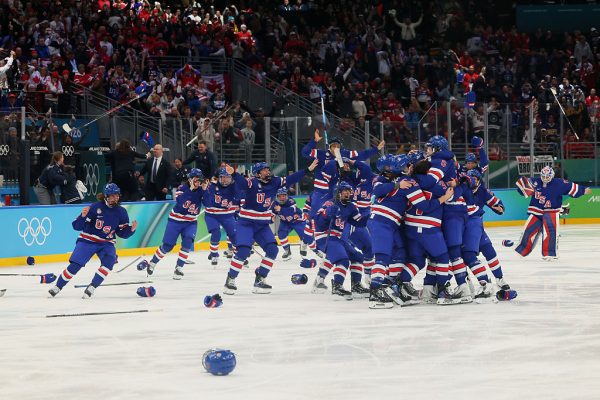
The US-Canada rivalry remains the defining story of women’s Olympic hockey
The gold medal game extended the longest and most intense rivalry in women’s hockey. Since international competition began in 1987, the United States and Canada have dominated the sport, claiming virtually every major title between them. The two North American powers have met in every Olympic women’s hockey final, with only rare exceptions breaking their grip on gold.
Canada came into the final as the more aggressive team in the early going, but the Americans leaned on experience and resilience to engineer the comeback. Knight’s tying goal and Keller’s overtime winner demonstrated the kind of composure under pressure that has defined U.S. women’s hockey for decades.
The victory gave the United States its first Olympic gold medal in women’s hockey since the 2018 Pyeongchang Games. It continued the tradition of dramatic finishes between the two rivals, a tradition that shows no sign of ending.
The Americans closed the 2026 Winter Olympics women’s hockey tournament with an overtime comeback victory that will rank among the most memorable moments in the history of the sport.