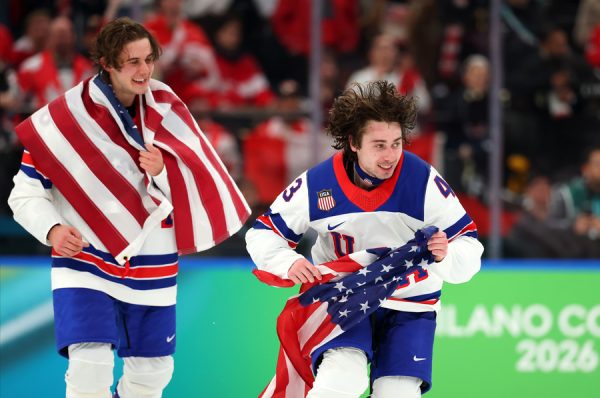
On Feb. 22 in the men’s ice hockey final at the 2026 Winter Olympics, the United States faced its longtime rival Canada in Milan, Italy. The game went into overtime, and just 1 minute 41 seconds in, U.S. forward Jack Hughes scored the gold medal-winning goal, securing a 2–1 victory for the United States. This marks the first time the U.S. has won an Olympic men’s ice hockey gold since the 1980 “Miracle on Ice.”
Hughes said excitedly: “This is our country’s moment. I’m proud to be an American. I love my country and I love my teammates. This is the spirit of U.S. hockey. Canada is strong, but this victory is truly special. We are a real team, and the brotherhood in this team is incredibly strong. I can’t believe it—the game could have gone either way tonight.”
Goalkeeper heroics: Hellebuyck’s spectacular saves
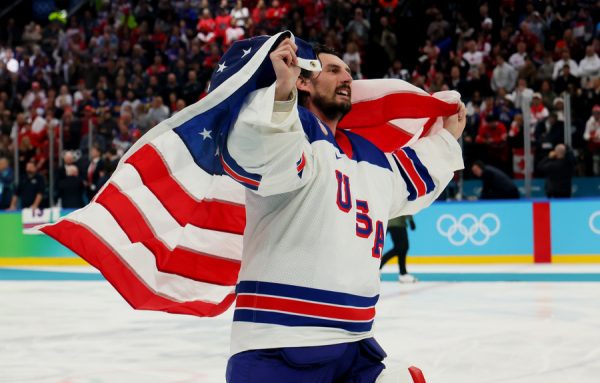
While Hughes became a historic hero, the U.S. victory would not have been possible without goaltender Connor Hellebuyck’s brilliant performance. He stopped 41 of 42 shots in the game and was named the best player on the ice. Hughes said: “He was absolutely our best player tonight—there’s no debate about it.”
The U.S. took an early lead with Matt Boldy scoring just six minutes into the game. Boldy received a pass from Auston Matthews, skillfully maneuvered past Canadian defenders Devon Toews and Cale Makar, and scored with a backhand shot.
In the second period, Canada gained momentum. Makar tied the game and then took the lead with 1:44 left in the period. The U.S. almost responded immediately—Brock Faber’s powerful shot hit the post—but the period ended tied 1–1, setting the stage for a decisive third period.
Success
You are now signed up for our newsletter
Success
Check your email to complete sign up
Overtime winner: brotherhood and team strength
With the 60-minute regulation ending in a tie, the game went into sudden-death overtime. Jack Hughes seized the moment to score the game-winning goal, igniting celebrations among U.S. fans both inside and outside the arena. Hellebuyck’s calm and steady goaltending gave the offensive players full confidence.
Dylan Larkin said during the game: “We were under pressure in the last two periods, but in these 20 minutes, you have to give everything—you have to seize the chance to create a special moment.”
The U.S. team also carried strong family and emotional motivations. Former NHL player Johnny Gaudreau and his brother had tragically died in a car accident; their family attended the game to support the U.S. team. In the locker room, the team hung Gaudreau’s #13 jersey, and after winning the final, players lifted his jersey and posed for photos with his two children.

From the ‘miracle on ice’ to a new era of glory
This was the third Olympic gold medal matchup between the U.S. and Canada, with Canada winning the previous two.
NBC reported that Feb. 22, 2026, will forever be remembered by every American hockey fan, dreamer, and nonconformist. Forty-six years ago, the U.S. men’s Olympic hockey team achieved what the world thought impossible. At the 1980 Lake Placid Winter Olympics semifinals, the U.S. defeated five-time defending champions the Soviet Union 4–3, then easily beat Czechoslovakia in the final to win the second men’s ice hockey gold in history.
That “Miracle on Ice” inspired generations of players, including the current stars wearing the U.S. flag on the ice.
The 2026 U.S. team not only inherited the collegiate hockey spirit of the 1980 team (20 players developed in the NCAA) but also featured top NHL talent, forming one of the strongest lineups in history. Captain Auston Matthews, Jack Eichel, Matthew Tkachuk, and Brady Tkachuk all contributed key goals. The U.S. victory was not only a sports miracle but also a perfect embodiment of teamwork, family legacy, and national pride.