By Meng Hao, Vision Times
As China enters 2026, the Year of the Horse, social unease is reaching a boiling point beneath the surface of “official optimism” as preached by the Chinese Communist Party (CCP). Compounding factors stemming from a nationwide economic slowdown, heightened political surveillance, and escalating U.S.–China intelligence tensions have contributed to what some observers describe as a growing desire among both ordinary citizens and officials to leave the country.
Former Inner Mongolia official Du Wen, ex-entrepreneur Hu Liren, and Old Dominion University professor Li Shaomin recently spoke about what they see as mounting pressures inside China, outlining the risks, obstacles, and psychological strains associated with departure, particularly for those within the system.
RELATED: Will China Face a Military Coup? Risk Assessment Amid Reports on Zhang Youxia
Moral strain
Hu Liren, who previously operated businesses in China, described what he views as a profound moral deterioration. He recounted a 1990s partnership with an associate from a well-connected family who allegedly used illegal financial practices to amass vast wealth and eventually gained prestigious political titles. Hu said he chose to withdraw rather than compromise his principles.
Success
You are now signed up for our newsletter
Success
Check your email to complete sign up
According to Hu, a social logic has taken hold in which “the more one compromises morally, the more one prospers.” He argued that individuals who attempt to uphold ethical standards increasingly find themselves marginalized.
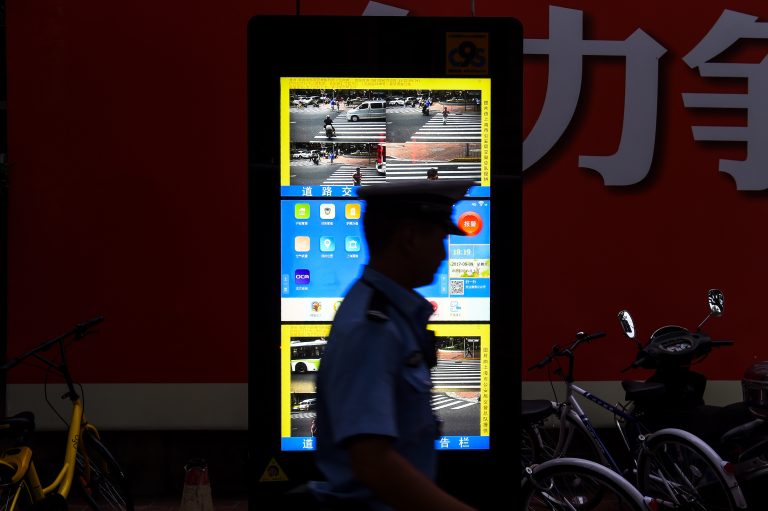
Du Wen, now living in Europe, focused on political pressures within officialdom. He described what he characterized as a multilayered monitoring system, embedded supervisors, technological surveillance, personnel cross-checks, and restrictions on family travel. Since the 18th Party Congress, he noted, a significant number of provincial-level officials have been investigated or removed, which he interprets as evidence of a highly centralized loyalty-based system.
He recounted discovering multiple signal transmitters in his office using detection equipment, an experience he said underscored the extent of scrutiny. Such conditions, he argues, contribute to a pervasive atmosphere of insecurity.
CIA recruitment videos
Between May of last year and February of this year, the U.S. Central Intelligence Agency (CIA) released several Mandarin-language recruitment videos aimed at Chinese officials and military personnel. One video titled “Why I Chose to Stand Up: For a Better Future” portrays a fictional mid-level officer expressing frustration over internal purges and choosing to contact the CIA via secure channels.
RELATED: CIA Recruitment Tape Targets China’s Officer Corps Amid Power Struggle in Beijing
According to Reuters and other outlets, the agency said the videos reached millions and generated new intelligence leads. Professor Li Shaomin observed that U.S.–China intelligence engagement operates under different legal and political constraints. While the United States faces judicial oversight and public accountability, China’s approach, he said, reflects a more opaque and severe enforcement culture.
Li suggested that in an environment already shaped by internal investigations and military reshuffles, such videos may amplify psychological uncertainty among officials, even if their concrete recruitment impact remains unclear.
Escape route for officials
Du Wen has publicly introduced what he calls the “2026 Tianzhou Plan,” aimed at assisting a limited number of families each year, primarily those within the state system, to relocate abroad through legal channels. He claims the program emphasizes discretion, lawful procedures, and long-term settlement.
Officials, he said, face unique challenges: revoked passports, exit restrictions, monitored communications, and financial controls. He emphasized that hesitation often proves costly, recounting cases in which individuals delayed departure only to face investigation later.
He also outlined digital security precautions for prospective contacts, including device resets and avoiding domestic applications, advice reflecting his view that communication monitoring is widespread.
Asylum pathways
For ordinary citizens, departure may seem simpler, but Du and Hu argue the process is fraught with obstacles. Many travelers enter visa-free countries only to exhaust funds and find themselves without legal status. In some cases, returnees reportedly face questioning or detention.
Du contends that those claiming asylum must demonstrate credible fear of persecution, whether religious, political, or otherwise, and provide detailed documentation. He has also announced a separate “Ferry Plan” aimed at assisting certain religious figures in obtaining humanitarian visas, though on a limited basis.
Hu noted that some families send children abroad first, creating the phenomenon of “naked officials,” cadres whose families reside overseas. Yet tighter controls have complicated even this strategy. Departure carries risks, including asset forfeiture, family repercussions, or legal consequences upon return. Both Du and Hu argue that time windows may narrow as controls tighten.
They call on the international community to monitor the humanitarian dimension of China’s outflow and to consider streamlined asylum mechanisms for those facing credible persecution claims.
Whether characterized as an “exodus” or a gradual outward migration, the combination of economic strain, political centralization, and heightened global tensions appears to be reshaping personal calculations for many within China. For some, the path outward is viewed not as opportunism but as a last resort in an increasingly uncertain landscape.