The United States has assembled its most formidable military presence in the Middle East since the 2003 invasion of Iraq, positioning two aircraft carrier strike groups, scores of fighter jets, and missile defense assets within striking distance of Iran. The buildup has unfolded alongside three rounds of indirect nuclear talks between Washington and Tehran, mediated by Oman, with a third round set for Thursday, Feb. 27, in Geneva. President Trump has openly said he is considering limited strikes on Iran, and senior U.S. officials have described the current diplomatic push as the last chance before a major U.S.-Israeli military operation that could target Iran’s supreme leader, Ali Khamenei, directly.
The scale of the American buildup is difficult to overstate. The USS Abraham Lincoln carrier strike group arrived in the Arabian Sea in late January. On Feb. 13, the Pentagon ordered the USS Gerald R. Ford, the world’s largest warship, to transit from the Caribbean, where it had supported the capture of Venezuelan President Nicolás Maduro, to the Middle East. The Ford crossed the Strait of Gibraltar on Feb. 20 and entered the Mediterranean, where it is expected to dock in Haifa, Israel, as early as today.
Together the two carriers and their escorts give the United States more than 40,000 military personnel in the region, supported by Carrier Air Wings 8 and 9, Arleigh Burke-class destroyers armed with Tomahawk cruise missiles, and a constellation of surveillance and electronic warfare aircraft.
The air buildup on land has been equally aggressive. Satellite imagery of Muwaffaq Salti Air Base in Jordan shows every visible tactical jet parking space occupied: 18 F-15E Strike Eagles, 18 F-35A stealth fighters, 12 F-16s, six EA-18G Growler electronic warfare jets, and two MQ-9 Reaper drones, with additional aircraft likely sheltered out of view. Lajes Air Field in the Azores has received at least 11 KC-46 aerial refueling tankers and 12 F-16s. The United States has also pulled F-35s and other air assets out of NATO’s Cold Response exercise in Norway, redirecting them toward the Middle East. Norwegian defense officials confirmed the withdrawal.
More than 40,000 U.S. personnel are now stationed across bases and naval assets in the region. The concentration of firepower gives Trump what analysts at the Naval War College have described as “serious and sustainable” strike options against Iran.
Success
You are now signed up for our newsletter
Success
Check your email to complete sign up
The Maduro operation demonstrated Washington’s willingness to act
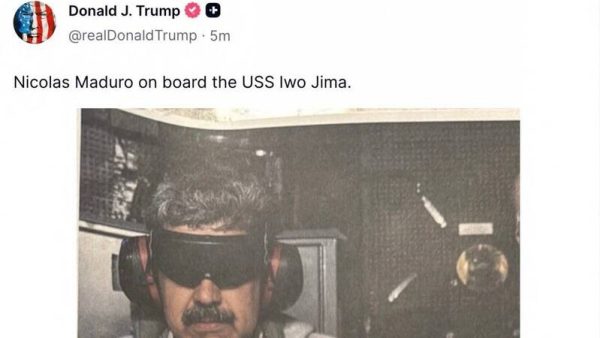
The Ford’s journey to the Middle East began in the Caribbean, where it had served as the centerpiece of Operation Southern Spear, the military operation that resulted in the detention of Venezuelan President Nicolás Maduro in January. For more than two decades, Venezuela had survived sanctions, diplomatic isolation, and rhetorical threats from Washington. Maduro’s capture ended that pattern and sent a signal that the Trump administration is willing to move from pressure to direct action against regimes it has spent years merely containing.
For Tehran, the lesson was legible. The same carrier group that helped topple a long-standing adversary in Latin America was now heading toward Iranian waters.
Against the backdrop of the military buildup, the United States and Iran have held two rounds of indirect nuclear negotiations, mediated by Oman’s foreign minister, Badr bin Hamad Al Busaidi. The first round took place in Muscat, Oman, on February 6. The second concluded in Geneva on Feb. 17 and 18.
Iran’s foreign minister, Abbas Araghchi, said after the Geneva round that the two sides had reached “broad agreement on a set of guiding principles” and that he considered the talks to have made “good progress.” The White House offered a cooler assessment. Press Secretary Karoline Leavitt said “a little progress” had been made but that the sides remained “very far apart on some issues.”
The central sticking point is enrichment. Washington has demanded “zero enrichment” of uranium on Iranian soil. Iran has rejected this outright. Araghchi told CBS that Iran’s nuclear program is a matter of national “dignity and pride” and that Tehran would not surrender technology its scientists developed independently over two decades of sanctions and the targeted killings of Iranian researchers.
He has signaled willingness to discuss reducing enrichment levels and exporting part of Iran’s stockpile of highly enriched uranium, which the International Atomic Energy Agency estimates at more than 440 kilograms enriched to up to 60 percent purity, a small technical step from the 90 percent considered weapons-grade.
Trump’s envoys, Steve Witkoff and the president’s son-in-law Jared Kushner, have told Araghchi that while the official U.S. position is zero enrichment, Washington is willing to consider a proposal involving “token enrichment” if Iran can demonstrate it blocks every path to a nuclear weapon. Araghchi was asked to submit a detailed written counterproposal within days.

A third round is set for Thursday in Geneva, possibly the last before strikes
Oman confirmed on Sunday that a third round of talks will take place in Geneva on Thursday, Feb. 27. Senior U.S. officials have described this as likely the last diplomatic window before military action. Axios reported that the current push is the final chance Trump will give Iran before authorizing what officials described as a “massive U.S.-Israeli military operation” that could directly target Supreme Leader Khamenei.
Trump himself has escalated his rhetoric in recent days. On Feb. 18, he posted on Truth Social that if Iran does not make a deal, the United States could use the Diego Garcia airbase in the Indian Ocean and RAF Fairford in England “in order to eradicate a potential attack by a highly unstable and dangerous regime.” On Feb. 20, asked about limited strikes, Trump told reporters: “I guess I can say I am considering that.”
Iran’s response has been defiant. On Feb. 17, while Araghchi’s team was negotiating in Geneva, Khamenei delivered a warning in Tehran: “More dangerous than the aircraft carrier is the weapon that can send it to the bottom of the sea.” Iranian President Masoud Pezeshkian struck a more measured tone on Sunday, saying the talks had yielded “encouraging signals” but that Tehran had “made all necessary preparations for any potential scenario.”
Iran’s foreign ministry spokesman, Esmaeil Baghaei, said Monday that any U.S. attack, “including limited strikes,” would be considered “an act of aggression” and that Iran would respond “ferociously” as a matter of self-defense. He dismissed reports of an interim deal, saying speculation about a temporary arrangement “has no basis.”
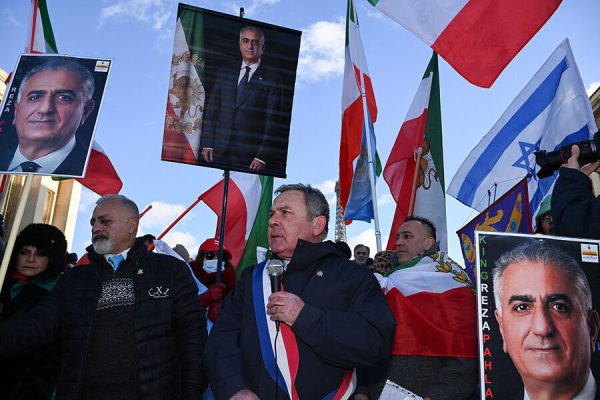
The external military threat coincides with severe internal instability. Mass protests have swept Iran since late 2025, and a second consecutive day of student demonstrations took place across Tehran this week. The U.S.-based Human Rights Activists News Agency estimates that at least 7,015 people were killed in the regime’s crackdown on the earlier wave of nationwide protests. Khamenei blamed the unrest on the United States and on Trump personally.
The protests have weakened the regime’s domestic legitimacy at precisely the moment it faces the most serious external threat in its history. Some European leaders, including German Chancellor Friedrich Merz, have suggested that Iran’s leadership is in its “final days and weeks.” The chief of staff of the Israeli military has estimated that war could begin within two weeks to two months.
Trump’s centralized decision-making keeps all sides guessing
Authority over American foreign policy under the Trump administration is concentrated to an unusual degree in the presidency. Strategic ambiguity functions as a deliberate tool: by keeping decisions opaque and centralized, Washington forces both allies and adversaries to calibrate their actions based on signals from a single, unpredictable executive center.
That concentration creates flexibility. Trump can escalate or pull back without extended interagency deliberation. His threats carry weight precisely because no institutional guardrails are visible. For Tehran, the usual methods of reading American intentions, through congressional debates, Pentagon leaks, and State Department signaling, provide less predictive value than under previous administrations.
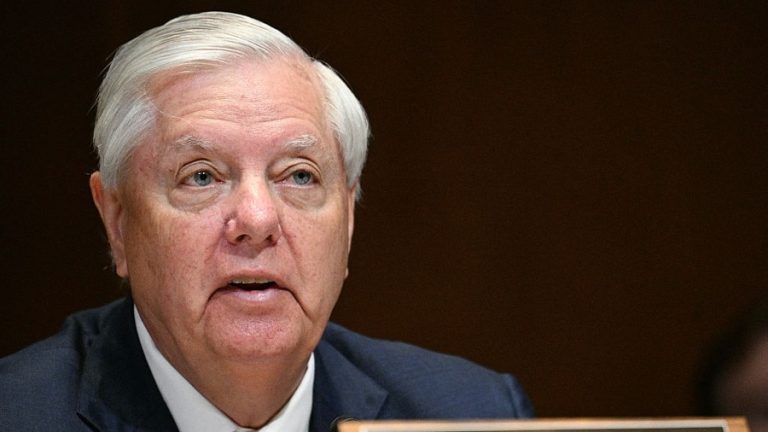
The same dynamic, however, generates instability. Senator Lindsey Graham has publicly urged Trump to ignore advisers counseling patience, arguing that “the consequences of letting evil go unchecked” outweigh the risks of military entanglement. Trump’s own advisers say the president could order strikes at any time but that many on his team are currently urging diplomacy. Top House Democrats, including Representatives Gregory Meeks, Adam Smith, and Jim Himes, have warned that strikes without congressional authorization would be unconstitutional and could spiral into a wider regional conflict.
The equilibrium is narrow. Washington has assembled the military capability to strike Iran and is giving Tehran days, not weeks, to produce a proposal that satisfies American demands on enrichment, uranium stockpiles, ballistic missiles, and support for armed proxy groups. Iran has signaled a willingness to negotiate on nuclear issues but has refused to discuss its missile program or its regional network of militias. The regime’s internal divisions, between officials who see negotiation as survival and hardliners who view compromise as capitulation, make the outcome difficult to predict.
What is clear is that the current moment will not last. Thursday’s talks in Geneva will either produce a framework that gives both sides a reason to step back from the brink, or they will fail, and the largest American military buildup in the Middle East in over two decades will find its purpose.
The views expressed are solely those of the author.
By Dong Fang