Zhou Enlai served as the Chinese Communist Party’s prime minister for 26 years, and to this day many Chinese people remember him as a compassionate moderate who quietly softened Mao Zedong’s worst impulses. The historical record tells a very different story. Insider memoirs, defector accounts, and declassified documents paint a picture of a man who survived at the top of one of the twentieth century’s most violent regimes because he was the most capable enabler a dictator could ask for. He made Mao’s rule function. The cost of that service, paid by the Chinese people, was measured in tens of millions of lives.
During the Cultural Revolution, Mao destroyed virtually every senior CCP leader around him. Zhou was the sole exception. Understanding how he kept his position helps explain why Mao’s dictatorship was so devastatingly effective for so long. Zhou survived by making himself indispensable, through public performances of loyalty so precise they amounted to political art, and through a private willingness to sacrifice anyone and anything, including his own family, his allies, Chinese territory, and entire populations, to remain at Mao’s side.
A former Chinese tech executive witnessed three calculated performances in 1966
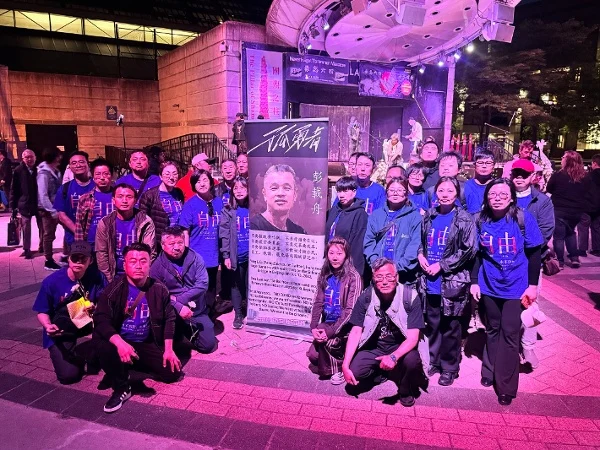
The clearest window into Zhou’s survival methods comes from the memoirs of Wan Runnan, former general manager of the Stone Corporation (Sitong), one of China’s pioneering private tech firms. Wan observed Zhou at close range during three events in August 1966, at the height of the Cultural Revolution’s opening frenzy. He later fled China after the 1989 Tiananmen Square massacre.
From these encounters, Wan identified three distinct tactics Zhou used to make himself untouchable: a demonstration of total recall designed to intimidate, a piece of split-second physical choreography that signaled absolute loyalty to Mao, and an act of calculated emotional manipulation aimed at ordinary people. Each performance served a different audience. Together, they explain why Mao could never afford to purge the one man who kept the machinery of dictatorship running smoothly.
Zhou recited 23 days of campus events from memory to intimidate thousands
On Aug. 4, 1966, Zhou addressed a mass rally at Tsinghua University’s East Sports Ground. Wearing a short-sleeved white shirt, he spoke to a crowd of well over ten thousand: Tsinghua faculty, students, staff, and visiting students who had traveled to Beijing as part of the regime’s nationwide “revolutionary exchange” mobilization.
Success
You are now signed up for our newsletter
Success
Check your email to complete sign up
Zhou opened by announcing that the CCP’s Standing Committee, the Party’s top decision-making circle, and Mao himself had dispatched him to take charge of the Cultural Revolution at Tsinghua. What followed left the audience stunned. Without notes of any kind, Zhou recited from memory every significant event that had occurred in the 23 days since the Party’s work teams entered the campus, large incidents and small details alike, all in precise chronological order.
Wan recalled that the sheer volume of information Zhou carried in his mind, and could produce on command, left the crowd in awe. The performance served a harder purpose than merely impressing people. By demonstrating that he already knew everything, Zhou made it clear that no one in the room could lie to him, challenge his account of events, or outmaneuver him on the facts. This was how Zhou operated at every level: total command of information deployed to ensure total control of the room.

When Mao’s successor nearly walked ahead of the dictator, Zhou yanked him back by the jacket
Zhou’s second performance took place on Aug. 18, 1966, the day Mao appeared atop Tiananmen Gate to review Red Guards for the first time. The Tsinghua delegation stood near the Golden Water Bridge, close enough to observe the figures on the balcony clearly.
The CCP had just wrapped up the Eleventh Plenum of its Eighth Central Committee, an internal Party conclave that reshuffled the regime’s power rankings. The most dramatic change: Lin Biao, a gaunt military figure Mao had chosen as his successor, was elevated to the number-two position, while Liu Shaoqi, the Party’s former second-ranking leader, was demoted to seventh. In the CCP’s rigidly hierarchical political theater, the order in which leaders appeared on the balcony had to mirror this new reality down to the step. Walking ahead of the wrong person, even by accident, could be read as a direct challenge to the Party’s power structure.
Mao broke with decades of personal precedent and wore a military uniform. He walked out first, gut thrust forward, at a slow, deliberate pace. Lin Biao followed immediately behind, his steps quick and anxious. Then, as Wan recalled and later confirmed by watching documentary footage, Lin nearly overtook Mao. In that instant, Zhou reached out and grabbed the back of Lin’s military jacket, pulling hard enough to straighten the fabric from collar to hem. Lin stumbled. Only after Mao had advanced a full step ahead did Zhou release his grip. For the rest of the appearance, Lin maintained exactly that one-step distance.
What happened next was even more revealing. Zhou stopped walking. He simply stood still. Because he stopped, no one behind him dared pass him. He waited until Mao and Lin had moved seven or eight paces ahead before leading the remaining entourage forward. In a matter of seconds, and in full view of a massive crowd, Zhou had enforced the Party hierarchy, demonstrated that he was the one who kept Mao’s supremacy visually intact, and reminded every leader behind him that he controlled the pace and order of their access to power. In a dictatorship, physical proximity to the dictator is the most visible form of political currency. The person who polices that proximity holds enormous power of his own.
How one rainstorm performance bought a lifetime of political protection
Zhou’s third performance came on Aug. 22, 1966, when he returned to Tsinghua for another mass meeting. A heavy rainstorm broke out before the event. Learning that part of the crowd had already entered the open-air venue, Zhou arrived wearing an old gray Mao suit and insisted on proceeding despite the downpour. The makeshift stage had no rain cover.
He stood in the rain for three full hours. When people tried to hold an umbrella over him, he refused, insisting he would endure the same conditions as the students and teachers in the audience. The crowd began chanting in rhythm: “Prime Minister, use the umbrella! Prime Minister, use the umbrella!” Wan judged that many faces in the audience that night showed rain mixed with tears.
What Zhou actually said that evening was beside the point. Wan observed that the content of the speech was irrelevant. Zhou was investing three hours of visible physical suffering to purchase something far more valuable: emotional loyalty from thousands of people who would then make it politically costly for anyone, Mao included, to move against him.
This was the third leg of Zhou’s survival strategy. The memory display controlled elites by demonstrating omniscience. The jacket grab controlled rivals by enforcing hierarchy. The rainstorm controlled the masses by manufacturing devotion. Zhou had made himself the man everyone needed and no one dared challenge.
Zhou’s survival kept Mao’s killing machine running for decades
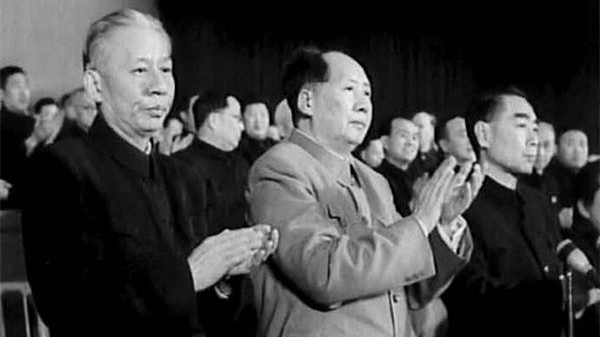
Zhou’s ability to remain at Mao’s side for decades was a catastrophe for China. Every year that Zhou survived meant another year in which Mao’s dictatorship had its most capable administrator keeping the system running. Zhou enabled Mao. The scale of what that enablement produced is staggering.
Throughout the Cultural Revolution, Zhou maintained his position by continuously sacrificing others. He turned over colleagues, allies, and subordinates to Mao’s political persecutions whenever doing so was necessary to protect himself. He did not spare even his adopted daughter or his own younger brother. Mao’s ability to cause the deaths of more than 80 million Chinese people, according to estimates cited by overseas Chinese historians, depended on Zhou’s willing cooperation at every stage. Without Zhou managing the machinery of government, Mao’s destructive impulses would have lacked the administrative infrastructure to kill on such a scale.
Zhou’s complicity extended far beyond passive enablement. The historical record, drawn from memoirs published in Hong Kong, overseas Chinese investigative reporting, and accounts from former CCP insiders, shows that Zhou personally ordered killings, engineered famines, gave away Chinese territory, and sent people to their deaths to protect himself, across a career spanning decades.
Zhou ordered the killing of 37 people to silence a defector. The victims included children.
In 2001, Wang Li, who had served as one of Mao Zedong’s confidential secretaries, published a two-volume, 800,000-character memoir in Hong Kong. The memoir confirmed that in 1931, Zhou personally directed a team of assassins to strangle Gu Shunzhang’s entire family and associates, 37 people in total, and bury their bodies in the courtyards of three separate residences.
Gu had been a senior CCP intelligence operative who defected to the Nationalist government. Zhou’s response was to wipe out everyone connected to him. The victims included small children and a man named Shi Li who had previously saved Zhou’s own life. Zhou had his rescuer killed to eliminate a potential witness. The pattern this episode established would define the rest of his career: no relationship, no debt of gratitude, and no moral boundary would be allowed to interfere with political self-preservation.
More than 10,000 wounded soldiers were executed before the Long March
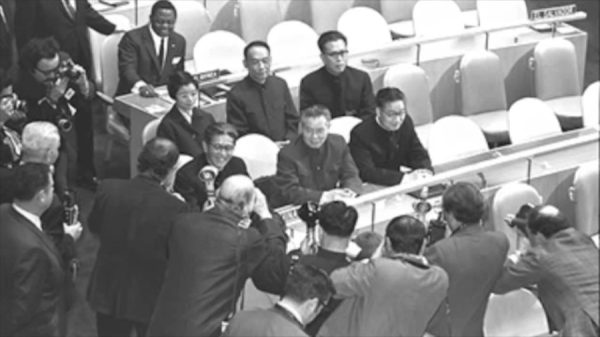
Three years later, in the winter of 1934, Zhou demonstrated the same logic on a vastly larger scale. Before the CCP’s Red Army began the Long March, Zhou, then serving as the Red Army’s chief political commissar, a role that gave him authority over ideological discipline and life-and-death decisions within the ranks, ordered the execution of more than 10,000 people. The victims were wounded and sick soldiers too injured to march, along with individuals deemed “politically unreliable.” This mass killing, known as the “Mass Grave Incident,” was carried out for a single operational reason: to prevent anyone left behind from revealing the army’s planned westward route. Zhou traded ten thousand lives for operational secrecy without, by any available account, a moment of hesitation.
Eleven people died on a plane he knew carried a bomb
Zhou’s willingness to sacrifice others for his own protection surfaced again in April 1955, before he traveled to the Asian-African Conference in Bandung, Indonesia. Zhou received intelligence that a time bomb had been planted aboard the chartered Air India plane, the Kashmir Princess, assigned to carry the Chinese delegation. Rather than warn all passengers and cancel the flight, Zhou secretly changed his own travel plans while ordering the rest of the delegation to board as originally scheduled.
His reasoning was coldly strategic: if he altered the group’s plans, Nationalist Chinese intelligence operatives would realize he had received a tip-off and would adjust their future operations accordingly. To protect the secrecy of his intelligence source and ensure his own safety on subsequent trips, Zhou sent 11 people, including his own subordinates and foreign journalists, to their deaths in the Pacific Ocean. He used their lives as cover for his own escape.
Tens of millions starved while Zhou shipped China’s food to foreign allies
Zhou’s conduct during the catastrophic famine of 1959 to 1961, triggered by the CCP’s disastrous economic collectivization policies, may be the most damning chapter in his record. According to the Hong Kong Cultural Arts Publishing House book “Zhou Enlai Behind the Mask,” which draws on insider accounts, an estimated 44 million Chinese farmers starved to death during this period.
Zhou’s response was to ship food out of the country. He authorized the export of 4.74 million tons of grain at cut-rate prices to the Soviet Union and its Eastern European satellite states. He sent 3,000 rubles worth of goods and 3.5 million British pounds in cash to Hungary. He gifted 500 billion rubles worth of food to East Germany. In the countryside of Anhui province, the famine grew so extreme that parents reportedly traded children with neighbors so that neither family would have to consume its own. Zhou refused to open state granaries. He preferred to let food rot in warehouses rather than distribute it to the dying.
At the same time, Zhou poured China’s scarce resources into foreign aid on an extraordinary scale: $20 billion to Vietnam, $10 billion to Albania, plus massive transfers to Romania, Cambodia, Cuba, Tanzania, and the Palestinian territories under the banner of “supporting world revolution.” Total foreign aid reached 6.92 percent of China’s gross national product, a ratio that exceeded that of the United States, the world’s wealthiest nation, by a factor of more than one hundred. For Zhou, the regime’s international prestige was always worth more than the lives of the people it governed.
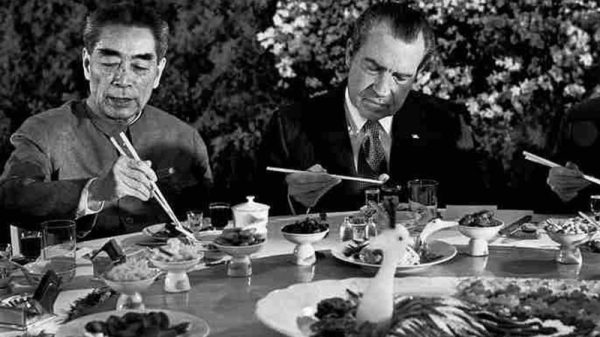
The pattern persisted into the 1970s. Zhou lavished resources on foreign leaders to win diplomatic recognition and persuade governments to sever ties with the Republic of China (Taiwan). He served U.S. President Richard Nixon a full ton of premium abalone. At a time when the average Chinese urban worker’s monthly salary could not buy a single bottle of Moutai liquor, Zhou gifted Nixon 20 tons of the prized Guizhou spirit.
Vast stretches of Chinese territory were handed to Burma, Mongolia, and Japan
Zhou’s willingness to sacrifice anything for political advantage extended to Chinese territory itself. He orchestrated a series of concessions that served the CCP’s short-term diplomatic goals at the expense of China’s long-term national interests.
To internationalize the Chinese civil war, Zhou arranged for Burma’s government to file a complaint at the United Nations accusing the Republic of China (Taiwan) of violating Burmese sovereignty. As part of this arrangement, he ceded Jiangxinpo, a fertile region of Yunnan province roughly the size of Anhui province, to Burma.
To ingratiate the regime with the Soviet Union, which the CCP treated as a senior patron during that era, Zhou personally signed the “Sino-Mongolian Friendship Agreement” with Outer Mongolian separatists and presided over the ceremony that transferred sovereignty over Outer Mongolia, formalizing the loss of a vast territory that had historically been part of China.
To drive a wedge between Japan and the United States, Zhou promoted the claim that the Ryukyu Islands belonged to Japan. This policy directly created the ongoing Diaoyu Islands (Senkaku Islands) territorial dispute, allowed Japan to exploit oil and gas resources in the East China Sea for decades, and constrained China’s maritime strategic position in the region for generations.
The CCP crushed Tibet after Zhou personally lured the Dalai Lama back
Zhou’s duplicity found one of its clearest expressions in Tibet. In the 1950s, he traveled to India three times to persuade the Dalai Lama to return to China, offering lavish promises of autonomy and religious freedom. By the late 1950s, those promises had been discarded entirely. Zhou ordered the brutal suppression of Tibetans who rose up against CCP occupation: demolishing monasteries, publicly denouncing monks, destroying Buddhist statues, and burning religious texts.
In the mid-1960s, he dispatched Red Guards into Tibet with explicit orders to “smash the lama system completely.” The Panchen Lama, Tibet’s second-highest religious leader, was subjected to public humiliation sessions and forced to eat human excrement. The man who had personally courted Tibet’s spiritual leaders with charm and reassurance oversaw the systematic destruction of their religion, their institutions, and their way of life.

The ‘beloved prime minister’ died in terror of what he had done
Only as death approached in the mid-1970s did Zhou appear to grasp that the truth about his career would eventually surface. Fearing that political enemies would desecrate his remains, he left his wife Deng Yingchao a set of final instructions: no ashes preserved, no tomb built, no burial anywhere near Zhongnanhai, the CCP’s walled leadership compound in Beijing. The man who had spent his career projecting calm authority died in fear of what the people he had helped oppress might do to his corpse.
The three performances that Wan Runnan witnessed in August 1966, the memory display, the jacket grab, the rainstorm, were the polished surface of a method built entirely on betrayal. Zhou’s genius was making dictatorship look like governance, making complicity look like moderation, and making a lifetime of cruelty look like service. The “beloved prime minister” was the most skilled enabler of the twentieth century’s deadliest regime, and millions of people, inside China and out, still believe the performance was real.