Oman’s foreign minister declared “significant progress” after the third round of U.S.-Iran nuclear talks in Geneva on Feb. 26, 2026, but the diplomatic window is closing fast. President Donald Trump gave Iran a 10-to-15-day deadline to reach a deal, two aircraft carrier strike groups are circling the Persian Gulf, and an estimated 40 to 50 percent of America’s globally deployable air power now sits within striking distance of Iranian territory. Inside Iran, university students are chanting for the death of Supreme Leader Ali Khamenei, and the regime’s security forces are struggling to contain the most sustained unrest since the 1979 revolution.
Oman’s foreign minister, Badr al-Busaidi, who mediated the Geneva session, said the two sides had exchanged “creative” proposals and agreed to send technical teams to Vienna for follow-up discussions the following week. He offered no specifics on what “significant progress” meant in practice.
The talks were structured as two separate sessions of indirect negotiation. Iran’s foreign minister, Abbas Araghchi, met with al-Busaidi, who then relayed positions to the American delegation led by Witkoff and Trump’s son-in-law, Jared Kushner. Araghchi described the session as “one of our most intense and longest rounds of negotiations” in an interview with Iranian state television, adding that Iran had “clearly spelled out” the steps that need to be taken. He provided no further detail.
The Wall Street Journal reported that Witkoff and Kushner demanded Iran dismantle the three nuclear facilities struck by U.S. bombers last June, at Fordow, Isfahan, and Natanz, and hand over all remaining enriched uranium to Washington. The Americans also insisted that any agreement be permanent, with no equivalent of the “sunset clauses” that allowed restrictions under the 2015 Joint Comprehensive Plan of Action to expire over time. Iran rejected these demands, the Journal later reported. How far Washington is willing to compromise remains unclear.
Trump used his State of the Union to build a public case for strikes
On Tuesday evening, Feb. 24, Trump addressed a joint session of Congress and warned that “Iran is working to build missiles that will soon reach the United States of America,” adding that Tehran harbored other “sinister ambitions.” He told lawmakers he preferred diplomacy but had not yet heard Iran say the “secret words: ‘We will never have a nuclear weapon.'”
Success
You are now signed up for our newsletter
Success
Check your email to complete sign up
The speech marked the first time Trump laid out in detail the rationale that could justify military action, a signal that his administration may be preparing American public opinion for war if negotiations fail. The White House did not immediately comment on the Geneva talks, but Secretary of War Pete Hegseth and General Dan Caine, the chairman of the Joint Chiefs of Staff, were seen leaving the presidential residence around the time the Geneva session concluded.
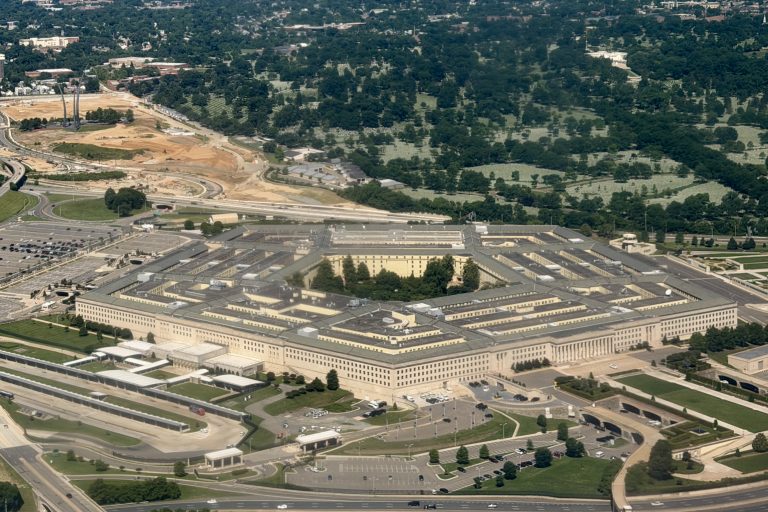
The Pentagon has assembled its largest Middle East force since the 2003 Iraq invasion
The scale of the U.S. military buildup dwarfs any deployment to the region in more than two decades. Two carrier strike groups, the USS Abraham Lincoln and the USS Gerald R. Ford, are operating in the Arabian Sea and eastern Mediterranean respectively, accompanied by at least 14 warships including guided-missile destroyers. Waves of F-35 and F-22 stealth fighters, along with F-15E Strike Eagles and F-16s, have been pre-positioned at bases across the region. F-22 Raptors have been deployed to Ovda Airbase in southern Israel, the first time the U.S. has stationed offensive combat aircraft on Israeli soil.
Robert Pape, a political scientist at the University of Chicago who specializes in air power and security affairs, estimated that the forces now concentrated around Iran represent roughly 40 to 50 percent of all American air power deployable worldwide. “The United States has never deployed this much force against a potential adversary without launching strikes,” Pape wrote on social media.
Unlike previous buildups, this one includes no ground troop reinforcements. The force structure is designed for a sustained, intensive air campaign without a land invasion. Patriot and THAAD missile defense systems have also been moved into position to defend against Iranian ballistic missile retaliation, a near-certainty after Tehran struck the U.S. command hub at al-Udeid Air Base in Qatar following last June’s strikes on its nuclear sites.
Trump set the clock running on Feb. 19, giving Iran “ten to fifteen days” to decide. He warned that if negotiations fail, the U.S. would not rule out “limited strikes.”
Iran’s regime faces collapsing defenses and a population in revolt
Analysts say Iran’s willingness to engage in diplomacy under extreme pressure reflects the fragility of the regime’s position on two fronts: military and domestic.
Militarily, Iran has not recovered from the June 2025 strikes. During Israel’s 12-day air campaign, Israeli jets destroyed much of Iran’s air defense network. Tehran can no longer mount a credible defense against U.S. or Israeli air power. Secretary of State Marco Rubio said on Feb. 25 that while Iran is not currently enriching uranium, “they’re trying to get to the point where they ultimately can.” Iran has blocked International Atomic Energy Agency inspectors from visiting the bombed sites, and satellite imagery analyzed by the Associated Press shows reconstruction activity at two of the three facilities.
On the domestic front, the regime confronts its worst crisis of legitimacy in decades. Nationwide protests that erupted on December 28, 2025, over soaring inflation and collapsing living standards quickly evolved into an open revolt against the Islamic Republic itself. The government’s response was the bloodiest crackdown in modern Iranian history. Human rights organizations have confirmed at least 7,000 deaths during the January suppression, and are working to verify reports of thousands more. Authorities cut all internet access on January 8 and deployed live fire against crowds, shooting protesters in the head and torso.
The crackdown temporarily suppressed the protests but could not extinguish them. When Iranian universities reopened for the new semester on Feb. 21, the 40-day mourning period for those killed in January, a date of deep cultural and political significance in Iranian tradition, had arrived. Students transformed campuses across Tehran, Isfahan, and Mashhad into scenes of open defiance.
Students are chanting for Khamenei’s death and calling for the exiled prince to return
At Sharif University of Technology, one of Iran’s most prestigious institutions, social media video showed rows of marching students denouncing Khamenei as a “murderous leader.” In an extraordinary moment, demonstrators chanted for the return of Reza Pahlavi, the exiled son of Iran’s last shah, who was overthrown in the 1979 revolution. At Beheshti University, students burned a portrait of Khamenei while chanting, “This is the year of blood, Seyed Ali will be overthrown.” Protests also erupted at Amirkabir University, Tehran University, Isfahan University of Technology, and Ferdowsi University in Mashhad.
The Basij, a paramilitary militia controlled by Iran’s Islamic Revolutionary Guard Corps, attacked students at several campuses. At Sharif University, clashes turned physical, with students throwing rocks at Basij members who attempted to storm campus grounds. By the fourth consecutive day of protests, on February 24, sit-ins, class boycotts, and confrontations with security forces were reported at more than a dozen universities nationwide.
The slogans represent a sharp ideological shift from the 2022 Mahsa Amini protests. Where those demonstrations centered on women’s rights and personal freedom, the current wave targets the Islamic Republic as a system, with chants ranging from “death to the dictator” to calls for a secular republic, and, for the first time at this scale, open demands for a monarchist restoration.
The coming days will determine whether diplomacy or war prevails
Ali Vaez, the Iran project director at the International Crisis Group, warned that “if there is no breakthrough in this round of negotiations, the risk of conflict in the coming days will rise significantly.” He noted that the fact that the American delegation did not walk away immediately when Iran presented its proposals was a positive sign, but the gap between Washington’s demands and Tehran’s red lines remains wide.
Iran insists it will discuss only nuclear issues and maintain its right to enrich uranium under international oversight. The U.S. wants Iran to abandon enrichment entirely, dismantle its missile program, and end support for armed groups like Hamas and Hezbollah. Technical talks in Vienna are scheduled for next week. Omani foreign minister al-Busaidi is traveling to Washington to brief Vice President JD Vance and other officials on the Geneva session.
The regime in Tehran is caught between impossible pressures. Capitulating to American demands would humiliate a government already hemorrhaging legitimacy at home. Refusing to deal risks a military campaign that Iran, with its shattered air defenses and restive population, may be unable to survive. The next 10 days will determine which path prevails.
By Tian Jingxin