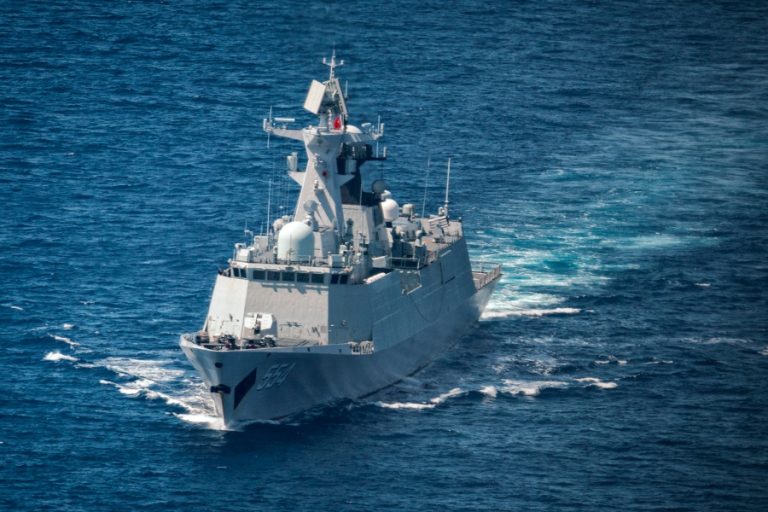
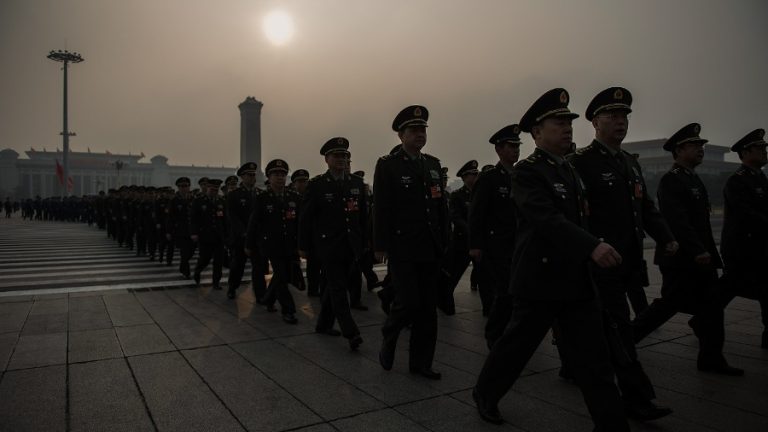
Recently, the air and sea situation around Taiwan has once again escalated, with frequent activities by Chinese military aircraft and ships, accompanied by airborne balloons crossing the Taiwan Strait median line and our Air Defense Identification Zone (ADIZ). Taiwan’s military continues to strengthen monitoring and response, maintaining regional security and defense capability through layered air defense and maritime surveillance measures.
According to the “PLA Activity Map Near Taiwan Strait Airspace,” yesterday from 16:45 to 17:05, the military detected one Chinese airborne balloon crossing the median line 67 nautical miles northwest of Keelung, at an altitude of 20,000 feet, which eventually disappeared over the Taiwan Strait.

The Ministry of National Defense (MND) announced yesterday that, in the past 24 hours, eight Chinese military aircraft, six Chinese naval vessels, one public-service ship, and two Chinese airborne balloons were detected. Among them, six Chinese aircraft crossed the median line into central and southwestern airspace, continuing activity around the Taiwan Strait.
The military stated that over the past few days, at least seven PLA naval vessels appeared in waters surrounding Taiwan, passing by the eastern coast and toward the South China Sea, and at one point crossed the Taiwan Strait median line into areas of interest. At the same time, abnormal flights of Chinese airborne balloons entered Taiwan’s ADIZ. The military is closely tracking these movements using airborne radar, shipborne sonar, and ground-based detection systems, maintaining proper distance and air defense monitoring to avoid unnecessary misjudgments while ensuring a strong defense posture.
The military emphasized that although these recent military and aerial activities have not led to direct confrontation, they demonstrate provocative intentions toward Taiwan’s air and maritime borders. Relevant units have dispatched patrol aircraft, destroyers, and shore-based radar systems for around-the-clock monitoring, and all unusual flight paths are being recorded and analyzed to provide factual evidence for international forums.
Success
You are now signed up for our newsletter
Success
Check your email to complete sign up
Military officials noted that the behavior patterns of airborne objects from across the strait differ from those of traditional Chinese aircraft, potentially attempting to use lower-threat “soft power” probes to test Taiwan’s responses and defense deployments. Such incidents not only affect cross-strait military trust but may also signal the potential for more complex military activities in the future. The MND is further enhancing joint force coordination, strengthening air defense, electronic intelligence gathering, and maritime defense capabilities to respond to diversified threats.
Currently, all military surveillance and countermeasures units remain on high alert and are sharing relevant information with allies through international security cooperation. Commanders stressed that Taiwan’s defense posture is solid and stable, ensuring that national sovereignty and regional peace remain undisturbed.