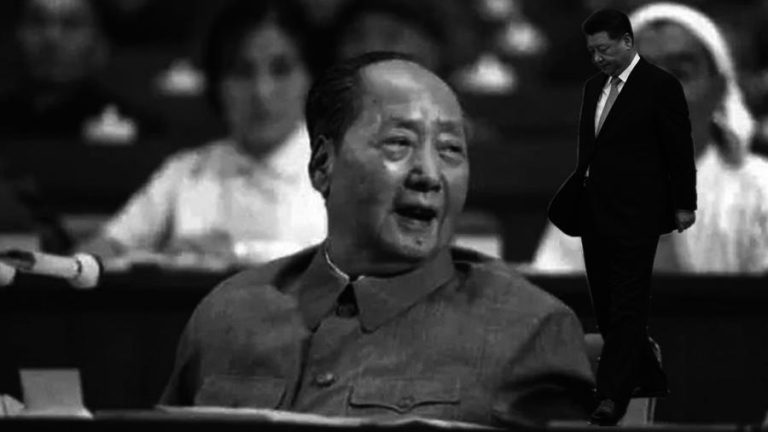
In its conventional sense, a coup is an extraordinary move to overturn a political order, usually by seizing supreme power from those who hold it. The “coups” discussed here were different. They were initiated not by challengers, but by the supreme leader himself, who used the authority he already commanded to remake the state system and redirect the country’s political course according to his own vision.
In the history of the People’s Republic of China, three leaders exercised this capacity to fundamentally reorder the system: Mao Zedong, Deng Xiaoping, and Xi Jinping. Their eras share structural continuities rooted in the Chinese Communist Party’s monopoly on power. Yet they diverge in direction and intensity, reflecting differences in political temperament and strategic choice.
Mao pressed forward with what he regarded as orthodox Marxism and a comprehensive socialist transformation. Deng preserved one-party rule while introducing market mechanisms to stabilize the system. Xi has tightened ideological discipline and centralized authority, reinforcing socialism as a framework for national strength and international positioning.
What made such sweeping reversals possible was control of the military. The Party’s founding dictum — that “political power grows out of the barrel of a gun” — became the operating logic of the state after 1949. The armed forces safeguarded not only the regime, but the authority of the leader at its apex. Mao exercised near-total command over the military, moving China from centralized rule toward a form of total political control.
Deng institutionalized military leadership through the chairman responsibility system of the Central Military Commission, grounding authority in the armed forces while avoiding overt lifelong rule. Xi, lacking Deng’s revolutionary standing, has consolidated power through intensified Party discipline and reinforced command over the military establishment.
Success
You are now signed up for our newsletter
Success
Check your email to complete sign up
This article examines three political upheavals initiated by Mao: the abandonment of the New Democracy framework, the transformation of the Party-state into a system centered on personal authority, and the rupture with the Soviet Union followed by a strategic pivot toward leadership of the developing world. Each episode reshaped China’s internal order and altered its position in global politics.

The first five-year transformation: from republic to party-state
Mao pursued two interconnected goals: building a socialist system and securing undisputed authority. A sustained New Democracy arrangement, with plural political participation and competitive institutions, would have constrained personal dominance. Without durable control, Mao could not guarantee the implementation of his preferred ideological path. The political campaigns of the 1950s unfolded within this tension.
In June 1953, Mao introduced the general line for socialist construction. Behind the First Five-Year Plan lay a sweeping political restructuring. Agricultural collectivization accelerated. Private land ownership was replaced by collective structures. Advanced cooperatives absorbed individual producers. In industry and commerce, “public-private partnerships” transferred operational control and resource allocation into the state planning apparatus. By the end of 1956, private enterprise had largely been folded into state supervision.
The unified purchase and sale system concentrated grain and key resources in state hands, ensuring the accumulation required for heavy industry while extending administrative reach into everyday economic life. Labor and assets in urban industry and commerce came under direct state authority. The scope for independent economic activity narrowed sharply. The shift marked a structural departure from the limited pluralism envisioned under the 1949 Common Program.
Dissent surfaced both within the Party and among intellectuals. Members of the Chinese People’s Political Consultative Conference called for meaningful participation in governance rather than symbolic consultation. Meanwhile, Nikita Khrushchev’s denunciation of Stalin unsettled ideological orthodoxy across the socialist bloc. Mao responded with the Anti-Rightist Movement. According to declassified central archives cited by Wikipedia, more than 3.17 million people were officially designated as rightists nationwide, and more than 1.43 million others were labeled “middle-rightists” and subjected to struggle and persecution. Political consultation receded into formality. The emerging system consolidated Party supremacy across state institutions.
The upheavals of 1953 to 1958 produced enduring consequences. Political, economic, and cultural elites associated with the Republican era lost institutional footing and independent space. The famine that followed the Great Leap Forward led to tens of millions of abnormal deaths in rural China. The structures forged during these years — collective land ownership, the urban-rural divide, Party dominance over the National People’s Congress, and the precedence of Party rules over the state constitution — persisted into subsequent decades.

The Cultural Revolution: from party governance to personal rule
In August 1966, Mao issued his big-character poster urging followers to “Bombard the Headquarters.” Internal disagreements were framed as a struggle between opposing lines. Rather than resolve disputes through established Party congresses or state institutions, Mao mobilized mass movements. Red Guards targeted senior officials, including Liu Shaoqi. The Party’s internal hierarchy was overturned through political campaigns rather than formal procedure.
Revolutionary committees replaced existing administrative organs. Authority centered increasingly on the leader’s directives. Institutional constraints weakened. The dual structure of Party and state narrowed into a system dominated by a single political axis. The position of state chairman was abolished. Governance operated through campaign-style mobilization and centralized command.
The Cultural Revolution disrupted political administration, economic management, education, and social order. When it ended, Mao remained the sole decisive authority. The episode recast Party rule into a structure defined by personal supremacy.

The break with the Soviet Union and the turn to the developing world
The Soviet Union had been both patron and model in the early years of the People’s Republic. Khrushchev’s repudiation of Stalin and the broader de-Stalinization campaign strained relations. Soviet proposals for joint military arrangements heightened concerns in Beijing about sovereignty and ideological direction. By 1960, Soviet experts withdrew, and cooperative agreements were terminated.
Tensions escalated into border clashes in 1969. The Soviet Union reportedly prepared contingency plans for military action and informed the United States. Washington discouraged escalation, and the Sino-Soviet split became a defining element of Cold War geopolitics.
The rupture carried domestic and international implications. Industrial programs reliant on Soviet assistance stalled. Youth mobilization during the Cultural Revolution altered China’s social structure. Diplomatically, Mao opened channels to the United States while cultivating influence among developing countries. China extended economic assistance abroad even amid domestic shortages, positioning itself as a leader within the Third World. Elements of this external orientation would echo in later policy frameworks.
The Party’s institutional design — particularly its absolute command over the military — enabled successive systemic reconfigurations. Under Mao, these transformations redefined the political and economic order on a national scale.
The views expressed are solely those of the author.
By Wu Zuolai