For centuries, traditional Chinese civilization profoundly shaped Japan’s cultural landscape. The architectural grandeur of Nara’s Tōshōdai-ji and Tōdai-ji temples, and Kyoto’s Kiyomizu-dera, still bears the imprint of China’s Tang dynasty aesthetics. Their sweeping roofs and cosmic symmetry echo an era when Japan looked to Chang’an, the capital of the flourishing Tang Empire, as a civilizational model.
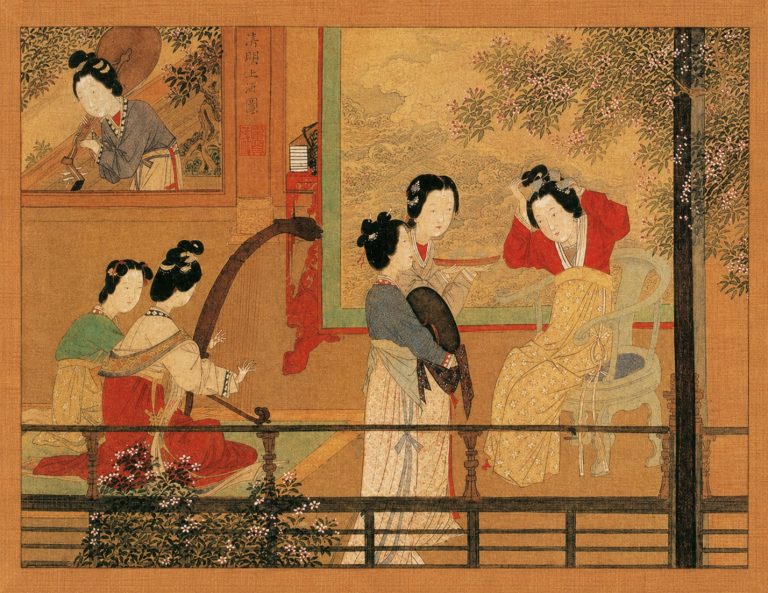
In the 7th and 8th centuries, Japanese envoys traveled to China and encountered not only a sophisticated political system but a cosmopolitan society. Persians, Arabs, and Africans walked the same streets as Chinese scholars and officials. Japan adopted Chinese writing, Confucian ethics, Buddhist philosophy, and principles of city planning rooted in the concept of harmony between heaven and humanity.
Capitals such as Heijō-kyō (modern Nara) and Heian-kyō (modern Kyoto) were modeled after Chang’an, reflecting old Japan’s admiration for what was then the height of civilization.
RELATED: ‘A Triumph of Traditional Chinese Culture’: Shen Yun Enchants Audiences in Japan

A shared civilizational memory
Over time, Japan preserved elements of that heritage with remarkable care. Classical texts such as The Analects of Confucius continued to shape education and governance. Yet modern geopolitical tensions have complicated public perceptions of China. While interest in classical Chinese history once flourished widely in Japan, contemporary political realities have created distance between the two countries.
Success
You are now signed up for our newsletter
Success
Check your email to complete sign up
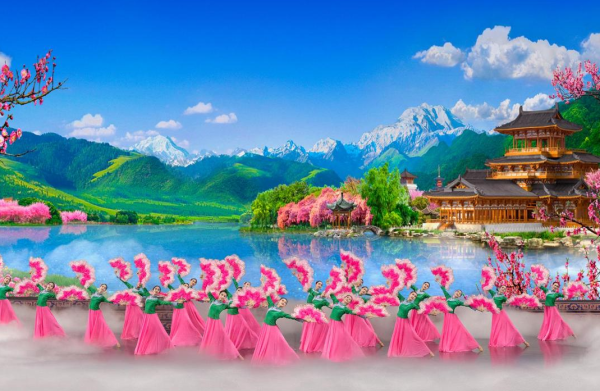
Against this backdrop, performances by Shen Yun Performing Arts in Japan have prompted renewed reflection on traditional Chinese culture. Many in Japan’s cultural and business communities describe the production as a vivid rediscovery of a civilization that once deeply inspired their own.
Professor Koiwa Ichiro of Kanto University remarked, “The performance was not merely a display of dance technique; it conveyed an extraordinarily rich historical and cultural depth. I thoroughly enjoyed it. One of today’s programs featured a story from Romance of the Three Kingdoms, which I watched with great delight. The performance made me feel that ancient values cannot be altered at will. Although modern society has undergone many innovative changes, I strongly feel that the spiritual principles handed down through generations must not be forgotten.”

Art, spirituality, and rectitude
Koike Seiji, an international culture editor at public broadcaster NHK, described the production as “a window into Chinese culture,” adding, “The content was exceptionally rich and truly wonderful. I gained a deeper understanding of the inspiration behind the saying [known both in Chinese and Japanese] ‘Li Bai was able was compose a hundred poems after drinking a cup of wine.’”

For writer Ishiyama Ryo, the contrast with contemporary mainland performances was striking. “For a long time, I found that performances in mainland China were largely devoted to praising the Communist Party, which felt very strange. Shen Yun, however, made me feel as though I had entered a paradise beyond this world — as if I had really entered the realm of gods and Buddhas. The performance twice reminded the audience about the harms of the theory of evolution and atheism. It suggests that the human world is a place of spiritual cultivation, and that in the end one may return to heaven. China’s history is vast and profound. In terms of its spiritual foundation and depth, Shen Yun demonstrated that China is truly an ancient and magnificent civilization.”
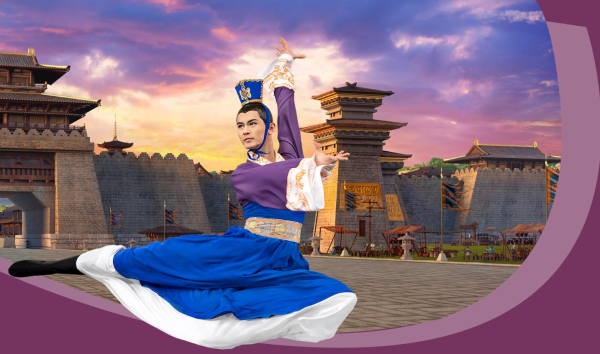
Business leaders echoed similar sentiments. Kawano Akimitsu, president of Eiko Trading Company, said, “These ancient Chinese virtues, the exquisite dance movements — the fact that such art continues to be passed down moved me deeply. It was truly beautiful. Today’s China, influenced by politics, feels vastly different. I sincerely hope that traditional culture can be cherished and preserved. I couldn’t help but think: I truly long to see a China like the one presented in this performance.”
‘The true essence of Chinese culture’
For some, the impact was deeply personal. Yoshioka Akira, CEO of Yokohama Kiko, described his reaction: “The moment the curtain rose, I felt a powerful shock deep within my heart. That feeling continued to resonate until the performance ended.” He added that presenting “five thousand years of Chinese traditional culture through art is deeply significant. This, to me, is the true essence of Chinese culture.”

Others reflected on shared cultural roots. Dentist Hada Norihiro commented, “These dances belong to China. You can truly feel the depth of its historical foundation. It gives me the sense that this is the root of Japanese culture.” Confectionery salon founder Imada Minako expressed surprise: “I never realized that China possesses such a magnificent culture. Today is the first time I truly understood this.”
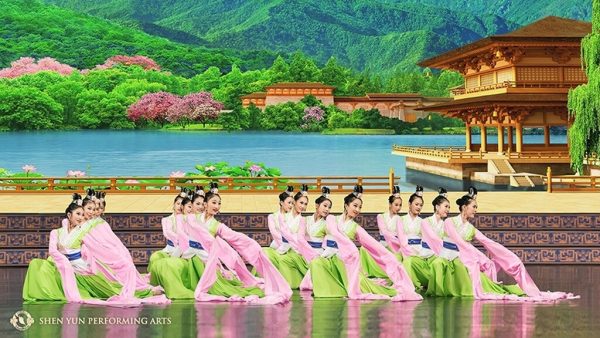
Traditional theater critic Horikawa Toshiko offered a broader perspective: “Overall, it was outstanding — incomparable to other performances. Traditions must be treasured. Only by nurturing them as the roots of culture can branches flourish and continue across generations. A nation’s traditions represent its defining characteristics and identity. Preserving that identity is of utmost importance.”
In an era marked by political strain between Beijing and Tokyo, these reactions suggest that cultural memory runs deeper than contemporary disputes. For many Japanese audience members, the performances rekindled admiration not for modern political narratives, but for a civilizational legacy rooted in moral clarity, reverence for the divine, and artistic refinement.
The recurring sentiment, “I truly long to see a China like this,” speaks to something larger than nostalgia. It reflects a longing for the reemergence of a cultural confidence that once inspired not only China itself, but much of East Asia.