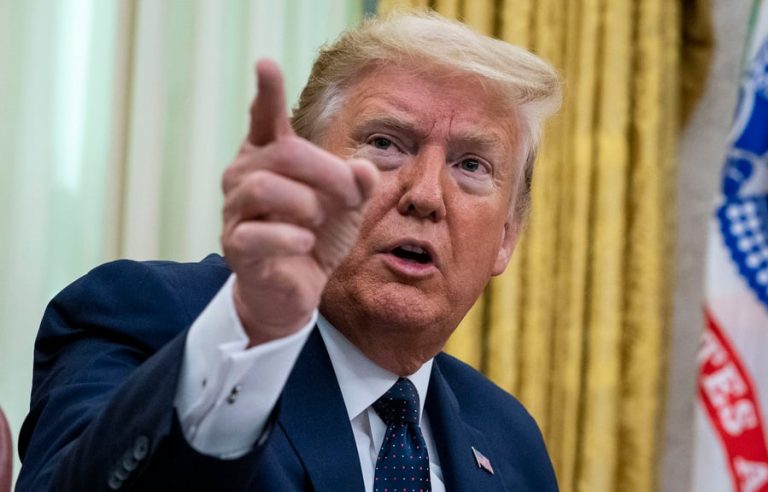
On Feb. 28, the sky over Tehran turned bright with incoming fire. It marked the opening phase of what U.S. President Donald Trump called “Operation Epic Fury,” a strike that reportedly killed Iran’s Supreme Leader Ali Khamenei along with senior commanders in a precision bombing campaign.
The immediate target was Tehran. The strategic signal was directed at Beijing.
In Chinese strategy, there is a phrase: “strike at the mountain to shake the tiger.” The blow lands in one place. The warning is meant for another.
The strike has placed the so-called CRINK alignment under direct pressure.
CRINK refers to China, Russia, Iran, and North Korea. In Western policy circles, the acronym describes a tightening bloc positioned against the U.S.-led order.
Success
You are now signed up for our newsletter
Success
Check your email to complete sign up
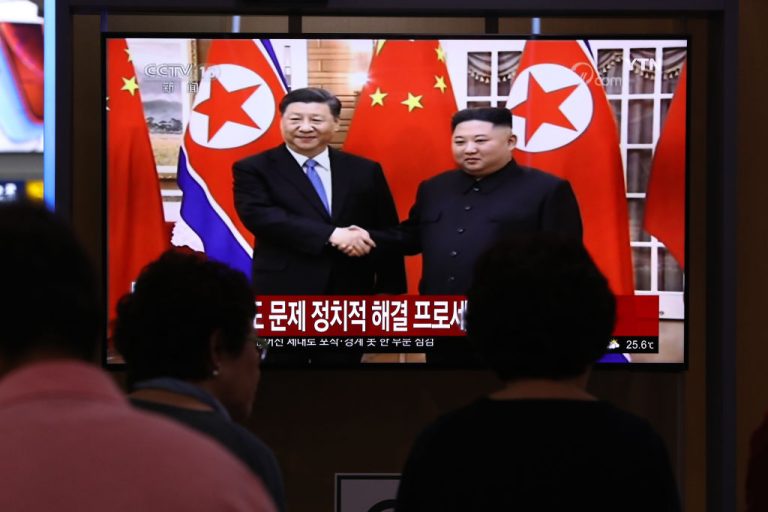
In recent years, the four have expanded coordination through energy trade, military cooperation, technology transfers, and sanctions evasion. Beijing supplied capital and industrial capacity. Moscow provided battlefield force. Tehran projected power through regional proxies. Pyongyang advanced missile and weapons programs.
The arrangement rested on mutual need. It was not an alliance of shared ideology but of shared utility.
Washington did not move against all four simultaneously. It struck the most exposed partner first.
Beijing has long treated Iran as a strategic asset. In 2021, the two governments signed a 25-year comprehensive partnership reportedly valued at $400 billion, centered on energy access and long-term infrastructure investment.
Iran has been a significant crude supplier to China despite sanctions. If leadership disruption affects production and exports, the consequences extend beyond the Middle East.
China imports roughly 70 percent of its oil. Sustained supply instability would tighten domestic energy margins and amplify price pressure.
Chinese infrastructure projects inside Iran now sit in a volatile environment. Rail lines, port facilities, telecommunications networks, and surveillance systems developed by Chinese firms face operational uncertainty in an active strike zone.
Beijing’s public response has emphasized restraint and stability. No military step has followed. For regional actors observing the situation, the message is straightforward: alignment with China does not guarantee intervention.
Russia faces parallel exposure. Iranian drone systems have played a visible role in Moscow’s campaign in Ukraine. If production capacity or transfer routes are disrupted, the operational effect will be immediate.
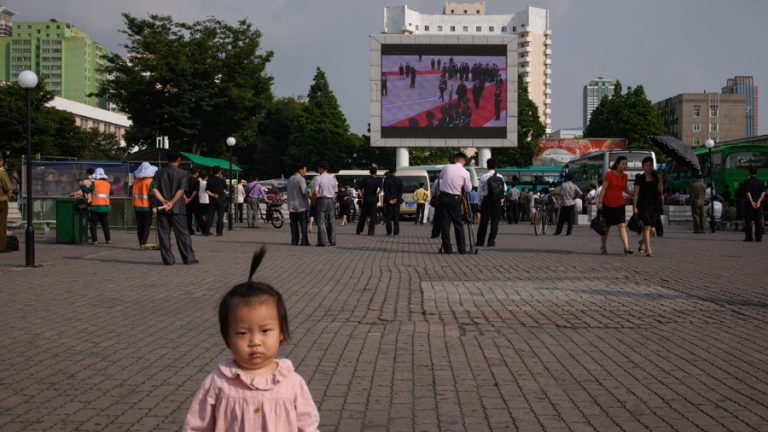
North Korea is watching the precedent. The recent sequence — Nicolás Maduro captured, Khamenei eliminated — underscores the reach of U.S. intelligence and precision strike capability. Hardened compounds and layered security did not prevent decapitation.
For leaders built around personal control, this carries weight.
Elsewhere, political calculations are adjusting. India, long maneuvering within BRICS, has moved closer to Washington in recent weeks.
The practical outcome is narrowing space around Beijing.
If Tehran destabilizes, Moscow strains, and Pyongyang recalibrates, the structure surrounding China thins. What remains is a more direct U.S.–China confrontation without intermediate buffers.
Beijing now faces tighter energy exposure, uncertain overseas investments, and greater scrutiny from states evaluating their own risk.
The strike in Tehran altered more than a leadership hierarchy. It tested the durability of a geopolitical alignment built on convenience. The effects are already visible.
The views expressed are solely those of the author.
By Chen Jing