By Si Yang, Commentary
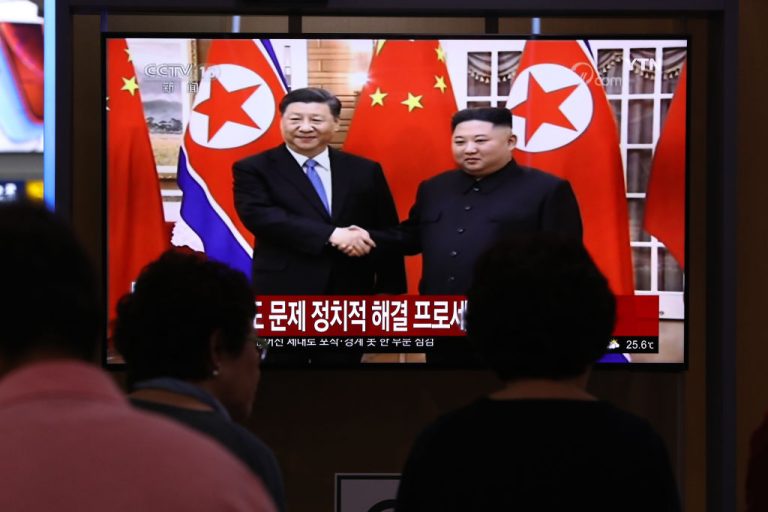
As Chinese leader Xi Jinping returns to Beijing this week after his first visit to Pyongyang in seven years, both Chinese and North Korean state media sought to portray the trip as evidence of an “unbreakable friendship.” Yet behind the carefully choreographed displays of solidarity, analysts say the visit underscored a more complicated reality fraught with tension, including Beijing’s concern over North Korea’s growing closeness with Russia and its desire to reaffirm China’s strategic relevance.
In an article published Monday by North Korea’s NK News, Xi wrote that “regardless of how the international situation changes, the traditional friendship between China and North Korea remains unbreakable.” According to official Chinese summaries of the talks, Kim Jong Un echoed the sentiment, saying the visit demonstrated once again “how unbreakable” bilateral ties remain.
RELATED: Why Beijing and Pyongyang Keep Clinging to Each Other Despite Mutual Distrust
Showcasing an image of unity
But experts suggest Beijing had practical reasons for making the trip. Scott Snyder, president and CEO of the Korea Economic Institute of America, said Xi’s visit appeared aimed at promoting stability in North Korea while reminding Kim Jong Un of China’s enduring importance.
Success
You are now signed up for our newsletter
Success
Check your email to complete sign up
Xi’s visit coincided with the 65th anniversary of the Sino-North Korean Treaty of Friendship, Cooperation and Mutual Assistance, China’s only remaining formal military alliance treaty still in force. For decades, China has served as North Korea’s primary economic lifeline and diplomatic backer, often softening the impact of international sanctions.
According to a 2024 report by the U.S.-based National Committee on North Korea, roughly 95 percent of North Korea’s legal trade depends on China. That dynamic, however, has shifted dramatically since Russia’s invasion of Ukraine in 2022.
Is Beijing losing leverage?
North Korea has reportedly supplied Russia with artillery, munitions and manpower, while Moscow is widely believed to have provided Pyongyang with sensitive military technology in return. South Korea’s Institute for National Security Strategy estimated that North Korea earned between $7.67 billion and $14.4 billion from military exports and troop deployments between August 2023 and December 2025.
RELATED: Xi-Putin Summit Underscores China-Russia Push for Multipolar World Order: Reports
Oriana Skylar Mastro, a fellow at Stanford University’s Freeman Spogli Institute for International Studies, argued during a Center for Strategic and International Studies (CSIS) event on June 5 that Moscow’s renewed engagement with Pyongyang has unsettled Beijing. “They don’t like the North Koreans,” said Mastro. “That’s never been a secret. But the moment Putin went to North Korea and rebuilt close relations, you could see the Chinese starting to panic about their own position.”
She noted that China does not necessarily need to preserve the North Korean regime at all costs, but it wants to avoid instability that could ultimately benefit Washington and Seoul. “Their view is basically: Keep North Korea there, but don’t pay any real price for it,” added Mastro. “They’re not going to become an international pariah in order to protect North Korea.”
‘Evolving strategic triangle’
Patricia Kim, a senior fellow at the Brookings Institution, argued that Kim Jong Un has become increasingly adept at maximizing leverage between Beijing and Moscow. “North Korea is the biggest beneficiary in this evolving strategic triangle,” said Kim. “Both Moscow and Beijing have strong incentives to keep Pyongyang aligned with them.”
Kim added that Xi’s visit was also intended to signal to Russia, the United States and regional actors that China remains North Korea’s most important external partner and source of influence.
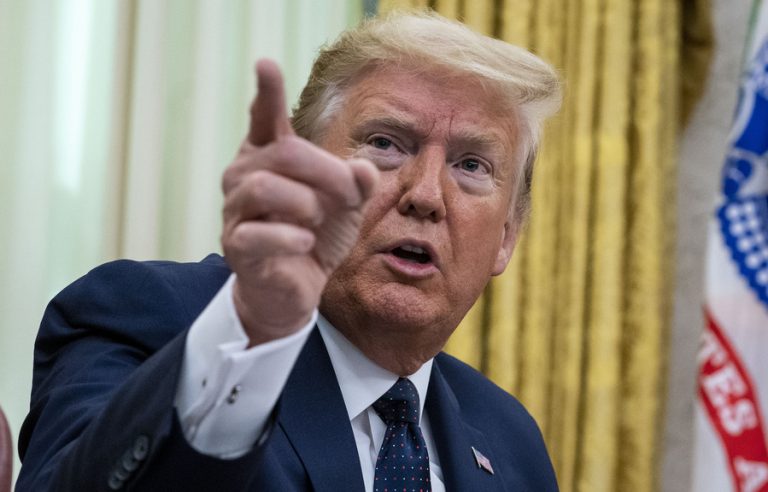
Some analysts further suggest that restoring leverage over Pyongyang could provide Beijing with additional bargaining power should U.S. President Donald Trump seek to revive diplomacy with Kim Jong Un, something Trump has repeatedly expressed interest in doing.
United by interests, not trust
Others, however, see broader strategic coordination behind the visit. Joseph Bosco, a former China specialist in the Office of the U.S. Secretary of Defense, argued that China and North Korea share a common objective in countering the United States and its allies.
Joseph Bosco, a former China specialist in the Office of the U.S. Secretary of Defense, argued that Beijing and Pyongyang share an interest in countering U.S. influence and coordinating their strategic objectives. Bosco has also maintained that China’s opposition to North Korea’s nuclear program has been more rhetorical than substantive.
Xi himself offered only a brief public assessment before departing Pyongyang, saying the visit had enabled both sides to achieve “deeper and more comprehensive mutual understanding” and greater clarity about the future direction of bilateral ties.
While Beijing and Pyongyang continue to proclaim their friendship as “unbreakable,” both capitals are navigating a rapidly evolving strategic landscape in which old assumptions about influence and dependency no longer apply.
Editorial note: Views expressed in this article are the opinions of the author and do not necessarily reflect the views of Vision Times.