By Sheng Xue, Commentary
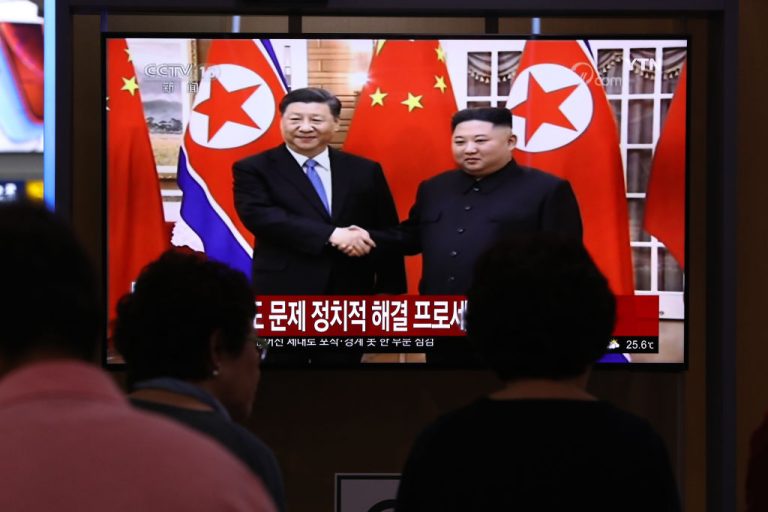
Following Xi Jinping’s two-day visit to Pyongyang, state-run Chinese and North Korean outlets once again celebrated the relationship as one of “unbreakable friendship,” describing the two countries as 唇齿相依 (“as close as lips and teeth”), a traditional Chinese expression meaning a deeply intertwined and mutually dependent relationship.
But beneath the carefully staged ceremonies and displays of political unity is a far more complicated reality. The China–North Korea relationship is not sustained by trust or sentiment. Rather, it is rooted in shared authoritarian instincts, mutual dependence, and a common need to navigate mounting geopolitical pressure while harboring deep suspicions of one another.
To understand why this relationship has endured, we must first recognize that ruling systems in Beijing and Pyongyang derive their legitimacy not from the consent of the governed, but from maintaining centralized control at all costs. In this framework, liberal democratic values and open political systems are not viewed as alternative models of governance, but as challenges to regime survival.
RELATED: Xi Heads to Pyongyang as North Korea Doubles Down on Nuclear Ambitions
Historical roots
Success
You are now signed up for our newsletter
Success
Check your email to complete sign up
This dynamic stretches all the way back to the Korean War. The phrase “as close as lips and teeth” emerged during that conflict as then-Chinese leaders Mao Zedong and Zhou Enlai framed North Korea as China’s strategic buffer. Following North Korea’s invasion of South Korea, the Truman administration intervened under a United Nations mandate to contain the spread of communism in East Asia. Beijing responded by entering the war under the banner of “Resist America, Aid Korea,” helping cement a geopolitical rivalry that continues to shape the region today.
Those experiences forged a lasting political narrative in which the U.S. became the defining external adversary for both regimes. Whether one agrees with that worldview or not, it remains deeply embedded in the strategic thinking of both governments.
Today, renewed coordination between Beijing and Pyongyang reflects changing geopolitical realities. As security cooperation among the United States, Japan, South Korea, the Philippines, and Taiwan deepens, both China and North Korea perceive themselves as operating in an increasingly constrained environment.
China faces mounting pressure in the form of regional security partnerships, technological restrictions, and economic competition. North Korea continues to confront sanctions and military deterrence. Under these circumstances, closer coordination becomes less about ideology and more about survival.
‘Fundamentally transactional’
At the same time, this partnership is fundamentally transactional. For North Korea, China remains an indispensable economic lifeline. Though Pyongyang has strengthened ties with Moscow and reportedly gained military benefits from that relationship, Russia cannot replace China’s role as North Korea’s principal trading partner, energy supplier, and diplomatic protector.
RELATED: As Sino-US Competition Heats Up, South Korea Finds Itself at a Crossroads
For Beijing, meanwhile, North Korea serves as a strategic buffer. Periodic crises on the Korean Peninsula can divert Washington’s attention and resources, creating leverage during periods of heightened tension over Taiwan, trade, and regional security.
Yet mistrust has always existed beneath the surface. Kim Il Sung purged pro-China factions within North Korea decades ago, and Kim Jong Un’s recent outreach to Russia reflects Pyongyang’s enduring desire to avoid becoming overly dependent on Beijing. Viewed through this lens, Xi’s latest visit carried dual objectives: strengthening coordination in response to mounting external pressure while ensuring that North Korea does not drift too far into Moscow’s orbit.
Toeing the line
China and North Korea have become deeply intertwined in strategic terms. The collapse of North Korea would deprive China of one of its most important geographic buffers. Conversely, the loss of Beijing’s support could leave Pyongyang increasingly vulnerable economically and diplomatically.
But interdependence should not be mistaken for permanence. Competition over influence, disagreements over resources, and struggles for leadership within the broader authoritarian camp could all strain the relationship. Domestic crises, including economic downturns, succession disputes, or social instability, could prove equally destabilizing.
Ultimately, the greatest threat to the future of China–North Korea relations lies not outside their borders, but within the contradictions of the systems themselves. Publicly, Beijing and Pyongyang may continue to embrace as steadfast partners. In reality, they remain bound together by necessity while divided by competing interests and enduring distrust.
Editorial note: Views expressed in this article are the opinions of the author and do not necessarily reflect the views of Vision Times.