Amid the rapidly escalating conflict between the United States and Iran, Russia is being accused of providing Tehran with critical intelligence support, helping it target U.S. military assets in the Middle East. If true, this indicates that what was originally a U.S.-Iran-centered military confrontation is gradually evolving into a more complex great-power struggle.
Russia accused of providing US target intelligence to Iran
The Washington Post reported that since the outbreak of the conflict last week, Russia has provided Iran with intelligence on the locations of U.S. military assets in the Middle East, including warships and military aircraft. Three U.S. officials familiar with the intelligence said this information helped Iran more accurately target U.S. forces.
This is the first sign that another major U.S. rival country is “indirectly participating” in this war.
One intelligence official said the intelligence assistance appears “quite comprehensive,” indicating that Moscow is leveraging its capabilities in satellite reconnaissance and signals intelligence to support Tehran.
The Russian Embassy in Washington did not respond to media requests for comment, but Moscow has previously publicly called for an end to the conflict, labeling it “an unprovoked armed aggression.”

Success
You are now signed up for our newsletter
Success
Check your email to complete sign up
Iran expands missile and drone attacks
As the conflict escalates, multiple locations in the Middle East have faced continuous attacks. Iranian missiles struck a hotel and two residential buildings in Manama, the capital of Bahrain, where there was intense bombardment.
Meanwhile, Saudi Arabia intercepted three drones near Riyadh; Qatar reported that its navy was attacked near Bahrain; and residents in Dubai, UAE, received mobile alerts urging them to take shelter.
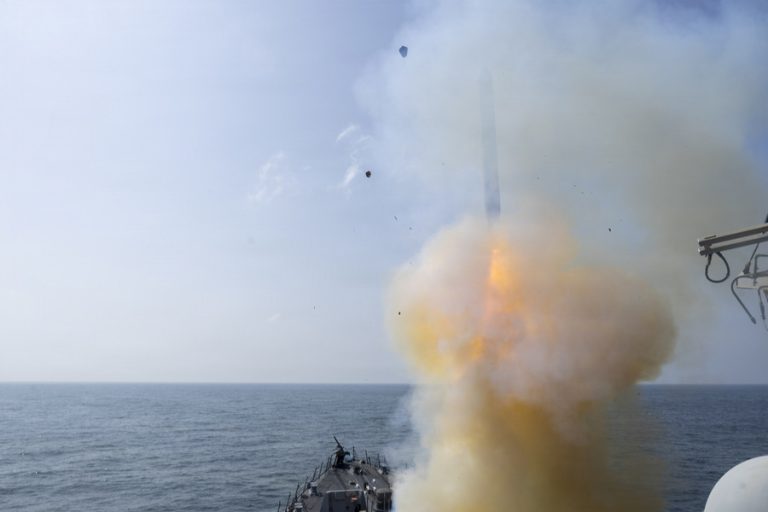
According to the Washington Post, Iran has launched thousands of one-time-use attack drones and hundreds of missiles at U.S. military bases, diplomatic facilities, and related targets.
In one drone attack, a U.S. facility in Kuwait was hit, resulting in six U.S. military deaths and multiple injuries.
US says Iranian military capabilities are being ‘suppressed’
White House spokesperson Anna Kelly stated that joint U.S.-Israeli strikes have hit over 2,000 Iranian targets, including ballistic missile facilities, naval assets, and parts of the military command system.
She said: “The Iranian regime is taking heavy hits; their missile retaliation capabilities are weakening day by day, naval power is being destroyed, and production capacity is being reduced.”
U.S. Secretary of Defense Pete Hegseth warned that U.S. military operations “have only just begun.” Former President Donald Trump also directly issued a final ultimatum to the Iranian military, demanding surrender or facing “certain death.”
Meanwhile, the U.S. Air Force’s heaviest bombers are preparing for deployment to bases in the UK. The Daily Mail reported that this is seen as a prelude to the “major strike operation” Trump described.

Experts: Russian intelligence may explain Iran’s precision
Some military experts believe Russia’s intelligence support may help explain the recent precision of Iran’s attacks.
Dara Massicot, a researcher at the Carnegie Endowment for International Peace, noted that Iran’s strikes have clearly focused on key targets such as radar systems and command-and-control facilities.
She said that Iran has only a limited number of military satellites, and access to more advanced Russian satellite imagery and reconnaissance intelligence could significantly enhance its strike capabilities.
Nicole Grajewski, a researcher at Harvard Kennedy School’s Belfer Center, also said that Iran’s counterattacks show a higher “level of complexity” in target selection and air-defense penetration.
She pointed out that compared with last summer’s 12-day Iran-Israel conflict, Tehran’s strike capabilities seem to have improved.
‘Geopolitical payback’ in the context of the Ukraine War
The Washington Post analyzed that Russia providing intelligence to Iran may also carry a “strategic payback” motive.
During the Russia-Ukraine war, Iran provided Moscow with drone technology used to strike Ukrainian cities and deplete Western-supplied air-defense systems.
A U.S. official familiar with the intelligence said: “Russia knows very well what assistance the U.S. has provided to Ukraine, and now they are willing to attempt some form of counteraction.”
However, experts believe Moscow has not yet directly intervened militarily, as its strategic focus remains on the Ukraine battlefield. Massicot said that from Russia’s strategic calculations, “Ukraine is still their top-priority theater.”
But as intelligence warfare and proxy conflicts expand, the Middle East situation is showing signs of a more complex great-power competition landscape.