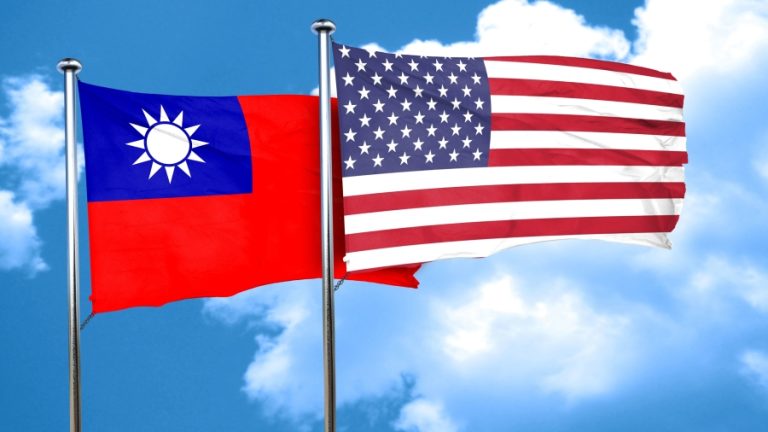
The U.S. Senate committee has passed the “Taiwan–U.S. Space Assistance Act,” expanding cooperation between Taiwan’s National Space Organization and the U.S. National Aeronautics and Space Administration (NASA). The bill also creates channels for NASA personnel to voluntarily visit Taiwan’s space center for exchanges, further strengthening Taiwan’s space capabilities.
Republican Senator Eric Schmitt, and Democratic Senators Tammy Duckworth and Michael Bennet announced in a joint statement that their bipartisan Taiwan–U.S. Space Assistance Act (TASA Act) has passed the Senate Commerce Committee and will now be submitted for consideration by the full Senate.
The senators said the bill will help the U.S. respond to threats from China and fill gaps in NASA’s current collaboration with Taiwan’s space programs, including satellites, space exploration, and atmospheric and meteorological research initiatives.
Schmitt stated that the continuous development of space exploration and satellites is increasingly central to U.S. national security. Collaborating with regional allies and sharing advanced technologies will help the U.S. better understand space activities in the Indo-Pacific region and counter the malicious influence of major rivals such as China.
Duckworth emphasized that as the U.S. maintains its leadership in global space exploration and continues to develop innovative technologies for space and satellite operations, partnering with Indo-Pacific allies for shared progress and prosperity is critical.

Success
You are now signed up for our newsletter
Success
Check your email to complete sign up
Bennet noted that Taiwan is a vibrant democracy, a key economic partner, and an increasingly capable space actor. The bill will allow NASA and the National Oceanic and Atmospheric Administration (NOAA) to collaborate with Taiwan’s space agency, strengthening U.S.–Taiwan capacity to address challenges in space.
Specifically, the Taiwan–U.S. Space Assistance Act will expand cooperation between Taiwan’s National Space Organization (NSPO) and NASA/NOAA and provide pathways for personnel from these agencies to voluntarily visit Taiwan’s space center for exchanges, further enhancing Taiwan’s space capabilities.
Additionally, the bill will broaden U.S.–Taiwan collaboration in satellite development, space exploration, and atmospheric and meteorological programs.
The bill must pass both the Senate and the House and be signed by the President to take effect. The House version of the Taiwan–U.S. Space Assistance Act was approved by the House Science, Space, and Technology Committee in early February and will next be submitted to the full House for consideration.