A set of figures circulating online has recently drawn widespread attention. Over the past month alone, the Jiangsu–Zhejiang–Shanghai region, often described as the engine of China’s economy, has reportedly seen a sudden surge in people leaving the country.
How significant is it? According to figures attributed to immigration authorities in the region, as many as 370,000 people completed exit procedures within just 30 days. This occurred in 2026, a time when the Chinese Communist Party maintains strict layers of control over outbound travel.
Even more striking is where many of these people reportedly went. Traditionally, wealthy residents from Jiangsu, Zhejiang, and Shanghai have favored destinations such as the United States, Australia, Japan, or Singapore. This time, however, the data circulating online suggests that among those leaving, roughly 60 to 70 percent traveled first to Turkey rather than cities such as New York or Tokyo.
The explanation has little to do with tourism. Visa requirements for countries such as the United States, Japan, and Australia have become increasingly difficult to meet for many middle-class applicants. As a result, Turkey has emerged as a transit point for some people hoping eventually to move onward to Europe or North America. For certain travelers, it has become one of the few remaining pathways available.
In effect, people are heading wherever an exit route remains open, reflecting a growing sense of urgency.
Success
You are now signed up for our newsletter
Success
Check your email to complete sign up
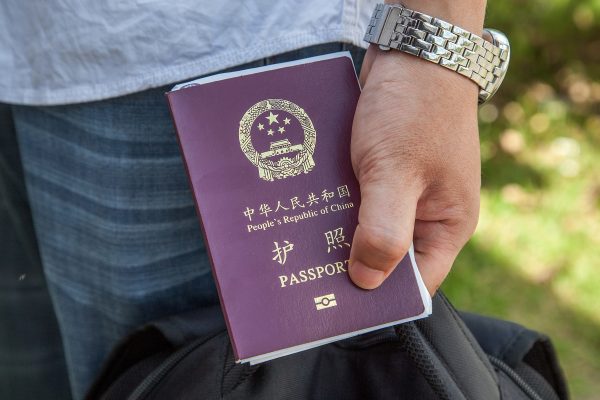
Passports shift from a right to a privilege
In today’s China, obtaining a passport increasingly appears to depend on luck—or personal connections.
Although Chinese law describes holding a passport as a citizen’s right, critics say that within the Chinese Communist Party’s administrative system, that right can easily become a discretionary privilege. In some provinces, applicants are reportedly required to provide an overseas invitation letter before their passport application will even be accepted.
If someone simply wishes to travel abroad as a tourist, officials may reject the request on the grounds that the purpose is insufficient.
Videos circulating online show immigration offices in several cities crowded with applicants. Long lines stretch through the halls as people wait to submit documents. Even renewing permits for travel to Hong Kong or Macau can require extended waits at manual counters if it is a first-time application.
The reason, many applicants say, is straightforward. Machines do not ask questions—but people do.
Applicants are often asked detailed questions resembling an interrogation: Where are you going? When will you return? Who will guarantee your return?
Many people feel they are racing against time. A widely shared sentiment online is that the door to leaving the country may soon narrow further. Some say that even if they do not plan to travel immediately, simply possessing a passport provides a measure of psychological reassurance.
In most countries, a passport is simply a travel document. For Chinese citizens, critics say, it increasingly resembles a request that only becomes valid if authorities grant approval.

Where people choose to live reveals the truth
A simple economic comparison helps explain why so many people are seeking to leave.
Take dishwashing work in Europe as an example. In the Czech Republic, a couple working in the kitchen of a Chinese restaurant reportedly earns about 2,400 euros per month combined (roughly $2,600). The key issue is not only income but also living costs and social welfare.
For people with practical skills—such as cooking, welding, or automobile repair—blue-collar work abroad can provide relatively stable earnings along with a degree of social respect.
In China, by contrast, a dishwasher in a similar restaurant may earn only 3,000 to 4,000 yuan per month (about $420–$560). The work is physically demanding, and workers may also worry about delayed or unpaid wages.
Beyond wages, many observers point to the security provided by social welfare systems abroad. In much of Europe, medical care is largely covered by public systems, meaning a serious illness such as cancer does not necessarily lead to financial ruin. Unemployment benefits and food assistance programs provide basic support.
Critics say China’s system often works in the opposite direction. Income inequality is widely discussed yet rarely reflected transparently in official statistics. Medical costs can place heavy burdens on ordinary families, while senior officials enjoy far more favorable treatment.
This contrast becomes increasingly visible in people’s choices.
Chinese state media frequently portray Western countries as unstable while describing nations such as Russia, Iran, or Pakistan as close partners. Yet when individuals make their own decisions about where to live, their destinations tell a different story.
Few Chinese immigrants choose Russia, North Korea, or Cuba. Even tourism to those countries remains limited.
Instead, many people seek to move to places frequently criticized in official media—including the United Kingdom, the United States, Canada, Australia, and Japan.
Some observers describe this phenomenon as “voting with one’s feet.”
Propaganda may shape narratives, but when survival and children’s futures are at stake, people’s decisions often speak more clearly.

Foreign-exchange controls tighten further
Leaving the country is difficult. Moving money abroad may be even harder.
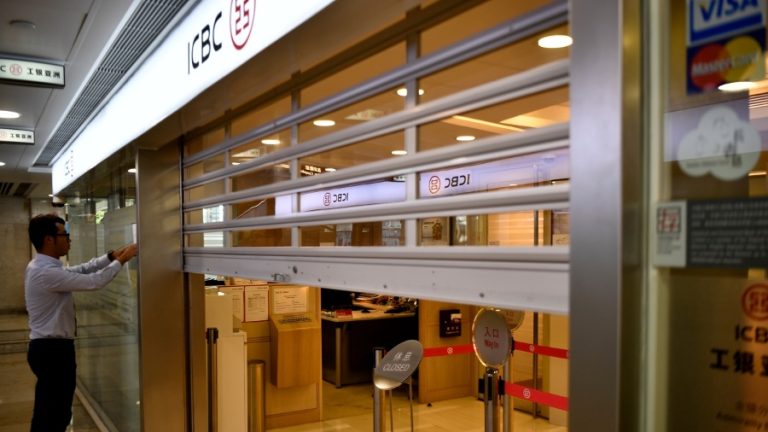
Reports indicate that, beginning in 2026, China’s foreign-exchange controls have tightened again. If an overseas transfer exceeds 5,000 yuan (about $700), banks may now require verification of the recipient’s identity.
Officially, the annual foreign-exchange quota of $50,000 per person remains unchanged. Critics say, however, that the system increasingly resembles holding a voucher for grain when the store itself is closed.
The money remains in the bank account, but converting it into foreign currency and transferring it abroad may require navigating numerous administrative restrictions.
Some observers describe this as a hidden financial risk. The signal from authorities appears to be that capital should remain within the country. Whether transfer delays will lengthen, additional fees will appear, or further restrictions will follow remains uncertain.
For many people considering emigration, the concern is straightforward. In the past, it was at least possible to take some savings when leaving. In the future, some fear that departing the country could mean leaving without access to those funds.
Some analysts interpret the surge in passport applications as a reflection of declining confidence in the country’s long-term prospects. Others speculate about the demographic implications of a falling birth rate combined with outward migration.
When professionals, middle-class families, and ordinary workers alike begin to see departure as their primary life goal, critics argue that the narrative of national resurgence faces a profound contradiction.
The views expressed are solely those of the author.
By Chen Jing