Should Taiwanese people favor the United States or China? If the U.S. military does not come to Taiwan’s defense, would the public still be willing to resist a Chinese Communist Party (CCP) invasion? Two new public opinion polls in Taiwan reveal the public’s stance.
A survey by the TVBS Poll Center shows that as many as 77 percent of respondents believe being pro-U.S. is important for Taiwan, while 47 percent say being pro-China is important. Meanwhile, a poll by Academia Sinica indicates that more than half of respondents are willing to resist a CCP invasion at any cost and support purchasing weapons from the United States.
‘Pro-US’ becomes a broad social consensus
According to a report by Today News, the TVBS Poll Center conducted surveys asking which of Taiwan’s three major political parties is most pro-U.S. and whether Taiwanese people prefer being pro-U.S. or pro-China.
Public perceptions of the foreign policy direction of Taiwan’s three major parties are quite clear:
- 82 percent believe the Democratic Progressive Party (DPP) is pro-U.S., while five percent think it is anti-U.S.
- Only 26 percent think the Kuomintang (KMT) is pro-U.S., while 48 percent believe it is anti-U.S.
- Regarding the Taiwan People’s Party (TPP), 24 percent believe it is pro-U.S., while 42 percent think it leans anti-U.S.
On how Taiwan should manage relations with the United States and China, the poll suggests that “pro-U.S.” has become a strong social consensus.
- 77 percent say being pro-U.S. is important for Taiwan
- 13 percent say it is not important
- 10 percent have no opinion
Success
You are now signed up for our newsletter
Success
Check your email to complete sign up
In contrast:
- 47 percent say being pro-China is important
- 39 percent say it is not important
- 13 percent have no opinion
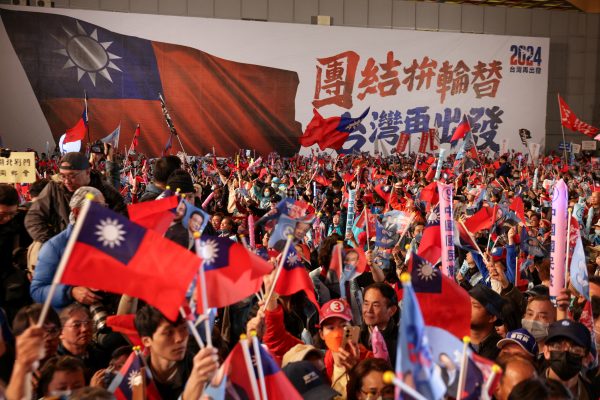
Wu Jingyi: KMT and TPP losing centrist voters
Political commentator Wu Jingyi wrote on Facebook on March 12 that the latest TVBS poll is “a heavy blow” to Taiwan’s political landscape.
She noted that 77 percent of respondents across the political spectrum see being pro-U.S. as vital to Taiwan, while only 13 percent oppose it, far exceeding the 47 percent who identify with a pro-China stance—a gap of 30 percentage points.
She said this result echoes a Taiwan Public Opinion Foundation poll from November 2025, which found nearly 70 percent oppose unification with China. Together, the polls suggest mainstream public opinion is dismantling the narrative of “one family across the Taiwan Strait.”
Wu argues the shift reflects a structural transformation in Taiwanese society where security, values, and economic interests are increasingly aligned. She said the trend is not blind admiration of the United States, but a pragmatic choice.
Wu also criticized Taiwan’s opposition parties, saying they mistakenly believe anti-U.S. rhetoric can energize their grassroots supporters. Instead, she argued, it risks alienating centrist and younger voters.
She said that the phrase “one family across the Strait,” often used by former TPP chairman Ko Wen-je, has lost resonance among younger generations. Facing repeated Chinese military aircraft and naval incursions and military exercises, young people see “invasion,” not “family.”
Wu also cited remarks by Japanese Prime Minister Sanae Takaichi, who said “a crisis for Japan is a crisis for Taiwan.” According to Wu, such statements reinforce a Japan-Taiwan security alignment and a growing sense of shared fate within the First Island Chain.
She warned that if the KMT and TPP continue to block arms purchases and pursue closer ties with China, they risk being seen as parties that oppose democracy while accommodating the CCP.

Over half willing to resist a CCP invasion even without US help
According to a report by the Central News Agency, the “Portrait of America” project conducted by Academia Sinica’s Institute of European and American Studies carried out a poll in January.
The survey asked respondents: “If China attacks Taiwan, would you be willing to resist at any cost?”
Researchers then added scenarios based on the U.S. policy of “strategic ambiguity”:
- The United States does not intervene militarily
- The United States sends troops to help defend Taiwan
If the U.S. does not intervene
- 58.7percent say they would resist at any cost
- 41.2 percent “very willing”
- 17.5 percent “somewhat willing”
- 36.2percent say they would not
- 21.7 percent “very unwilling”
- 14.5 percent “somewhat unwilling”
- 5.1 percent undecided
If the U.S. sends troops
- 56.5 percent say they would resist
- 34.4 percent “very willing”
- 22.1 percent “somewhat willing”
- 34.8 percent say they would not
- 8.7 percent undecided
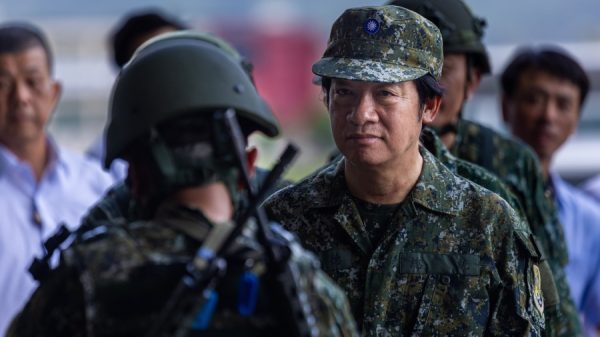
Majority supports higher defense spending and US arms purchases
The survey also asked whether respondents support raising Taiwan’s defense budget to three percent of GDP.
- 53.5 percent support
- 27.6 percent “strongly support”
- 25.9 percent “somewhat support”
- 31.1 percent oppose
- 15.3 percent undecided
On the question of purchasing weapons from the United States:
- 69.5 percent support
- 39.5 percent “strongly support”
- 30.0 percent “somewhat support”
- 24.7 percent oppose
- 5.8 percent undecided
Sociologist Pan Hsin-hsin, an associate professor at Soochow University and one of the scholars involved in the project, said during an online press conference with the Center for Strategic and International Studies (CSIS) on March 11 that both academic and government-affiliated surveys show a consistent trend: most Taiwanese people say they are willing to resist foreign invasion and defend Taiwan.
Pan added that the high willingness to resist “at any cost” is largely driven by supporters of the ruling DPP, while supporters of the KMT and TPP tend to lower the overall average.
When scenarios involving U.S. intervention were introduced, DPP supporters’ willingness to defend Taiwan remained unchanged regardless of whether the United States intervened, while KMT and TPP supporters were more sensitive to the scenario. Their willingness to resist declined when the U.S. was assumed not to intervene.
Pan also noted that almost all DPP supporters favor purchasing U.S. weapons, along with about two-thirds of TPP supporters and fewer than half of KMT supporters.
This divide has created a political stalemate over U.S. arms purchases in Taiwan, as the ruling DPP strongly supports them while the KMT and TPP together hold a majority in the Legislative Yuan.
By Li Jingyao