A former United Front Work Department official who fled to America in 2024 is now providing the FBI with granular evidence of how Beijing surveils, intimidates, and silences Chinese diaspora communities on American soil.
Ma Ruilin spent nearly a quarter century working inside one of the Chinese Communist Party’s most secretive bureaucracies. As a deputy party secretary within the United Front Work Department, the CCP’s umbrella agency for managing anyone the Party considers a potential threat or asset, his portfolio covered ethnic minorities, religious communities, private entrepreneurs, intellectuals, social media influencers, and diaspora communities in Hong Kong, Macau, and Taiwan. He was, by his own account, a loyal operative of a system designed to control minds as much as territory.
Then, in 2024, he defected.
Ma arrived in the United States on February 4 of that year. He now runs a restaurant in Manhattan. In a three-hour interview with CNN, he described with the precision of a system insider how the Party surveils its own citizens, how it extends that surveillance to Chinese communities abroad, and why he ultimately concluded that the work he had spent decades performing was wrong.
The United Front Work Department is rarely discussed openly in Chinese official life, even though its reach is vast. Ma described a portfolio that included monitoring independent religious practitioners, coordinating with domestic security services, and maintaining a network of informants embedded within mosques across Gansu Province. The security police and the United Front, he explained, functioned as a single apparatus.
Success
You are now signed up for our newsletter
Success
Check your email to complete sign up
How the CCP systematically dismantled religious practice in China
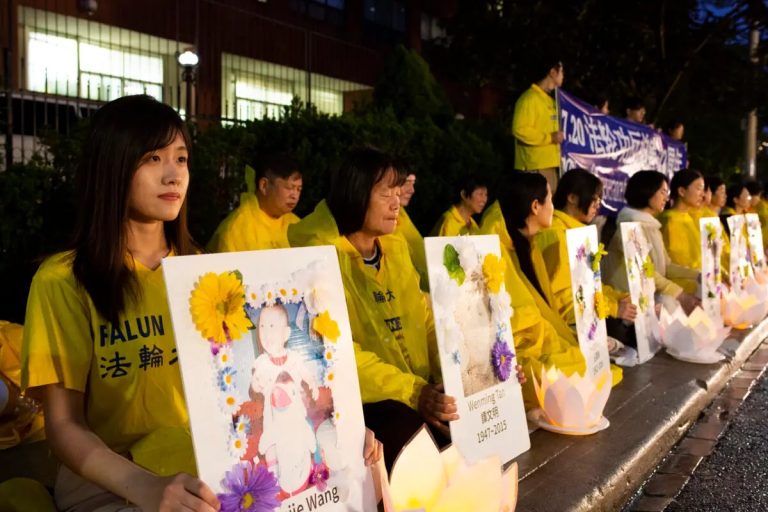
The CCP’s campaign against religious belief in China is deliberate, generational, and institutionally enforced. Ma’s account of how the Party treats religion is methodical and damning. He described watching authorities demolish mosques and strip crosses from church buildings. Children were barred from entering mosques, churches, and temples. Security cameras were installed at entrances. Notices posted at the doors of religious buildings explicitly prohibited minors from entering.
The purpose, Ma said, was to sever the transmission of religious belief from one generation to the next. An informant was placed inside every mosque. If a worshipper violated any regulation, even one with no genuine criminal content, they could be accused of spreading extremist religious thought, then detained, sent to re-education, or prosecuted.
In Xinjiang, Ma confirmed, the system operates at a far larger scale. People who hold religious beliefs are imprisoned in facilities the Party euphemistically calls “vocational training centers,” which are, in practice, mass detention camps. His confirmation adds insider corroboration to an extensive body of evidence already documented by journalists, researchers, and former detainees.
“I began to feel an increasing sense of guilt,” Ma told CNN. “When I reflected on what I was doing, I knew it was wrong.”
The Hajj pilgrimage that broke a party official’s loyalty to the CCP
A state-sanctioned trip to Mecca ended Ma Ruilin’s ideological allegiance to the Chinese Communist Party. Ma, who is Muslim, led an official delegation on the hajj pilgrimage, a journey the CCP permits for select officials as a form of managed religious expression. Something about the experience broke through the professional carapace he had spent decades building.
He returned to China as a different person. For nearly ten years after that, he lived a double life: a compliant official by day, a practicing Muslim in private. At night he prayed in secret. He enforced policies he no longer believed in. He rose through the ranks of a system he had come to regard as illegitimate.
He did not publicly break until he was safely out of the country.
CCP United Front informants are embedded in American universities and diaspora organizations
The CCP’s overseas surveillance network extends deep into Chinese communities in the United States, according to Ma Ruilin’s testimony. He told CNN that he had seen internal CCP documents confirming that United Front Work Department informants had been arrested in the United States. The Party’s network reaches into student associations on American university campuses and into the local community organizations that diaspora populations form to help new arrivals navigate paperwork, driving licenses, and daily life. Those same organizations, he said, are also used to recruit people willing to participate in transnational repression.
The recruitment methods are direct. The Party offers money or other benefits. “There are too many ways to buy people or corrupt them,” Ma said.
He urged overseas Chinese to limit their contact with hometown associations and similar organizations, describing their leadership as reliably pro-Party in orientation. He also advised people to reduce their use of WeChat, Xiaohongshu, and TikTok: platforms whose content is filtered and shaped by CCP censors. Even living abroad, he warned, a person whose information diet consists primarily of these platforms will find their thinking shaped by the Party’s framing.
The FBI says hundreds of CCP agents are operating inside the United States right now.
American counterintelligence has independently confirmed the scope of the CCP’s transnational repression campaign. Roman Rozhavsky, deputy assistant director of the FBI’s counterintelligence and espionage division, described an operation that is both aggressive and broad.
“This is the Chinese government silencing dissidents on American soil,” Rozhavsky said, adding that the methods are extensive and the operation unusually brazen for a foreign government to conduct on United States territory.
Rozhavsky said there are hundreds of CCP agents operating inside the United States, representing a serious violation of American sovereignty. The FBI has assigned hundreds of personnel to monitor this activity and has brought multiple prosecutions against suspects linked to Beijing.
The tactics used against overseas Chinese include threats against family members still in China, harassment by CCP-linked officials traveling to the United States, the use of private investigators to surveil individuals’ movements, and, in some cases, violence. The goal is to manufacture the atmosphere of an authoritarian state inside a democratic one—making people afraid to speak even when the law protects their right to do so.
“If you are prominent, if you speak out, if you have a large following, you will be seen as a threat,” Rozhavsky said.
Xi Jinping is privately despised by the officials who publicly praise him
Xi Jinping, the CCP’s general secretary and China’s top leader, commands public adulation and private resentment in equal measure, according to Ma Ruilin’s account. Asked whether Xi is genuinely popular among the officials and civil servants who serve under him, Ma did not hesitate.
“From what I know of people, privately no one likes him,” he said. “But in public everyone has to praise him.”
The observation cuts to something authoritarian systems consistently produce: a gap between performance and belief so wide that the performance itself becomes the only legible reality. Officials who privately resent Xi’s rule nonetheless participate in the ritual of adulation. The gap between what is said and what is felt is the system.
Ma’s defection and his willingness to speak on the record represent a rare instance of that gap being named publicly by someone who spent decades operating inside it. For Western policymakers tracking Beijing’s covert influence operations, his account of the CCP’s United Front Work Department, its informant networks, its overseas surveillance, and its reach into Chinese diaspora communities in the United States is among the most detailed insider testimony to emerge in years.
By Cai Siyun