At a Politburo Standing Committee meeting on Aug. 1, 1959, Lin Biao told those present: “This is not about overthrowing you, nor does it mean we will distrust you in the future. You should continue your work. There must, however, be rectification and ideological remolding.”
Peng Dehuai replied: “I agree with ideological reform. I support the general line. My work has negative aspects.”
Records indicate that Lin Biao made these remarks without first consulting Mao Zedong.
Later, Peng Dehuai suggested that “the Military Commission should be placed in the hands of a capable comrade. I will step down. This time it does not need to be announced. I propose that one person take charge of daily affairs.” Mao responded: “Let us not discuss this now. You should continue the work.”
This episode suggests that Lin Biao at the time had not fully grasped the political situation surrounding Peng Dehuai, nor was he aware of the political boundaries Mao Zedong and others had already set regarding Peng’s fate.
Success
You are now signed up for our newsletter
Success
Check your email to complete sign up
Lin Biao’s remarks contained broad political labels but were largely vague and lacked concrete accusations. They did not involve charges that would have placed Peng Dehuai in mortal danger. In the campaign against Peng Dehuai, Lin Biao’s role appears to have been far smaller than that of Liu Shaoqi and Zhou Enlai.
Before Mao Zedong circulated Peng Dehuai’s letter, he had already discussed it with Liu Shaoqi and Zhou Enlai. Likewise, before Mao decided to convene the large meeting on the 23rd and deliver a key speech, he first communicated with Liu Shaoqi and Zhou Enlai.
When Mao delivered his speech, the atmosphere at the meeting suddenly became tense and the situation quickly deteriorated. The focus of the conference shifted from correcting “leftist” errors to opposing the “right,” and the political conclusion regarding Peng Dehuai was effectively settled.
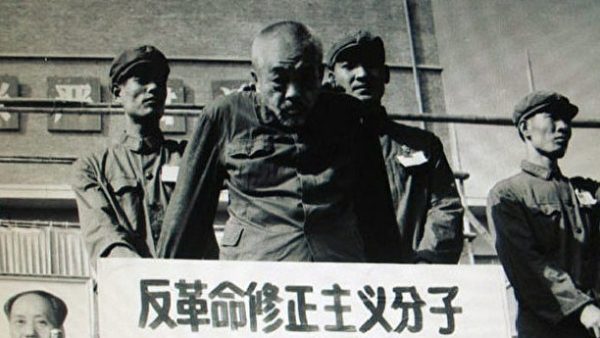
Peng Dehuai’s “collusion with foreign powers” and the “military club” accusation
The accusation that Peng Dehuai had “colluded with foreign powers” was also closely connected to Zhou Enlai.
Fifteen years later, in November 1974, when Peng Dehuai was critically ill and nearing death, his tongue had become stiff and his speech extremely difficult. Even in those final moments he repeatedly murmured: “I did not collude with foreign powers… I am innocent…”
These words reflected how deeply the accusation had scarred him. Because the matter was never clarified, Peng Dehuai died without clearing his name.
As for the so-called “military club,” Zhou Enlai was the first to raise the accusation clearly before participants at the plenary session.
The central leadership later decided to convene an enlarged meeting of the Military Commission to eliminate Peng Dehuai’s influence. At this meeting, investigators focused on the alleged “military club” and “collusion with foreign powers.” Peng Dehuai later recalled:
“As the meeting proceeded, I adopted the attitude of giving whatever was demanded, so long as it did not harm the Party or the people. I made certain self-criticisms that exaggerated errors inconsistent with the facts. Only on the issue of the so-called ‘military club’ did I adhere to the principle of seeking truth from facts.
“During the Lushan Conference there had already been pressure on this issue, but after the enlarged Military Commission meeting convened in Beijing (from late August to early September), the pressure became especially severe. If I did not confess the organization, program, purpose, and membership list of the so-called ‘military club,’ I would be labeled dishonest, evasive, and cunning.
“Once, while I was making a self-criticism at the enlarged Military Commission meeting, a small group of comrades shouted slogans: ‘Hurry and confess!’ ‘Stop deceiving us!’ I became extremely angry and said: expel me from the Party and shoot me if you wish. Whoever among you is a member of the ‘military club’ should step forward and register yourself.
“Some comrades said I was too stubborn and not serious enough. In fact, after the Lushan Conference ended, I had already decided to eliminate and discredit my own influence in the army over the past thirty years. Doing so would help safeguard the further consolidation of the People’s Liberation Army under the Party’s leadership.
“With that attitude I returned to Beijing to make my self-criticism. But I could not fabricate the organization, program, purpose, or membership list of a so-called ‘military club.’ Doing so would have serious consequences. I could destroy myself, but I could never damage the People’s Army led by the Party.”

Regarding the accusation of “colluding with foreign powers,” the meeting spent two full days conducting investigations.
Those who made the accusation based their claim primarily on the fact that Peng Dehuai, while leading Chinese military delegations abroad, had contact with Soviet leader Nikita Khrushchev and had been received by him.
Peng Dehuai explained in detail the ceremonial meetings he had with Khrushchev during those visits, providing the time, location, accompanying personnel, and interpreters present at each meeting.
“I do not understand foreign languages,” Peng Dehuai said. “Any conversation with foreigners must go through interpreters. If I were to collude with foreign powers, how could I hold secret talks?”
He added: “In order to discredit me, they placed such an ugly accusation on my head. It made me extremely distressed.”
At the enlarged Military Commission meeting, the investigation into the alleged “collusion with foreign powers” combined accusations raised during the session with investigations conducted outside it. Participants could raise questions during the meeting. Whenever an important issue emerged, people were immediately dispatched to consult the Foreign Affairs Work Conference for verification. Telegrams were also sent to Chinese embassies abroad to confirm relevant details.
The investigative process was thorough, systematic, and rapid. Yet by the time the meeting concluded, no evidence had been found.
In successive special investigation groups, the accusation of “collusion with foreign powers” remained one of the major issues used to investigate Peng Dehuai. No proof was ever discovered, but the charge continued to be listed as a key issue.
On this matter, Peng Dehuai once wrote a letter to the Party Central Committee and to Mao Zedong, making a solemn declaration: if conclusive evidence of “collusion with foreign powers” were ever found, he could be convicted of treason and sentenced to death without complaint.
These records show how deeply these accusations affected Peng Dehuai and how strongly he reacted to them.
The historical record suggests that figures such as Zhou Enlai, rather than Lin Biao, played the decisive role in condemning and harming Peng Dehuai.
By Sima Qingyang