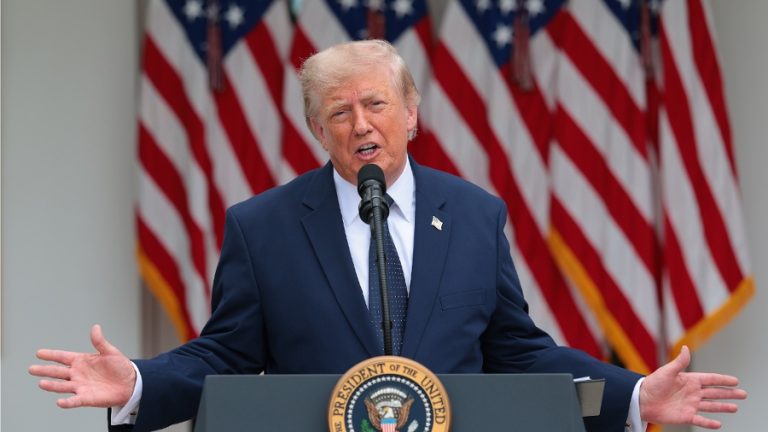
As the United States continues escalating military action against Iran, the planned US-China leaders’ summit may face adjustments. US Treasury Secretary Scott Bessent said on Monday, March 16 that if President Trump chooses to remain in Washington to direct the Iran operation, the meeting with Xi Jinping could be delayed for logistical reasons.
During an interview with CNBC’s Squawk Box in Paris, Bessent said: “If the meeting is postponed, it will not be because the president asked China to safeguard the Strait of Hormuz. Any rescheduling would be for logistical reasons.”
Bessent explained that if the summit is postponed, it is likely because Trump, in his capacity as Commander-in-Chief, decides to stay in the White House or elsewhere in the US during the conflict to coordinate military operations.
This statement also suggests the White House expects the conflict may last some time. Trump had initially indicated that military action against Iran might last only a few days, but the conflict has now continued for nearly a month and remains a central concern for the US government.
Originally, Trump was scheduled to visit China from March 31 to April 2, where he would hold a summit with Xi in Beijing. If it takes place, it would mark the first US presidential visit to China since Trump’s 2017 visit.
Success
You are now signed up for our newsletter
Success
Check your email to complete sign up
The two leaders last met five months ago in South Korea, where they agreed to a temporary “truce” in the trade war, after tariffs between the two countries had spiked to triple-digit levels.
Meanwhile, friction between the US and China continues to grow. Last week, the Trump administration announced new trade investigations targeting China and more than a dozen other countries under Section 301 of the 1974 Trade Act.
The two countries are also competing in high-tech fields such as artificial intelligence. Washington is attempting to restrict Beijing’s access to advanced US chips and key technologies, while China has been a major target of Trump’s tariff policies during his two presidential terms.
Bessent is currently meeting in Paris with Chinese Vice Premier He Lifeng. He said the talks are progressing smoothly and urged markets not to overreact to a potential summit delay.
Bessent stated: “We’ve had very successful two days of talks here. In the coming days, we will release a statement reaffirming the stability of the relationship between the world’s first and second largest economies.”

Trump warns NATO of ‘dire future’ if allies don’t help reopen Strait of Hormuz
As US and Israeli military action against Iran continues to escalate, Trump issued a stark warning to allies: if European countries do not assist the US in restoring navigation through the Strait of Hormuz, NATO could face serious consequences.
In a phone interview with the Financial Times, Trump said that if allies refuse to participate, “the future of NATO will be very bad.”
He noted that Europe and China are heavily reliant on oil from the Gulf and therefore should participate in securing this vital global energy route.
The US is currently calling on multiple countries to join efforts to restore one of the world’s most important energy waterways. The Strait of Hormuz handles roughly one-fifth of global oil transport. Since the US and Israel launched military action against Iran over two weeks ago, Iran has effectively closed the strait, causing turbulence in global energy markets.
International oil prices briefly rose to $106 per barrel, about 45 percent higher than before the conflict began.
Trump has previously singled out China, France, Japan, South Korea, and the UK, urging them to join a “team effort” to restore navigation. However, he expressed skepticism about whether allies will respond.
He said: “We’ve been helping them, for example with Ukraine. Now we’ll see if they help us.”
When asked what assistance allies should provide, Trump said “at all costs,” mentioning that Europe possesses many minesweepers that should be sent to the Gulf to clear naval mines.
He also implied that he hopes Europe will deploy special forces or other military assets to target personnel deploying drones and naval mines along Iran’s Gulf coast.
Trump stated that the US and Israel have severely weakened Iran’s military over the past two weeks, but Iran may still attempt to disrupt the strait using mines and other measures.
Meanwhile, European allies have already suffered casualties in the conflict. On Thursday, a French soldier was killed in a drone attack by Iran on Iraq, and on Sunday, an Italian aircraft was destroyed at a base in Kuwait.
Trump also warned that the US is prepared to strike Iran’s oil export hub, Kharg Island. He said that previous US bombings had already destroyed most of the island’s facilities.
“We can hit it again within five minutes, and there’s nothing they can do about it,” Trump said.
By Gao Yun