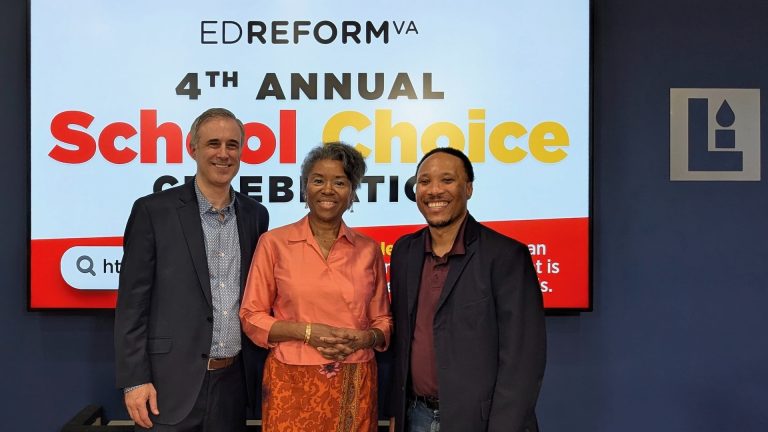
ARLINGTON, Virginia — On March 7, over a hundred advocates, parents, and educators gathered for the 4th Annual School Choice Celebration, where speakers urged supporters to remain engaged in the ongoing fight over education policy. They argued that political resistance — not a lack of public support — remains one of the largest barriers to expanding school choice options for families in the state.
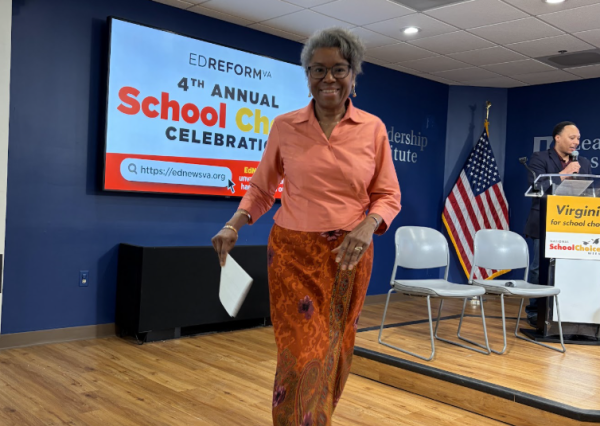
Organized by EdReform Virginia, a nonprofit group focused on expanding educational opportunities across the state, the event brought together parents, educators, youth-serving organizations, and supporters of educational freedom for an afternoon of discussion, networking, and community engagement. Featured speakers included Virginia Lt. Gov. Winsome Earle-Sears, EdReform Virginia Executive Director Nathan Brinkman, and WMAL host Larry O’Connor, who described school choice as a long-running political battle that will require sustained public pressure from voters and parents alike.
RELATED: Northern Virginia Rings in the Year of the Horse With Festivities Rooted in Tradition
‘Equal opportunity for our children’
Earle-Sears argued that school choice opponents often rely on arguments that collapse under scrutiny. “One of their major obstacles,” she said, is the claim that “government money shouldn’t be funding private institutions.” But she said that principle is applied selectively. “When you talk about SNAP benefits, food benefits, isn’t that public money that goes to private grocery stores?” she asked. “And then when you talk about Section Eight, isn’t that public money that goes to private landlords?”
She continued with examples from Medicaid, Medicare, childcare, preschool, and higher education, contending that public funds already flow to a variety of private providers. “But when it comes to the foundational aspect of our children’s lives, K through 12, we say, No, your only option is the public school option, unless, my friends, you can afford different,” she said.
Success
You are now signed up for our newsletter
Success
Check your email to complete sign up
That contradiction, she argued, sits at the heart of the school choice debate in Virginia. Earle-Sears also stressed that education is inherently political, whether parents want it to be or not. “So many people I’ve heard say, you know, I don’t want to be involved in politics. I’m not really interested, except that politics is interested in you,” she said. “And you’re as involved as ever.”
For Earle-Sears, expanding school choice ultimately comes down to giving parents greater control over their children’s education and ensuring families are not limited by income or geography. “We want equal opportunity for our children. We have to keep fighting,” she said.
Empowering families
Brinkman said his organization increasingly hears from parents, particularly in Northern Virginia, who feel that public schools in once highly sought-after districts are no longer meeting expectations.
“I’ve heard from a lot of parents, including in the Asian community here in Northern Virginia, who have very grave concerns about their public schools in districts that traditionally were considered some of the best in the state or even in the country,” he said. “In the past, people moved here and paid a premium for their houses to be in the so-called right school attendance zone, and now, with their kids moving up through these systems, they feel like they’re not getting what was advertised.”
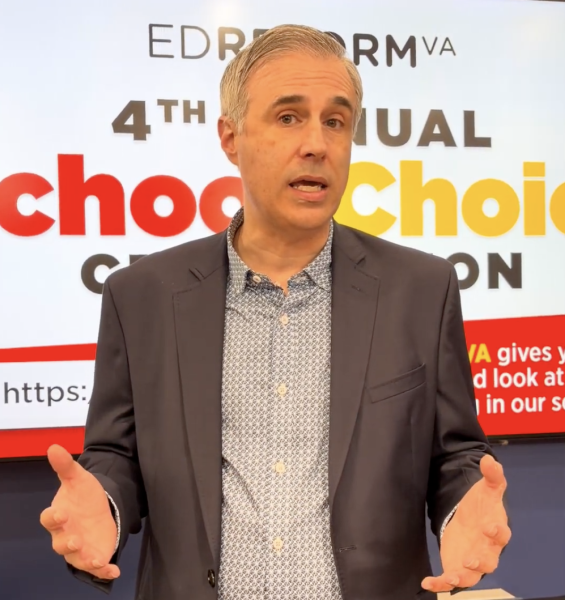
Brinkman pointed to concerns about declining academic rigor, discipline issues, and growing disorder in classrooms as factors pushing more families to consider alternative schooling options.
Policy battles over school choice
Pointing to local spending levels, Earle-Sears questioned whether current results justify the cost. In Arlington, she noted, public schools spend “about 25,000 per student,” while in Alexandria the number is even higher. “That’s a lot of money,” she said.
Yet, according to Earle-Sears, even modest school choice proposals have repeatedly been blocked. She recalled past efforts to pass pilot scholarship programs and charter school reforms, saying opponents often resisted not because the ideas lacked merit, but because of political calculations. Recounting a conversation involving a proposal backed by Gov. Glenn Youngkin, she said the message from House leadership was clear: “It’s a good thing, but we’re not going to pass it under you.”
For Earle-Sears, the answer is unwavering persistence. She urged supporters to show up at school board meetings, state Board of Education meetings, and public events across the state. “Every single event, they ought to say, oh, here come the school choice people again. That’s when you know you’re making a difference, because they see you coming,” she said.
She also tied the issue to history and parental rights. Citing Frederick Douglass, she said education remains central to freedom itself. “Parents are the child’s first teachers,” she said. “We need to be able to make that decision on where to send our children to school.”
Putting American students first
Meanwhile, O’Connor focused on teachers unions and the political machinery he said keeps failing systems in place. He pointed to polling showing widespread frustration with unions’ political role. “It was an astounding 60 percent,” he said. “We can’t get 60 percent of Americans right now to agree that chocolate ice cream is pretty damn yummy, right?”
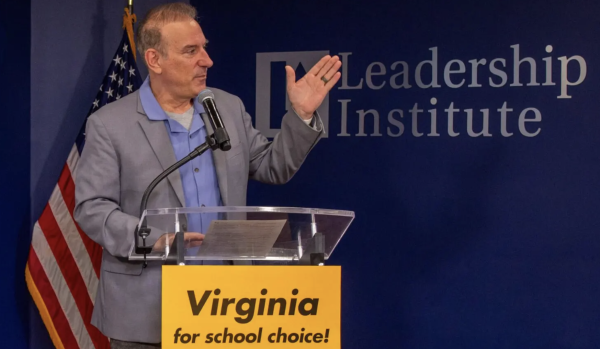
But he said unions are unlikely to change course on their own because the politicians they help elect face few consequences for maintaining the relationship. “We need associations with that kind of political money to be just as toxic as tobacco money was,” he said.
O’Connor argued that local school board races and policies often matter more to families’ daily lives than national politics. “What happens in your house is more important than what happens in the White House,” he said. “I think we saw during the covid pandemic that your local school board member has more of an impact every single day on your life and on your children’s life than who sits behind the resolute desk in the Oval Office.”
He said too many parents pulled their own children out of failing systems but stopped fighting for broader reform. That, he argued, is a mistake. “If your kids are no longer in the system, frankly, that means that it’s even more incumbent on you to give other kids the choice of the opportunity that your kids have,” he said.
Keeping foreign influence at bay
O’Connor also raised concerns about foreign influence in American educational institutions, particularly in light of growing scrutiny of organizations tied to the Chinese Communist Party (CCP) operating in the U.S. “I’ve seen so many stories of students and faculty members who have been involved in an organization that ends up being arrested or suspected of espionage,” he said, adding, “We need to put American schools first and American students first and make sure that we’re not having that kind of influence or attempted espionage in our country, or foreign influence on our students and student body.”
Like Earle-Sears, O’Connor said opponents of school choice implicitly understand that competition would expose weaknesses in the current system. “The only argument they’ve got back to you is, well, that’s going to make all of the public schools poor, because you’ll pull all the money out of it, which is an admission of their own failure,” he said.
Brinkman said parents exploring alternatives should not assume private school is out of reach. “A lot of these schools do have merit-based scholarships as well as needs-based financial assistance,” he said. “I’d encourage families to at least enter into a dialogue with the school.”