In the late 1950s, millions of Chinese citizens were mobilized in a nationwide effort to eradicate sparrows. Armed with drums, gongs, and improvised tools, they drove the small birds to exhaustion until they fell from the sky.
The campaign, launched under Mao Zedong as part of the Chinese Communist Party’s “Four Pests” movement, was framed as a scientific effort to protect grain production. In reality, it became one of the most striking examples of how political authority overrode ecological knowledge, contributing to a chain of events that preceded the Great Famine.
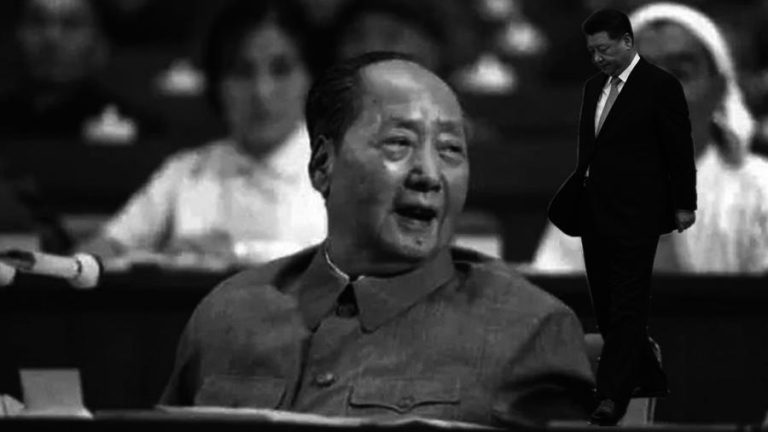
Today, a growing body of online commentary draws comparisons between that episode and more recent policies under China’s top leader Xi Jinping, particularly the strict “zero-COVID” campaign from 2019 to 2023. Critics argue that both reflect a governing approach built on political mobilization, rigid targets, and the suppression of dissent.
Historical accounts suggest that the inclusion of sparrows in the “Four Pests” list was not the result of scientific consensus, but of leadership judgment.
In 1956, Mao approved the National Agricultural Development Outline, which called for the elimination of rats, flies, mosquitoes, and sparrows within a defined period. Despite warnings from biologists that sparrows also consumed large numbers of insects and were part of a balanced ecosystem, those views carried little weight.
Success
You are now signed up for our newsletter
Success
Check your email to complete sign up
Under the prevailing political climate, dissenting scientific voices were sidelined. Policy flowed downward from the leadership, and local officials were expected to deliver results.

Mass mobilization and political pressure
By 1958, the anti-sparrow campaign had evolved into a nationwide mass movement. Provinces set timelines to achieve “four pests elimination,” and local authorities established command structures to coordinate participation.
In Sichuan, officials promoted a method in which large groups of people created continuous noise to prevent sparrows from landing. Exhausted birds would eventually fall mid-flight and die. The approach was hailed as an “advanced experience” and replicated elsewhere.
In Beijing, authorities launched a large-scale operation in April 1958. Contemporary reports describe hundreds of thousands, and in some accounts millions, of residents taking part simultaneously. Government officials, including senior leaders, oversaw the campaign, while designated zones were set up for poisoning and shooting.
Intellectuals and scientists were also mobilized. Researchers from the Chinese Academy of Sciences, including experts who had spent their careers studying birds, were required to participate. Writers and artists produced poems, cartoons, and performances portraying sparrows as enemies of the people.
Participation became a political obligation. The campaign blurred the line between environmental policy and ideological demonstration.
Exaggeration and systemic distortion
As the movement intensified, reporting became increasingly disconnected from reality.
Local officials competed to meet or exceed targets, leading to widespread exaggeration. Dead pests became a form of political currency. Historical records and later accounts describe implausible figures, including claims of individuals killing millions of flies.
In some cases, people fabricated evidence to satisfy quotas. Artificial “rat tails” were reportedly produced to meet requirements set by schools or local authorities.
The campaign also expanded beyond its original scope. Other animals, including birds of prey, were labeled harmful and targeted.
The result was a system in which performance metrics, rather than ecological understanding, dictated behavior.

Ecological consequences and famine
The near elimination of sparrows disrupted China’s ecological balance.
Without a natural predator, insect populations surged. Crops were heavily damaged, and agricultural output declined. This ecological shock compounded other policies during the Great Leap Forward, including collectivization and inflated production reporting.
Between 1959 and 1961, China experienced a devastating famine. Historical estimates suggest tens of millions of excess deaths and a significant decline in births during that period.
By 1960, the leadership adjusted its approach. Sparrows were quietly removed from the “Four Pests” list and replaced with bedbugs. The policy shift was not accompanied by a public acknowledgment of error.
Some scientists had warned early on about the ecological risks of eliminating sparrows.
According to historical accounts, individuals who argued that sparrows were beneficial faced political pressure. In later political campaigns, including the Cultural Revolution, some were subjected to public humiliation or persecution.
The episode reinforced a broader pattern in which scientific judgment was subordinated to political priorities.
Echoes in recent policy debates
In recent years, Chinese social media and overseas commentary have drawn parallels between the anti-sparrow campaign and the government’s strict zero-COVID policy.
During the pandemic, entire cities were placed under extended lockdowns in an effort to eliminate transmission. Critics argue that the approach emphasized absolute targets, with limited flexibility once policies were set.
Some online commentators have used the phrase “elimination logic” to describe both campaigns, suggesting a continuity in governance style across decades.
In more critical commentary circulating online, some writers extend the comparison further.
They argue that successive campaigns, from the Mao era to the pandemic period, reflect a broader pattern in which large-scale political initiatives can have unintended human costs.
Some of these claims, including assertions about significant population declines in recent years, remain unverified and are widely debated. They are presented in online discourse as expressions of public distrust rather than established fact.
At the same time, data from the Global Service Center for Quitting the Chinese Communist Party, also known as the Tuidang Center, indicate that more than 450 million people have submitted declarations to renounce their affiliations with the Chinese Communist Party, the Communist Youth League, and the Young Pioneers. The figures cannot be independently verified but are frequently cited in overseas Chinese-language media.
Historical memory and recurring questions
Sparrow populations eventually recovered. The human toll of the famine did not.
For many observers, the anti-sparrow campaign remains a case study in how centralized decision-making, combined with mass mobilization and limited tolerance for dissent, can produce far-reaching consequences.
The comparisons drawn today, whether accepted or disputed, reflect an ongoing debate about governance, accountability, and the role of historical memory in shaping China’s future.
By Chen Jing