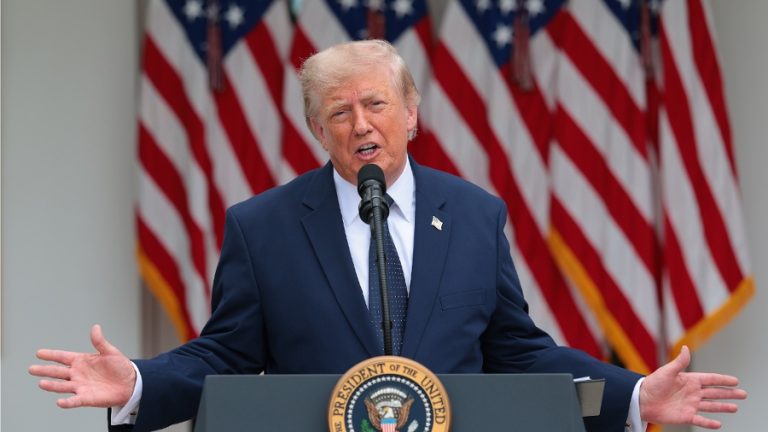
On March 18, U.S. President Donald Trump signed an executive order announcing a 60-day waiver of the century-old Jones Act for oil and natural gas transportation. The move aims to address soaring energy costs caused by tensions in the Middle East, allowing foreign-flagged vessels to transport crude oil, liquefied natural gas, and refined petroleum products between U.S. ports. The White House stated that this would effectively ease supply chain pressures and stabilize fuel prices.
On Wednesday, Trump authorized foreign-flagged ships to transport a range of goods between U.S. ports for the next 60 days.
White House Press Secretary Caroline Leavitt wrote on X: “President Trump has decided to issue a 60-day waiver of the Jones Act. This is another measure to ease short-term volatility in the oil market while the U.S. military continues to pursue the objectives of ‘Operation Epic Fury.’ This action will allow key materials such as oil, natural gas, fertilizer, and coal to move freely between U.S. ports over the next 60 days. Furthermore, this administration remains committed to continuously strengthening our critical supply chains.”
Currently, global oil supplies are facing volatility due to Middle East tensions and military operations targeting Iran. Domestic gasoline prices in the U.S. have surged to over $3.63 per gallon, a significant increase of approximately 69 cents from last month.
In an interview with Fox News several days before the decision, President Trump stated that although the Jones Act historically served to protect the U.S. shipbuilding industry, under the current “war context” the law has become “extremely restrictive.”
Success
You are now signed up for our newsletter
Success
Check your email to complete sign up
Public welfare is a key focus of Trump’s administration. Trump and supporters of the waiver argue that under extreme conditions, flexible market adjustment policies are necessary.
“Our top priority is to lower energy costs for the public,” Trump said in the interview. “If that means we need to rely on more flexible foreign vessels to secure the supply chain, then that’s what we have to do.”
In the past, the U.S. has only sporadically issued Jones Act waivers during major supply disruptions. The most recent waivers occurred after Hurricanes Harvey and Maria in 2017, when the Department of Homeland Security temporarily allowed foreign-flagged vessels to transport fuel between U.S. ports to alleviate shortages and speed deliveries to affected areas.
The Jones Act, officially Section 27 of the Merchant Marine Act of 1920, was initiated by Senator Wesley Jones. Over the past century, it has been regarded as a cornerstone of U.S. maritime security and domestic shipbuilding, ensuring that the nation maintains a merchant fleet ready for wartime or emergencies. The law has long required that all cargo transported between U.S. ports be carried on ships that are U.S.-built, U.S.-owned, and crewed by U.S. personnel.