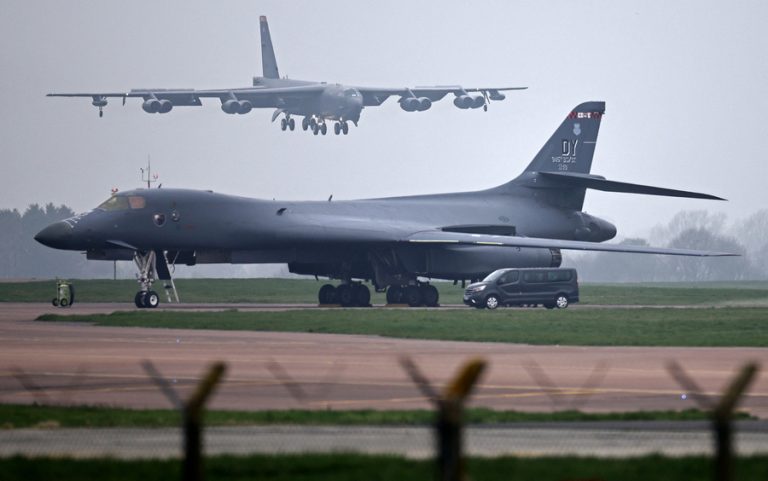
On Tuesday, March 17, the U.S. military carried out airstrikes on multiple “hardened” missile facilities along Iran’s southern coast, deploying several 5,000-pound deep-penetrating bombs, focusing on underground targets. The Hill cited U.S. Central Command as saying these bases deploy anti-ship cruise missiles that pose a real threat to international shipping through the Strait of Hormuz, making them a priority target for destruction.
The operation used the advanced GBU-72 bunker-buster, a high-intensity weapon introduced in recent years, specifically designed for bunkers and underground structures. The U.S. defines its use as a necessary measure to ensure the security of critical maritime routes.
Strait nearly blocked, global oil prices surge
The Strait of Hormuz handles about one-fifth of global oil transport, but with the conflict escalating, Iran has effectively imposed a “partial blockade” through mines, missile deterrence, and drone harassment.
Iran’s new Supreme Leader, Mojtaba Khamenei, previously stated that Tehran would respond to the U.S.-Israeli joint airstrikes, launched on Feb. 28, by blocking the strait. Iranian Foreign Minister Abbas Araghchi said the strait is “open to outsiders but closed to enemies.”
Energy markets reacted quickly. U.S. gasoline prices rose from $2.90 per gallon before the conflict to about $3.80 per gallon. Although Saudi Arabia and the UAE have partial bypass pipelines, the International Energy Agency noted that most oil exports still heavily depend on the Hormuz strait.
Success
You are now signed up for our newsletter
Success
Check your email to complete sign up
To mitigate supply shocks, the IEA announced the release of 400 million barrels from strategic oil reserves, a historic record, though analysts generally believe this will only provide a short-term buffer.

Allies’ hesitation sparks frustration; Washington applies pressure
As military operations continue, cracks are appearing between the U.S. and its allies. The Daily Mail reported that the U.K., France, Japan, and Australia have all declined U.S. requests for joint escort operations in the Strait of Hormuz.
U.S. President Donald Trump publicly expressed frustration, saying these allies are “unwilling to intervene,” and further emphasized that the U.S. “neither needs nor desires” NATO’s assistance, signaling a possible adjustment in relations with the alliance.
There is support within Congress as well. Senator Lindsey Graham warned European countries that continued refusal to participate would have “broad and profound” consequences for alliance relations.
Meanwhile, the UAE has indicated it may join U.S.-led escort operations, revealing a split within Middle Eastern positions.
Although the U.S. claims its strikes have been effective, the situation on the ground remains tense. The U.S. Navy cannot yet guarantee the safe passage of tankers through the strait. The Pentagon has deployed additional forces to the region, including the amphibious assault ship USS Tripoli and roughly 2,000 Marines, capable of seizing key ports.
Many speculate that the U.S. may consider limited ground operations to break the current stalemate. Trump stated that the conflict “could end soon” while also emphasizing that the U.S. is prepared for long-term operations.
Diplomatically, measures have also tightened. U.S. Secretary of State Marco Rubio has ordered embassies and consulates worldwide to enter high alert and activate emergency response mechanisms.