A surveillance system introduced in Chengdu is drawing attention for its breadth, with local authorities reportedly classifying residents into four warning levels and expanding oversight across a growing list of targeted groups.
Details of the system surfaced on March 20, when the social media account “Li Laoshi Bu Shi Ni Laoshi” shared submissions describing how monitoring is carried out at the neighborhood and police-station level. Information provided by multiple interviewees aligns closely with those accounts.
The system uses a four-tier scale: red, orange, yellow, and blue, to assess individuals flagged for monitoring. Those identified as key targets may remain under observation even after relocating outside Chengdu.
People described as “unreliable” are among those placed under closer watch. This category includes individuals with mental health conditions, former prisoners, petitioners, and those involved in legal disputes, groups often treated by Chinese authorities as potential risks to social stability.
Separate categories apply to people connected to Tibet and Xinjiang. The scope extends beyond residents from those regions to include ethnic Tibetans and people from autonomous prefectures within Sichuan, students studying in Chengdu, minors, elderly people born before 1949, and Han Chinese who previously worked in Tibet or Xinjiang.
Success
You are now signed up for our newsletter
Success
Check your email to complete sign up
Family ties can also determine inclusion. Individuals born in Chengdu may still be classified if their family background is linked to those regions.
One source familiar with local enforcement said follow-up checks continue even after a person moves away. Officials may visit a new address and carry out inquiries over a period of months.
At the provincial level, a centralized platform supports the classification system. Authorities have expanded earlier categories described as “three losses and one deviation” to a broader framework known as “five losses and one deviation,” a classification system used to identify individuals considered socially unstable, including those who have lost access to schooling, family support, employment, or supervision, as well as those with criminal histories or behavioral concerns.
Young people who have dropped out of school and women working in the sex industry are also included in the management system, according to those familiar with its operation.
In practice, implementation varies across districts, but residents say the direction is consistent. More groups have been added over time, including people facing unemployment or financial strain, reflecting China’s broader “stability maintenance” system, a domestic security approach aimed at preventing unrest before it emerges.
Authorities may assign monitored individuals to positions that require regular check-ins or digital records of attendance. While these roles may have limited practical function, they create a routine mechanism for oversight.

Monitoring extends into daily life
Monitoring also extends into daily life. A staff member at a Chengdu business hotel said guests from Tibet and Xinjiang must be reported to local police upon check-in.
“All guest ID information is uploaded, and we also need to call the police station to report it,” the employee said, describing a requirement that has been in place for years.
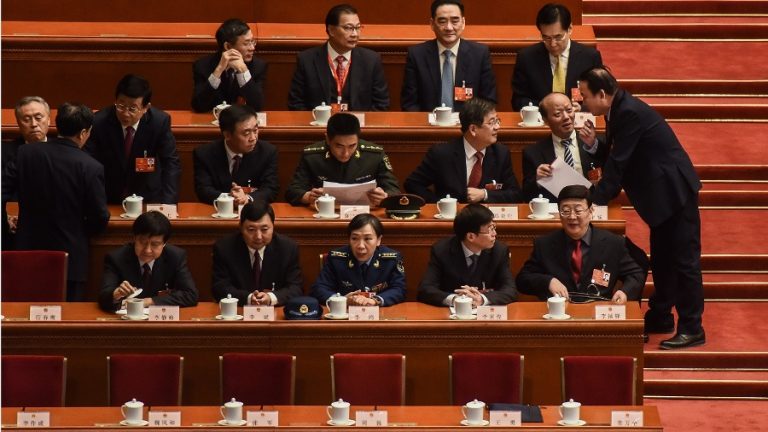
During politically sensitive periods, such as China’s annual parliamentary meetings, held by the country’s legislature, the National People’s Congress, or National Day, restrictions tend to tighten. Residents described home visits, limits on travel, and pressure from landlords to push certain tenants to relocate.
Christians attending unregistered house churches said they face particular scrutiny. One believer said state security officers have urged members to join government-approved churches under the Three-Self Patriotic Movement, the state-controlled Protestant church system in China. Those who decline often meet in small groups to avoid attention.
Churches such as the Early Rain Covenant Church have faced repeated intervention by authorities in recent years. Local sources said some believers have been taken in for questioning or prevented from gathering.
A resident familiar with the situation said Chengdu’s role as a major migration hub has contributed to the scope of monitoring. The city hosts a steady flow of people from Tibet and Xinjiang, as well as active house church networks, factors that have drawn sustained attention from authorities.
He added that economic pressures have also shaped the system. As more people face job losses or unstable living conditions, these groups are increasingly treated as potential risks.
Similar measures have been reported in other cities, with local authorities adopting comparable approaches to tracking and managing designated populations.
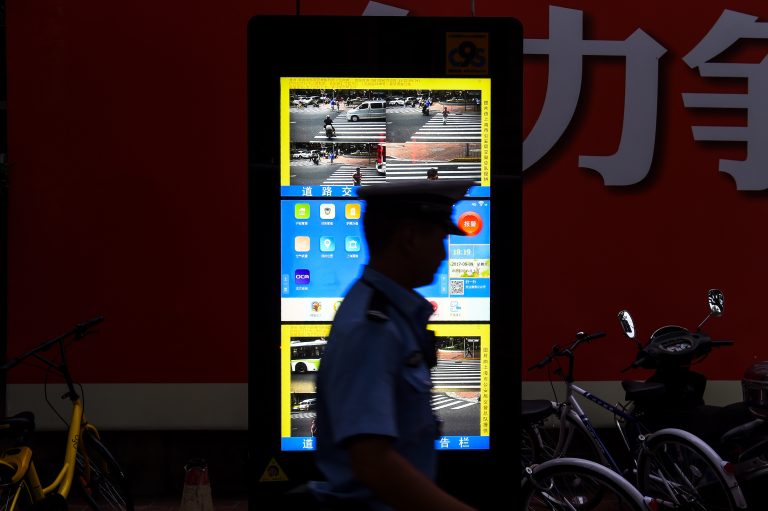
Online reactions reflect unease over the extent of surveillance. Some users described the environment as highly controlled, pointing to the widespread use of facial recognition and data collection.
One person who recently returned from Chengdu described a heavy police presence near Wuhou Shrine, including armed officers and an armored vehicle stationed along the street.
“The feeling was constant surveillance,” the user wrote.