China’s military newspaper is once again speaking in the language of total mobilization.
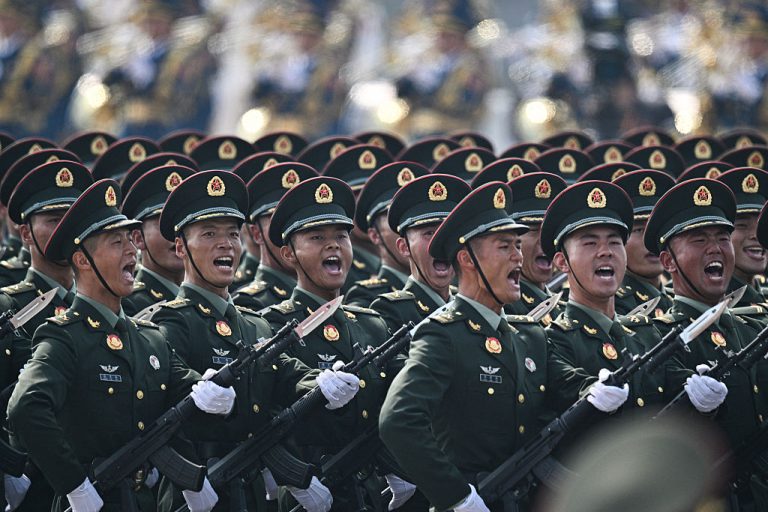
In its March 30 edition, the PLA Daily called for “all citizens to be soldiers,” reviving the idea that the population can serve as a “steel wall” in wartime. The phrasing is familiar. So is the assumption behind it.
The slogans have barely changed. Civilians are cast as an overwhelming force, a “vast ocean” capable of swallowing an enemy whole. They are urged to risk their lives in support of the People’s Liberation Army. The tone belongs to an earlier political era, when mass campaigns were not just rhetoric but a governing instinct.
The ideas themselves are older still.
Alexis de Tocqueville, writing nearly two centuries ago in The Old Regime and the Revolution, offered a portrait that feels uncomfortably current. He described a certain kind of ruler whose intellectual and moral development effectively stops at an early stage, yet who later rises to power and attempts to govern an entirely different age using the ideas he formed in that earlier moment.
Success
You are now signed up for our newsletter
Success
Check your email to complete sign up
Such figures do not adapt; they repeat. They draw on outdated assumptions, clinging to them with stubborn certainty, convinced they are defending timeless truths while in fact recycling what has already decayed.
Tocqueville reached for a more vivid image. These leaders, he wrote, resemble ghosts stepping out of the past and into broad daylight, dressed in the costumes of another era, performing on a modern stage. Everyone else can see what they are. Only they believe themselves to be something more.
The policies they produce, however forcefully imposed, are not new directions but old doctrines, repackaged, brittle, and already out of date.
What appears in the PLA Daily follows that pattern. The language does not point forward. It circles back.
The distance between that language and lived experience is not difficult to trace. Even in the early years of Communist rule, when the Party’s authority was more direct and its revolutionary legitimacy still fresh, mobilizing civilians proved far from straightforward.
Accounts from within the PLA itself capture that tension with unusual clarity.
Liu Yazhou, a former PLA general, wrote in his retrospective analysis of the Battle of Guningtou that “civilian boats were unreliable, and civilian support could not be depended on.” The line reads like a logistical complaint. The details behind it tell a different story.
Boat operators recruited for the assault were paid in gold. Some were supplied with opium beforehand, in an attempt to secure compliance. Even then, many found ways to avoid participation. Some hid. Others interfered. At critical moments, vessels were deliberately run aground, leaving advancing troops exposed to concentrated fire.
Closer to shore, as artillery intensified, some operators withdrew below deck, leaving soldiers with no maritime experience to navigate under combat conditions. The result was confusion, delay, and targets that barely moved.
Similar scenes appear in the memoirs of Xiao Feng, then deputy commander of the PLA’s 28th Army. Securing boats was one problem. Securing crews was another. Many left midway through the journey south. By the time units regrouped, only a fraction of the required vessels remained, some without anyone capable of operating them.
Along the Fujian coast, resistance took quieter forms. Boats disappeared. Some were taken to offshore islands and hidden. Others were damaged. The owners simply left. Even when crews were located, commanders were never certain they would stay. At sea, there was always the possibility they would abandon ship and swim for shore, leaving troops stranded.
None of this resembles the image of a unified “people’s war.”
It points instead to something more familiar. When faced with demands for sacrifice, many chose distance. When possible, they stepped aside. When necessary, they interfered.
That instinct has not vanished.
Online, a different language circulates. Calls for collective sacrifice are often met with a simple response: let those at the top go first.
The Party continues to speak as though the population can be summoned at will. History suggests otherwise.
By Jian Yi