A series of reports released in early 2026 outlines the scale and methods of Beijing’s overseas influence operations, describing a system that combines artificial intelligence, fabricated identities, and commercial cover to shape foreign public opinion and monitor critics abroad.
Sarah Cook, founder and CEO of China Rights Analytics and Advising and former research director for China, Hong Kong, and Taiwan at Freedom House, published a synthesis of these findings on April 7. Her report identifies more than 100 tactics used by the Chinese Communist Party (CCP) to influence foreign audiences, suppress dissent, and present state messaging as locally generated content.
Six of those tactics, drawn from investigations by OpenAI, Meta, and the European Council on Foreign Relations, illustrate how the system operates in practice.
OpenAI investigation identifies state-linked covert network
An investigation released by OpenAI in late February described a coordinated influence operation linked to elements of China’s law enforcement system. According to the report, the network involved hundreds of personnel and thousands of accounts across multiple global platforms.
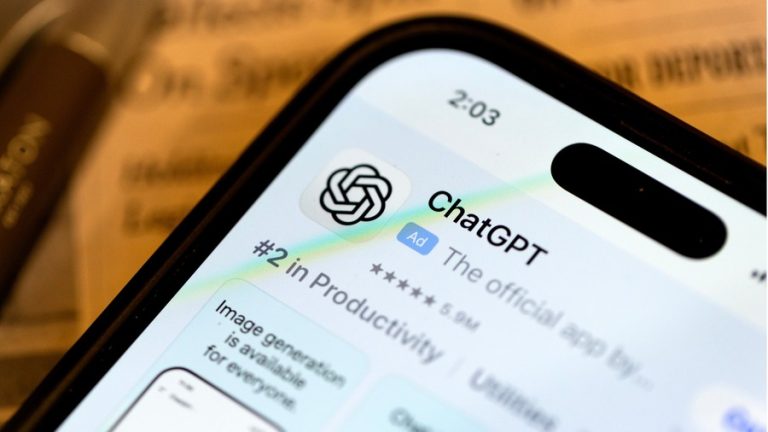
Internal documents cited in the investigation indicated that one Chinese province employed approximately 300 operatives assigned to these activities, with similar teams reported elsewhere. The operatives used ChatGPT and other artificial intelligence tools, including domestic models such as DeepSeek and Qwen, to generate content, profile targets, and monitor online discussions.
Success
You are now signed up for our newsletter
Success
Check your email to complete sign up
Cook’s report states that these operations rely on a wide range of techniques, many of which are designed to obscure their origin and appear indistinguishable from ordinary online activity.
AI model shapes Tibetan-language narratives
In March 2026, Chinese state media announced “DeepZang,” described as a large-scale Tibetan-language AI model intended to introduce global users to Tibetan history and culture.
According to the reports, the system produces responses aligned with official government positions. It describes Tibet as historically part of China and characterizes the Dalai Lama in terms consistent with state narratives. When asked about topics such as Tibetan independence or protests, the model limits responses to what it describes as “legal and compliant” content.
The launch followed the reported blocking of Monlam.ai, a Tibetan-language tool developed by the Tibetan exile community in India. The sequence effectively replaced an independent platform with a state-controlled alternative.
Fabricated evidence used in campaigns against dissidents
The OpenAI investigation documented coordinated efforts targeting individuals living abroad. These included the circulation of fabricated obituaries for living dissidents, accompanied by AI-generated images, distributed through social media platforms.
The report also describes the use of large-scale reporting campaigns against dissident accounts. Operatives submitted complaints supported by fabricated screenshots, exploiting automated moderation systems. In one case, forged documents presented as originating from a U.S. county court were submitted to justify account removal.
In addition, individuals posing as U.S. immigration officials reportedly contacted dissidents by phone, warning that their public statements on Chinese politics violated American law.
Fake consulting firm used to approach U.S. officials
Accounts linked to the network created a fictitious consulting firm known as “Nimbus Hub,” complete with a website, professional profiles, and staff biographies.
Using AI-generated English-language communications, the operation contacted U.S. state-level officials and policy analysts. The messages presented themselves as legitimate requests for policy input or consultation. According to OpenAI, the effort sought to obtain information about U.S. citizens and government facilities.
The report notes that recipients were encouraged to move conversations to private communication channels, reducing oversight and formal recordkeeping.
Social media networks targeted Taiwan audiences
Meta’s first-quarter 2026 report identified a network of accounts targeting Taiwan, including more than 150 Facebook accounts and multiple pages presenting themselves as local civic groups.
The network used traditional Chinese and local identifiers, encouraging users to submit anonymous grievances about social and political issues. It also purchased advertising on Facebook and Instagram, with total spending reported at approximately $15,000.
The report states that the operation focused on identifying and amplifying existing divisions within Taiwanese society.
OpenAI separately identified coordinated activity on the social platform Bluesky, where multiple accounts impersonated individual dissidents, apparently to dilute and displace authentic voices.
State media content distributed through local channels in Europe
A report by the European Council on Foreign Relations examined how Chinese state media content entered foreign information environments through commercial partnerships.
In the Czech Republic, a radio program titled “Colorful World” aired regularly for several years on a local station while sourcing its content from China Radio International. The program was presented as local programming, with no clear attribution to its origin.
Content produced by China Radio International was also republished by Czech-language outlets without attribution, appearing to audiences as domestic reporting.
Influencers and paid contributors amplify messaging
The European Council on Foreign Relations report describes the use of payments and incentives to recruit local participants to distribute content aligned with CCP messaging.
During the COVID-19 pandemic, university students in Central Europe were reportedly paid small sums to record videos presenting specific narratives about the virus. These videos were shared in local languages and presented as personal viewpoints.
The report also describes organized visits by social media influencers to Xinjiang, where content production was coordinated and later presented as independent travel experiences.
China Radio International’s Czech-language social media presence has accumulated more than one million followers, according to the report.
OpenAI identified similar activity in Japan, where efforts were made to influence perceptions of political leadership through locally framed messaging.
Scale and methods designed to conceal origin
The reports describe a system supported by sustained resources, including personnel, funding, and technical infrastructure deployed across multiple regions and platforms.
Many of the activities rely on indirect methods rather than overt messaging. These include the use of fabricated identities, commercial intermediaries, and locally framed content to obscure connections to state actors.
OpenAI noted that some operations achieved limited engagement and that accounts were often removed. However, the reports emphasize that the effectiveness of such efforts depends in part on their ability to remain undetected.
Cook’s analysis highlights the range of tactics now in use and the role of public awareness in identifying such activities.
Editor’s Note: This article is based on media reports, publicly released investigations by OpenAI, Meta, and the European Council on Foreign Relations, as well as analysis by China Rights Analytics and Advising. Some details involve alleged activities that cannot be independently verified and are presented as findings or claims from the cited sources.