According to a report by veteran national security journalist Bill Gertz in The Washington Times on April 1, the Pentagon’s Office of Strategic Capabilities is launching a new initiative described as “cognitive warfare” operations.
The report characterizes the development as part of a broader focus on strategic competition with U.S. adversaries, including the Chinese Communist Party (CCP) and Iran. It notes that some observers interpret the initiative as an expansion of information-related capabilities rather than traditional kinetic military action.
The discussion has prompted varied reactions online, with some commentators speculating about its implications for China, while others emphasize that the program is aimed at the information domain.
The report cites analysts who argue that the Chinese military concept of “Three Warfares”—public opinion warfare, psychological warfare, and legal warfare—has informed China’s approach to influence operations both domestically and internationally. According to these assessments, China is viewed by U.S. researchers as using cognitive influence strategies to shape public perception, influence decision-making, and affect geopolitical outcomes.
One analyst referenced in the report, Andrew Jensen, describes cognitive warfare as targeting “human will, beliefs, thoughts, and psychology,” with the objective of influencing an adversary’s decisions and behavior.
Success
You are now signed up for our newsletter
Success
Check your email to complete sign up
The report also notes recommendations for countermeasures, including exposing misinformation and supporting credible independent voices, as well as highlighting concerns about compliance with international agreements.
The Pentagon office involved, which focuses on autonomous systems and artificial intelligence, is reportedly led by Chief Technology Officer Sam Gray. According to the report, the new program—referred to as “Foundational Information Perception Operations”—aims to leverage commercial technologies for operations in the information domain.
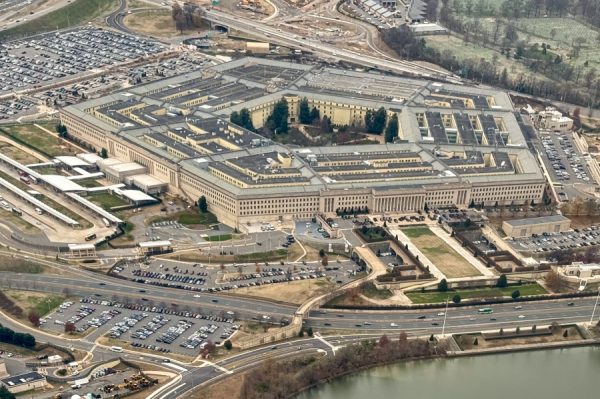
Cognitive warfare techniques in war
Historically, cognitive or information-based deception techniques have been used in warfare, including the use of inflatable decoy tanks during World War II to mislead German forces. Analysts note that modern artificial intelligence now enables similar techniques to be deployed at much larger scale across text, audio, and video environments.
The report states that the program is expected to develop new cognitive warfare capabilities within three to five years, aimed at addressing high-priority strategic challenges. Its stated objective is described as the ability to “disrupt the cognition and thinking of adversaries or individuals, and influence perception, judgment, and action.”
The discussion also references China’s so-called “Three Warfares” doctrine, which includes public opinion warfare, psychological warfare, and legal warfare. Some analysts argue that psychological operations have long been a component of major power competition, and note that the United States has historically invested in understanding adversarial decision-making processes.
The text draws comparisons to the Cold War era, when the Reagan administration viewed psychological and information-based measures as part of broader strategic competition with the Soviet Union. It is noted that Soviet leadership closely monitored President Ronald Reagan, who was often perceived as unpredictable in his policy approach.
Commentary in the report suggests that unpredictability in leadership style can affect strategic calculations by adversaries, making intentions harder to anticipate.
Historically, Reagan’s administration is described by some analysts as treating the Cold War as an ideological struggle, with efforts aimed at increasing uncertainty and pressure on Soviet decision-making. During this period, U.S. intelligence agencies, including the CIA, reportedly engaged specialists in psychology and psychiatry to better understand foreign leadership behavior.
These analyses often focused on assessing how foreign leaders perceived the United States, including their fears, decision-making patterns, resilience under pressure, and factors that might affect confidence or strategic stability.
For example, clinical psychologist Professor Alan Whittaker reportedly provided psychological assessments of Soviet leadership for the CIA. He recalled that “some indications suggested that Soviet leaders were under significant strain.”
The commentary then speculates that U.S. intelligence agencies may be closely monitoring the psychological profile of Chinese leadership, including President Xi Jinping, in order to assess perceived concerns, vulnerabilities, and decision-making patterns.
The text further links recent geopolitical developments involving countries such as Venezuela and Iran to heightened strategic pressure on China’s leadership, suggesting that these events may influence internal perceptions of risk.
It also references a recent public appearance by Xi Jinping, during which he attended a tree-planting event alongside other members of the Politburo Standing Committee. The commentary notes differences between reported weather conditions and clothing choices observed in photographs, and interprets this as symbolic rather than factual evidence of concern.
The passage concludes by introducing an article by Professor Miles Yu titled “How U.S. Military Superiority Can Undermine China’s War Machine,” which is presented as part of broader analysis on U.S.–China strategic competition.

Structural issues within the CCP system
Miles Yu, a prominent commentator on U.S.–China relations, is widely followed by Chinese-speaking audiences both inside and outside China for his analysis of structural issues within the Chinese political system.
In a recent article, Yu argues that “nearly every major leap in the modernization of the People’s Liberation Army has been triggered by disruptive demonstrations of U.S. military superiority.”
He cites examples including the Gulf War, as well as later U.S. operations involving Iran and Venezuela, which he says revealed significant weaknesses in China’s defense-industrial system. According to Yu, these events have repeatedly forced rapid modernization efforts, internal restructuring, and political purges within China’s military establishment.
Yu further writes that this pattern reflects not only strategic competition, but also deeper structural constraints within the Chinese Communist Party system itself.
He describes China’s military modernization as non-linear and reactive rather than innovation-driven, suggesting it is often prompted by external shocks rather than sustained indigenous technological development. He references the 1991 Gulf War, which he says demonstrated the effectiveness of precision strike, stealth, and networked warfare; the 1999 NATO bombing of the Chinese embassy in Belgrade; and the 2001 EP-3 incident, arguing that these events highlighted vulnerabilities in the PLA and accelerated investment in aerospace, cyber capabilities, and anti-access/area-denial strategies.
Yu also outlines what he identifies as three systemic weaknesses. First, he argues that China struggles to generate original innovation and remains heavily dependent on reverse engineering and foreign technology acquisition. Second, he claims that even when designs are obtained, challenges in engineering precision and materials science can limit consistent performance. Third, he suggests that efforts at military–civil fusion have contributed to inefficiencies and corruption within the defense sector, raising questions about weapons quality and reliability. Finally, he argues that a propaganda-driven political environment can encourage exaggeration and self-deception, with deficiencies often becoming apparent only in real-world conditions.
The article further argues that, in moments of major strategic pressure, the Chinese system tends to fall short of expectations.
It claims that in recent operations involving Venezuela and Iran, Chinese-provided air defense networks, radar systems, and missile platforms reportedly underperformed when confronted with advanced U.S. stealth and electronic warfare capabilities. According to the article, systems previously described as capable of detecting or deterring high-end threats were shown to be limited in effectiveness or, in some cases, non-functional under operational stress.
The report suggests that these outcomes not only undermine confidence in specific systems, but also highlight a significant gap between official narratives and demonstrated capability.

The leaderships’ response
It then turns to the question of leadership response, stating that instead of addressing structural issues, top decision-makers allegedly responded with large-scale personnel purges within military leadership and defense research institutions.
The commentary adds that this reflects a deeper systemic issue: an inability within the political structure to openly acknowledge failure. When deficiencies are exposed—particularly under conditions of competition with U.S. military capabilities—the response, it argues, is not institutional reform but the assignment of blame to individuals. This creates a cycle in which political purges replace technical correction.
According to the article, the consequences of this pattern are significant. Removing experienced military leaders and weapons scientists is said to weaken the system’s capacity for learning and improvement. At the same time, a climate of fear discourages accurate reporting and critical analysis, reinforcing the very distortions and inefficiencies that contribute to failure. In such an environment, innovation becomes more risky, as speaking candidly may carry greater consequences than making technical errors.
The article further argues that U.S. military successes have had a dual impact on China’s weapons development: they act as catalysts for accelerated modernization, while simultaneously exposing structural weaknesses in a system that prioritizes political control over operational capability. Each confrontation, it suggests, both narrows the technological gap and increases internal instability within military and research institutions.
This creates a paradox: while the Chinese system seeks to compete with the United States and pursue increasingly ambitious military programs, its centralized and politically driven structure limits the likelihood of consistent success. A lack of transparency, independent evaluation, and institutional resilience results in uneven and fragile progress.
Miles Yu is quoted as saying, “U.S.–China competition is not only a contest of weapons, but also a contest of systems.” He further states that “China’s system tends to transform operational failure into a political crisis.”
The passage characterizes this assessment as particularly incisive.