In February 1972, President Richard Nixon visited a China governed by the Chinese Communist Party (CCP), marking a historic thaw in U.S.–China relations. In the decades that followed, Washington’s mainstream foreign policy consensus held that engagement and trade would gradually encourage China to open up, eventually embracing market economics and democratic institutions. This belief guided successive administrations from Nixon through Obama. The United States opened its markets, universities, and technological cooperation channels, operating under the assumption that it was cultivating a “responsible stakeholder.”
There were historical reasons for this optimism. China is often viewed as a civilization with five thousand years of history, shaped by Confucian, Buddhist, and Daoist traditions, and guided by ethical concepts such as harmony between heaven and humanity, as well as virtues like benevolence, righteousness, propriety, wisdom, and trust. In the U.S.–China relationship prior to 1949, despite periods of tension, there was also extensive cooperation. American missionaries established schools and hospitals in China; Boxer Indemnity funds were used to support Chinese students studying in the United States; and during World War II, the United States became China’s most important ally in resisting Japanese aggression, providing substantial military and economic assistance through the Flying Tigers and the Lend-Lease program. The Flying Tigers remain a lasting symbol of wartime cooperation. From this perspective, many believed that no fundamental civilizational conflict existed between two societies rooted in traditional moral values, and that integrating China into the global system was both natural and beneficial.
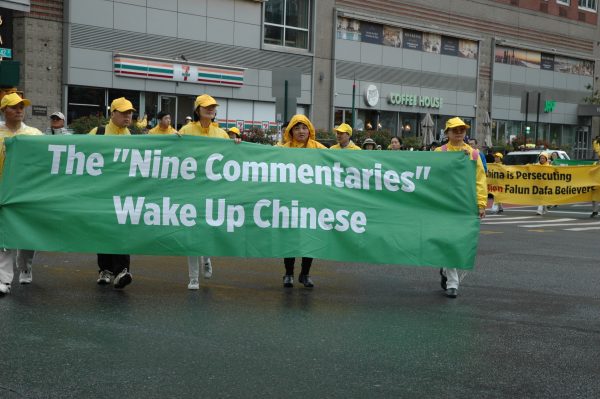
However, critics argue that this assumption overlooked a fundamental shift after 1949. The China governed by the Chinese Communist Party, they contend, was not a continuation of historical Chinese civilization. The book The Nine Commentaries on the Communist Party offers a stark interpretation, describing the Party as a destructive ideological force that has attached itself to Chinese society and permeated its institutions. In this view, the CCP is not the embodiment of Chinese civilization, but rather a parasitic system operating within it. According to this perspective, the United States was not engaging with an ancient civilization, but with a regime driven by ideological struggle and control.
During 1990–1991, the Soviet Union collapsed and Eastern Europe underwent dramatic political change. The Western world entered a period of optimism often described as the “end of history.” In Beijing, however, Deng Xiaoping issued a markedly different set of strategic directives to the Party leadership. This became known as the “24-character guideline”: observe calmly, secure our position, cope with affairs calmly, hide our capabilities and bide our time, be good at maintaining a low profile, and never claim leadership.
“Hide our capabilities and bide our time” was widely interpreted as a strategy of restraint and patience. Critics, however, argue it reflected a calculated approach: to conceal strength, avoid confrontation, and wait for a more favorable moment. Rather than signaling simple prudence, it is described by some as a form of strategic disguise. From this perspective, as the West grew confident in its post-Cold War dominance, Beijing was quietly focusing on long-term development with the intention of revealing its full strategic posture at a later stage.
Success
You are now signed up for our newsletter
Success
Check your email to complete sign up
By 2001, when the United States supported China’s accession to the World Trade Organization, elements within the Chinese military were already preparing for a different kind of “war.” In 1999, two senior PLA Air Force colonels, Qiao Liang and Wang Xiangsui, published Unrestricted Warfare, which advanced a doctrine of conflict extending far beyond traditional military engagement. The book states that “war can be military, quasi-military, or non-military… this requires us to no longer view today’s and tomorrow’s wars through old perspectives.” It outlines multiple forms of “non-military warfare,” including trade war, financial war, cyber war, media war, psychological war, cultural war, and legal war—each described as potentially applicable against the United States.
The timing of the book’s publication is often noted by critics: it appeared in 1999, the same period in which China was actively pursuing WTO membership. While Chinese leaders were engaged in diplomatic engagement with Western counterparts and publicly affirming “peaceful development,” military strategists were simultaneously publishing frameworks describing how non-military means could be used to confront and potentially defeat a global superpower.
The United States, critics argue, failed to fully interpret these signals
In 2008, the Chinese Communist Party launched the “Thousand Talents Plan,” administered by the Central Organization Department. Its publicly stated objective was to attract high-level overseas talent to contribute to China’s development. However, according to a Nov. 18, 2019 report by the U.S. Senate Permanent Subcommittee on Investigations titled “Threats to the U.S. Research Enterprise: China’s Talent Recruitment Plans,” the program was found to “incentivize the theft of proprietary and classified research.” The report further noted that multiple participants had covertly transferred U.S. federally funded research to Chinese institutions.
One prominent case cited in this context is that of Charles Lieber, former Chair of Harvard University’s Chemistry Department, who was convicted in January 2022 for concealing his contractual involvement with the “Thousand Talents Plan.” By around 2018, as U.S. authorities began investigating, Chinese authorities reportedly removed all public references to the program from the internet—an action critics describe as an implicit acknowledgment of concern.
In 2009, Li Changchun, then a member of the Politburo Standing Committee in charge of propaganda, stated that “Confucius Institutes are an important part of China’s overseas propaganda structure.” Critics interpret this remark as revealing the true nature of the Confucius Institute system—not as a purely cultural exchange initiative, but as an extension of state-led external messaging.
According to a February 2019 report by the U.S. Senate Permanent Subcommittee on Investigations titled “China’s Impact on the U.S. Education System,” the Office of Chinese Language Council International invested more than $158 million in Confucius Institute programs in the United States, while American universities reportedly had limited oversight over curriculum and staffing decisions. Some contractual provisions were reported to restrict discussion of topics such as Tibet, Taiwan, and Tiananmen.
In testimony before the U.S. Senate Select Committee on Intelligence on Feb. 13, 2018, then–FBI Director Christopher Wray stated that the FBI was treating Confucius Institutes as potential platforms for intelligence collection and influence operations.
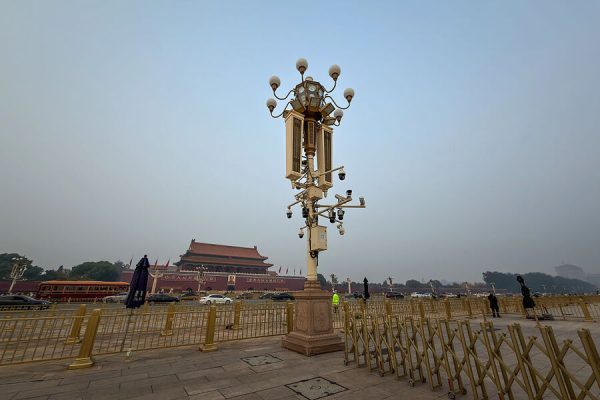
These were not hidden actions—the Chinese Communist Party stated them explicitly
In April 2013, the General Office of the Communist Party of China issued an internal document titled “Communiqué on the Current State of the Ideological Sphere,” commonly referred to as “Document No. 9.” The document was later leaked and published in full English translation by ChinaFile in November 2013. It explicitly listed seven prohibited topics, including Western constitutional democracy, universal values, civil society, neoliberalism, and Western journalism. The document stated that Western constitutional democracy carries a distinct political nature and orientation, including separation of powers, multiparty systems, universal suffrage, judicial independence, and the nationalization of the military—elements it described as aimed at negating the leadership of the Communist Party of China and the socialist system with Chinese characteristics.
In other words, while the United States spent decades attempting to promote liberal values through engagement, internal Party documents explicitly defined those same values as ideological threats to be contained and eliminated.
On Aug. 19, 2013, Xi Jinping delivered a major speech at a national conference on propaganda and ideological work, later referred to as the “8.19 Speech.” He stated that ideological work is “an extremely important task of the Party,” and called for ensuring that “the leadership, management, and discourse power over ideological work are firmly held in the Party’s hands.” According to multiple accounts, he also analyzed the collapse of the Soviet Union, asking: “Why did the Soviet Union disintegrate? Why did the Communist Party of the Soviet Union collapse? One important reason was intense ideological struggle, including the wholesale rejection of Soviet history, the Communist Party’s history, Lenin, and Stalin, and the rise of historical nihilism.”
The implication, critics argue, extended far beyond domestic politics. Xi’s message to the Party was that ideology is a matter of survival, and that the Soviet Union collapsed because it lost this struggle. Therefore, China must not repeat that fate and must instead proactively strengthen its ideological influence globally.
However, critics contend that this interpretation misreads the fundamental lesson of Soviet history. The collapse of the USSR, they argue, was not caused by “historical nihilism,” but by the inherent inability of communist ideology to deliver lasting prosperity, dignity, and legitimacy, ultimately leading to its rejection by its own people. When controls were loosened under Mikhail Gorbachev, Soviet citizens were, for the first time, able to speak openly—and what emerged was a rejection of the system itself.
From this perspective, the historical lesson should have been that failed ideological systems must give way to the will of the people. Yet Xi’s interpretation, critics argue, led to the opposite conclusion: that truth-telling must be restricted, and ideological control must be strengthened. In order to preserve the Party’s rule, ideological tightening would be intensified domestically, while the struggle over narratives would also be extended internationally—ensuring that, in this view, open discussion of truth would be increasingly constrained on a global scale.
In practice, critics argue, this is precisely what the Chinese Communist Party has been doing.
According to a November 2018 report by the Hoover Institution at Stanford University titled “Chinese Influence & American Interests: Promoting Constructive Vigilance”—co-authored by dozens of leading American China scholars—Beijing’s influence operations were found to extend across U.S. media, academia, think tanks, the corporate sector, diaspora communities, and the technology industry. The report noted that many of the contributing scholars had previously supported the policy of engagement, but became alarmed by the depth and breadth of what they perceived as Chinese influence and penetration during the course of their research.
The significance of the report, critics emphasize, lies in its authorship: it was not produced by political hardliners or ideological skeptics, but by a central segment of the American China studies community—scholars who had once been among the strongest proponents of engagement. Ultimately, they concluded that their prior assumptions had been incomplete, and that the engagement framework had, in some respects, been leveraged in ways they had not anticipated.

In reality, critics argue, the CCP has long been explicit about its methods
As early as 1939, Mao Zedong identified “United Front work” as one of the Party’s “three magic weapons,” alongside armed struggle and Party building. The core principle of the United Front strategy is summarized as: “make use of contradictions, win over the many, isolate the few, and eliminate opponents one by one.” This approach was later further developed by Zhou Enlai into what is often described as “people-to-people diplomacy,” involving the cultivation of foreign journalists, scholars, and business figures to influence foreign governments.
Critics emphasize that this is not a secret doctrine, but a methodology openly documented in Communist Party materials. From Mao Zedong to Xi Jinping, what has changed is not the underlying strategy, but the tools and scale: from cultivating figures such as Edgar Snow, to establishing Confucius Institutes; from traditional “people-to-people diplomacy” to the Thousand Talents Program; and from underground United Front work to a global external propaganda system worth hundreds of billions of dollars. In this view, the methodology has remained consistent throughout.
In 2015, Xi Jinping convened the first Central United Front Work Conference in nine years and issued the Regulations on United Front Work of the Communist Party of China. The regulations explicitly identify overseas Chinese communities, religious groups, intellectuals, and private entrepreneurs as targets of United Front work. According to research by Australian Strategic Policy Institute (ASPI) fellow Alex Joske in 2020, the United Front system operates through thousands of overseas organizations, reaching nearly every country with a significant Chinese diaspora presence.
Critics describe this not as conventional diplomacy, but as a system embedded within Chinese society that projects influence abroad through cultural and ethnic ties. Many participants in overseas Chinese associations, Chinese-language media outlets, and cultural organizations, they argue, may not even be aware of the broader political structure within which they operate.
Looking back, critics suggest that what is most striking is not what the Chinese Communist Party has done, but how openly much of it has been stated. Deng Xiaoping’s “hide your capabilities and bide your time” strategy, in this interpretation, referred to concealing strength, not concealing intent. Strategic objectives, they argue, have long been documented in Party communications, military writings, and leadership speeches. Works such as Unrestricted Warfare were publicly published. The content of “Document No. 9” aligns with long-standing Party practice. United Front work is formally embedded in the Party constitution. From this perspective, the United States was not primarily deceived by secrecy, but by its own assumptions—choosing in many cases to overlook evidence that was publicly available.
The Party, critics continue, has never concealed the nature of its media system. On Feb.19, 2016, Xi Jinping visited People’s Daily, Xinhua News Agency, and China Central Television, declaring that “Party-run media must bear the surname of the Party.” In this formulation, state media are not independent institutions but instruments of political communication—used domestically to shape public perception and internationally to influence narratives. The Party describes this as “telling China’s story well;” critics characterize it more bluntly as replacing truth with controlled messaging.
More than half a century after the normalization of relations in 1972, critics argue that the Chinese Communist Party has leveraged American openness and goodwill to build a broad influence network within American society—spanning universities, financial institutions, technology laboratories, lobbying channels, and media ecosystems. In their view, this system has been constructed using the very platforms and freedoms provided by the United States itself.
From this perspective, the result is not merely geopolitical competition, but a deeper structural transformation of a once-cooperative relationship. What could have been a mutually beneficial exchange between two major civilizations has instead, critics argue, evolved into strategic rivalry—not due to inherent incompatibility between peoples, but because of what they describe as the Party’s enduring logic of control, confrontation, and distrust.

Fortunately, Americans are finally waking up
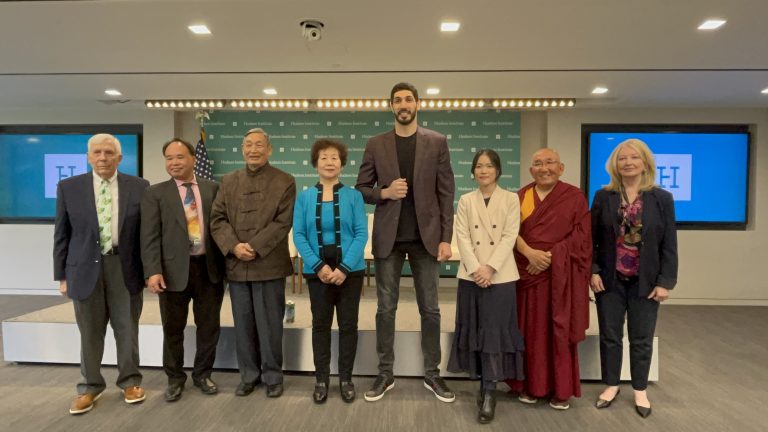
Since 2017, with the launch of the U.S.–China trade war; the Department of Justice’s “China Initiative” in 2018; Vice President Mike Pence’s Hudson Institute speech on China policy; the FBI’s systematic review of Confucius Institutes; and a rare bipartisan consensus in Congress on China policy—these developments collectively suggest that the decades-long “illusion of engagement” is being dismantled. The United States, critics argue, is recognizing the nature of the Chinese Communist Party at an unprecedented pace.
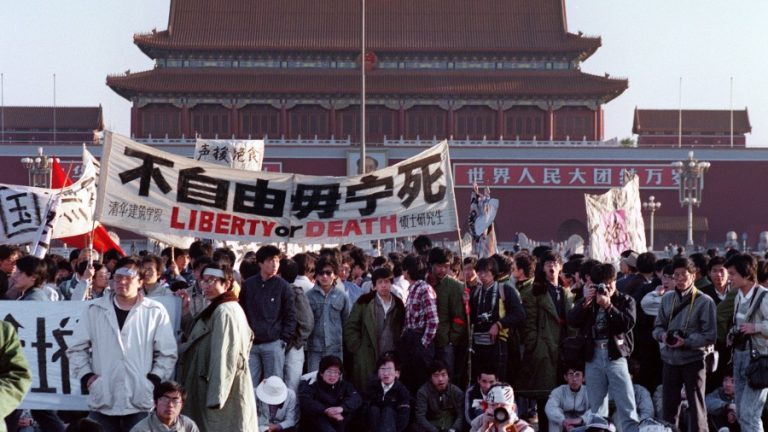
In this process of awakening, critics emphasize that the contributions of certain individuals should not be forgotten—particularly overseas Chinese who have long worked to expose what they view as the true nature of the Chinese Communist Party. Among them are post–Tiananmen exiles, Falun Gong practitioners, former officials and scholars who left the system, as well as journalists and writers who have remained committed to their convictions. At a time when mainstream American society was still largely operating under the assumptions of engagement policy, these individuals, often in isolation, consistently and repeatedly warned that the CCP was not what it appeared to be. For many years, their voices were ignored, ridiculed, or even suppressed. Yet, in hindsight, critics argue that they were proven correct.
This, they suggest, is the most profound lesson of engagement policy: Americans, in their view, were too trusting, believing they could change the CCP, while in reality the CCP was changing America. From the outset, critics argue, Beijing understood the trajectory of this strategic competition—an approach rooted in the long-standing principles established under Mao Zedong’s “three magic weapons,” which, they contend, have never fundamentally changed.
However, the most important lesson of this history is not “abandoning kindness.” Kindness, they argue, is never the problem; it is one of humanity’s most valuable qualities. The problem arises when kindness is not combined with the ability to recognize and confront malign intent. Without such discernment, goodwill can be exploited. In this interpretation, decades of engagement allowed U.S. capital, technology, and openness to be leveraged in ways that ultimately strengthened the CCP’s power, expanded its influence abroad, and reinforced domestic control.
As more people—both Americans and Chinese—come to recognize what critics describe as the “knife” held by the CCP, its edge begins to lose effectiveness. In this view, the greatest enemy of falsehood is not force, but exposure.
Looking forward, critics suggest that if what they describe as an alien force embedded within Chinese civilization is ultimately removed, the relationship between China and the United States will no longer be defined by confrontation. Instead, it could evolve into a relationship between two great nations based on genuine and constructive friendship.
(This article reflects the author’s personal views and opinions only.)
By Xinye