In December 2025, Chinese authorities announced an investigation into Wang Xinghuan, former president of Zhongnan Hospital of Wuhan University and a key figure during the early stages of the COVID-19 outbreak. The case has drawn attention due to the inclusion of an unusual charge described as “new-type hidden corruption” within China’s medical field.
According to a statement released by China’s top anti-corruption bodies, Wang is accused of “serious violations of discipline and law,” a standard phrase used in official investigations. The notice also cited a range of alleged offenses, including abuse of power, involvement in improper financial dealings, accepting large sums of illicit funds, and interfering with investigative procedures.
RELATED: Here’s Just How Badly ‘Zero-COVID’ Has Damaged China’s Economy
Notably, the statement referenced “hidden corruption” in the healthcare sector, a formulation rarely seen in official disciplinary language. Authorities alleged that Wang used his position to benefit others in areas such as medical equipment procurement and construction projects. Wang has since been expelled from public office within the Chinese Communist Party (CCP), and his case has been transferred for prosecution.
Role during the pandemic
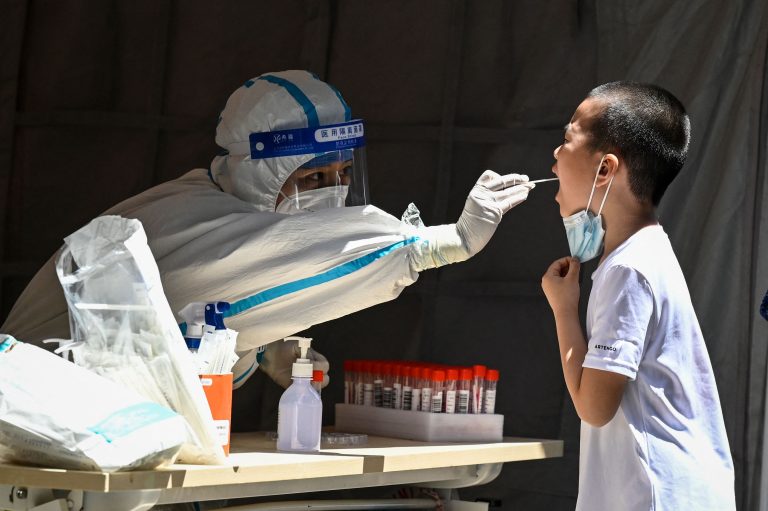
Wang Xinghuan gained national prominence in early 2020 when he served as head of Leishenshan Hospital, a temporary medical facility rapidly constructed in Wuhan during the initial COVID-19 outbreak.
Success
You are now signed up for our newsletter
Success
Check your email to complete sign up
At the time, official reports described the hospital’s operations as highly effective. According to state media, more than 3,000 medical personnel were deployed, and over 2,000 patients were treated during its operation. Authorities reported relatively low mortality rates and stated that there were no infections among staff.
However, some observers have questioned the reliability of publicly released data from that period, noting longstanding concerns about transparency during the early stages of the pandemic. As hospital director, Wang would have had direct knowledge of conditions on the ground, including patient outcomes and operational challenges.
Career background
Born in August 1965 in Hubei Province, Wang is a trained urologist and medical academic. He held leadership roles in several major hospitals, including Guangdong Provincial People’s Hospital, before becoming president of Zhongnan Hospital in 2015.
He served in that role for a decade and concurrently led Leishenshan Hospital during its brief operation in 2020. In addition to his medical positions, Wang was also affiliated with a minor political party aligned with the Communist Party system.
In late 2025, Wang’s status began to shift. His qualification as a member of the Chinese People’s Political Consultative Conference was revoked in December, and he was formally placed under investigation shortly afterward.
Scrutiny of medical sector practices
The case comes amid a broader anti-corruption campaign targeting China’s healthcare system. Since 2023, authorities have intensified efforts to investigate financial misconduct in hospitals, pharmaceutical procurement, and related sectors.
Officials have emphasized the need for “full-chain” oversight, focusing on key decision-makers and high-risk areas such as equipment purchasing and infrastructure projects, precisely the areas cited in Wang’s case.
Wang’s investigation has prompted a range of reactions online, with some observers questioning whether the case reflects broader political dynamics. Some commenters suggested that such high-profile cases may involve factors beyond financial misconduct, pointing to the inclusion of phrases like “associating with political fraudsters” in official statements. This terminology has appeared in other recent cases and is sometimes interpreted by analysts as signaling political alignment issues.
Others have drawn connections to earlier investigations of senior officials, noting patterns in how disciplinary language is used. However, these interpretations remain speculative and have not been confirmed by authorities.
Unresolved questions
While the official charges focus on corruption-related allegations, the inclusion of less common terminology has drawn particular attention. Analysts note that shifts in language can sometimes reflect evolving priorities within broader enforcement campaigns.
At the same time, Wang’s role during a pivotal moment in China’s public health response adds another layer of public interest to the case.
As the investigation proceeds, further details may clarify the scope of the allegations. For now, the case highlights both ongoing scrutiny of China’s healthcare system and the complexities surrounding high-profile disciplinary actions.
Editorial note: This article is based on publicly circulating reports and commentary from independent analysts. The claims described have not been independently verified by Vision Times, and relevant authorities have not publicly confirmed the allegations.