By Meng Hao, Vision Times
A newly-released report from the U.S. Department of State warns that Hong Kong’s autonomy, rule of law, and civil liberties continue to deteriorate, concluding that the city no longer warrants special treatment under U.S. law. The findings have intensified concerns among advocacy groups, with the Committee for Freedom in Hong Kong Foundation (CFHK) stating that the report confirms Hong Kong’s freedoms are undergoing “systematic erosion.”
Published on April 16 and covering developments throughout 2025, the report finds that Beijing and Hong Kong authorities have “systematically undermined Hong Kong’s political autonomy, civil liberties, and rule of law,” marking a continued shift away from the city’s once open society toward a more authoritarian model of governance.
RELATED: Expansion of Hong Kong Security Law Raises Stakes for Convicted Figures Like Jimmy Lai
Crackdown extends beyond borders
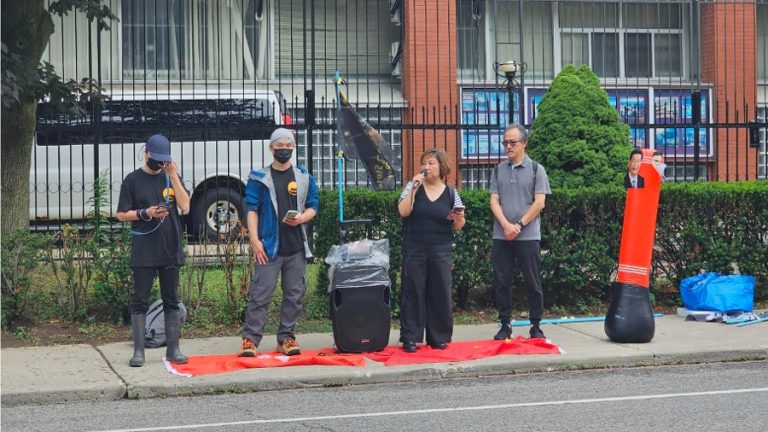
Among the report’s most concerning findings is the expansion of transnational repression. Authorities have issued arrest warrants and bounties exceeding $25,000 for 19 overseas activists, including U.S. citizens and residents. In one case, the father of a Hong Kong activist living in the United States was arrested for allegedly handling his daughter’s assets—an action critics say amounts to punishing families for exercising free speech abroad.
Success
You are now signed up for our newsletter
Success
Check your email to complete sign up
The report also confirms that at least one U.S. citizen has been targeted with an arrest warrant, highlighting the growing extraterritorial reach of Hong Kong’s National Security Law. CFHK stated: “This report confirms that Beijing and Hong Kong authorities have systematically and deliberately dismantled Hong Kong’s political autonomy, civil liberties, and rule of law.”
Jonathan Stivers, the group’s U.S. director, added: “Hong Kong people have not forgotten the promises made to them. The United States must not forget either. The window for meaningful action is closing. We urge the Trump administration to use all diplomatic, financial, and legal tools to secure the release of political prisoners and hold Beijing accountable. The United States must stand unequivocally with the people of Hong Kong.”
Judicial independence under pressure
The report raises serious concerns about the integrity of Hong Kong’s legal system, noting that in national security cases, “there is no expectation of a fair trial.”
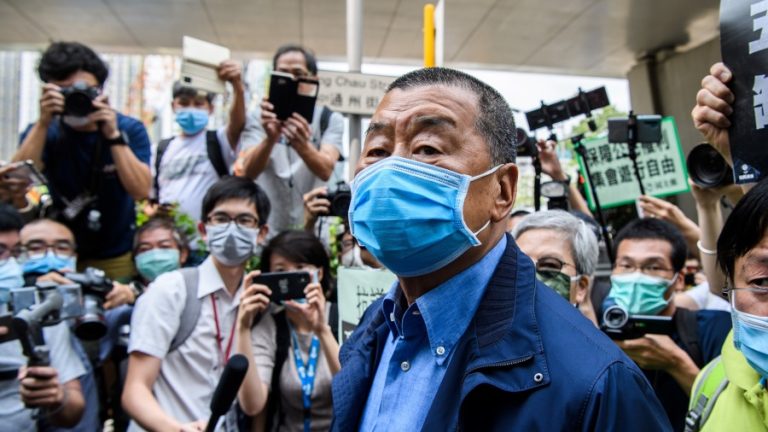
Particular attention is given to media entrepreneur and Apple Daily founder Jimmy Lai. Now 78, Lai was convicted on December 15, 2025, after being denied the right to choose his own legal counsel. He was later sentenced to 20 years in prison—a penalty widely viewed by critics as effectively a life sentence.
RELATED: Hong Kong to Seize Jimmy Lai’s Assets as Crackdown Extends Beyond Prison Walls
Additional arrests tied to political expression further illustrate the tightening environment. At least 12 individuals were detained in June 2025 for participating in Tiananmen Square commemorations, while others faced prosecution for social media posts or alleged “insults” to the Chinese national flag. In the lead-up to legislative elections conducted under Beijing-designed rules, 22 people were arrested, and pro-democracy parties were excluded entirely.
Political system reshaped
The report finds that Hong Kong’s political system has undergone a fundamental transformation following electoral reforms, with opposition voices largely removed from the legislative process.
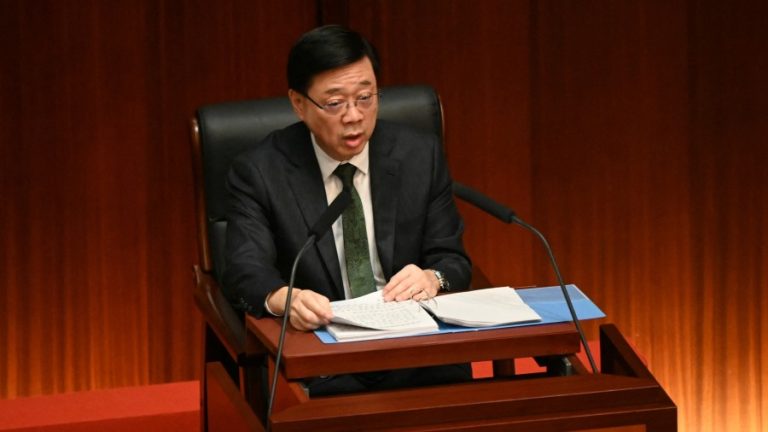
In an interview with Vision Times, Hong Kong parliamentary speaker John Jiang criticized the legislature’s evolving role: “So-called ‘oversight,’ if it is limited to internal voting and procedural questioning, without a genuine opposition or any voices willing to say ‘no’ to the Hong Kong authorities, is merely a performance of the system.” He continued: “Lacking public mandate and popular support, the Hong Kong legislature has not only failed to maintain pluralistic oversight, but has instead accelerated the one-way concentration of power.”
On broader institutional changes, Jiang said: “The blurring of legal boundaries between Hong Kong and the mainland is not a neutral development—it is evidence that ‘one country, two systems’ has been fundamentally hollowed out by the Chinese Communist Party.” He added: “When Hong Kong’s common law system and judicial independence are no longer clearly distinct from the mainland, Hong Kong ceases to be Hong Kong and becomes merely an extension of the Party-state system.”
Shrinking freedoms and media constraints
The report also documents continued pressure on civil society and the media. Hong Kong’s press freedom ranking remains low, and at least one Bloomberg journalist was denied a work visa without explanation.
Educational institutions have also faced increased restrictions, with schools warned against participating in U.S. consulate activities and universities required to implement national security education programs.
Jiang described the broader shift toward a security-driven governance model: “Security is no longer about ‘preventing crime,’ but about ‘preventing dissent’; data surveillance is not used to protect the people, but to monitor them.”
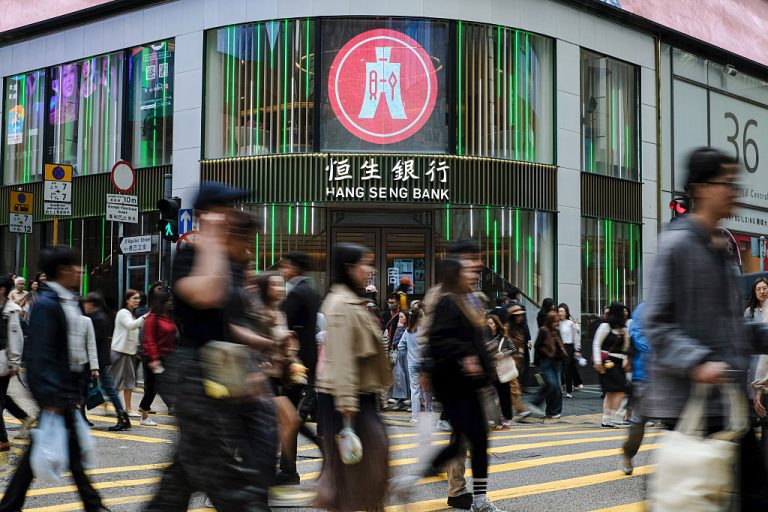
Despite these developments, the report notes that Hong Kong continues to function as an international financial center, maintaining free capital flows, low tariffs, and elements of its common law system. More than 1,300 U.S. companies remain active in the city, and the United States continues to maintain a trade surplus with Hong Kong. However, the report also points to Beijing’s growing influence over economic policymaking, including major business transactions and regional development strategies.
Calls for stronger US response
In response, CFHK has called on the U.S. government to take stronger action, including pressing for the release of political prisoners such as Jimmy Lai during future diplomatic engagements.
Jiang also urged U.S. leadership to raise the issue directly in discussions with Xi Jinping, emphasizing that expressions of concern alone are no longer sufficient. He called for targeted sanctions on officials involved in repression, as well as greater scrutiny of Hong Kong’s financial system for potential money laundering and corruption risks.
The State Department’s latest assessment underscores that Hong Kong is entering a period of profound institutional transformation, where domestic political shifts and international policy responses are increasingly intertwined.
As pressures mount from multiple directions, the city’s future, as both a global financial hub and a once-open society, remains a focal point of international concern.