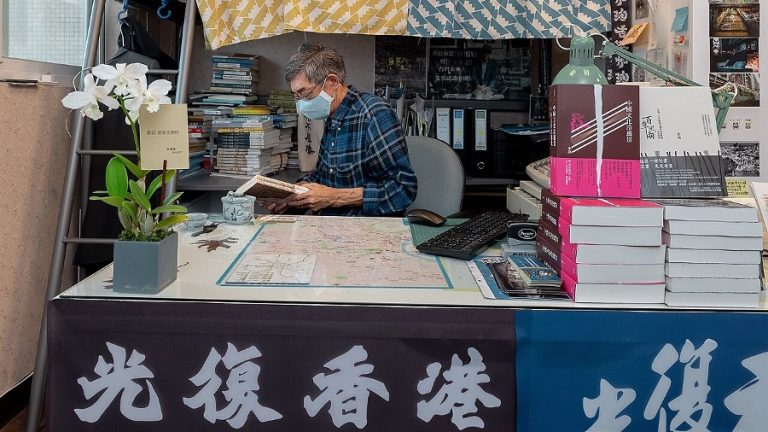
Eleven years have passed since the Causeway Bay Books incident. Lam Wing-kee, the bookstore’s founder, died on the evening of July 2 at Mackay Memorial Hospital in Taipei. Numerous Taiwanese political figures expressed their sorrow and paid tribute to him.
On Friday, Reporters Without Borders again urged the Swedish government to use the opportunity of Chinese Foreign Minister Wang Yi’s visit to Europe to press for the release of Gui Minhai, the Swedish citizen who was abducted by Chinese authorities during the Causeway Bay Books case.
Lam’s death has also renewed attention on China’s Law on Promoting Ethnic Unity and Progress, which took effect on July 1 and has been criticized for expanding Beijing’s transnational repression and extraterritorial jurisdiction. Before his death, Lam had warned that China’s practice of abducting people across borders could happen again.
Causeway Bay Books founder Lam Wing-kee dies in Taipei
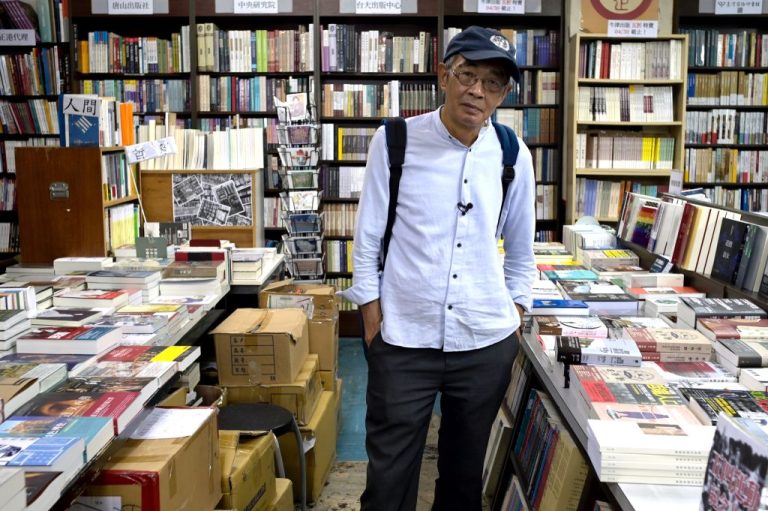
Lam Wing-kee, founder of Hong Kong’s Causeway Bay Books, died on July 2 at Mackay Memorial Hospital in Taipei at the age of 70.
News of his passing was widely reported by international media outlets, including the BBC, NHK, Deutsche Welle, Associated Press, and Reuters.
Success
You are now signed up for our newsletter
Success
Check your email to complete sign up
According to FTV News, after news of Lam’s death broke, many Hong Kong residents living in Taiwan and members of Hong Kong’s media gathered at Causeway Bay Books in Taipei’s Zhongzheng District to pay their respects.
Mourners placed framed photographs at the bookstore’s entrance and attached handwritten notes to its windows bearing messages such as “Brother Kei, rest in peace” and “May glory return to Hong Kong.” Bouquets of flowers and paper cranes were also laid outside the bookstore in tribute.
Lai Ching-te: Taiwan will continue to firmly defend democracy
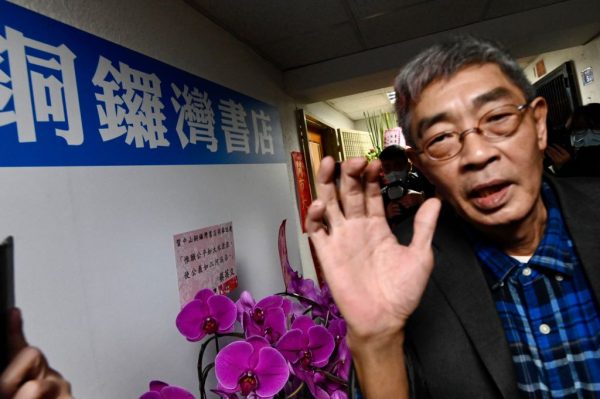
On the evening of July 2, Taiwan President Lai Ching-te posted a message on Facebook expressing his sorrow over Lam Wing-kee’s passing.
Lai said he was deeply saddened to learn of Lam’s death and extended his heartfelt condolences to Lam’s family, friends, and everyone who cares about Hong Kong’s freedom and democracy.
Lai recalled visiting Causeway Bay Books after it reopened in Taipei, where he met and spoke with Lam.
“It was a place filled with the fragrance of books and the air of freedom. Lam spoke gently, yet his eyes and his convictions conveyed an unwavering determination to defend freedom.”
Lai said Lam’s life bore witness to the value of freedom of expression, while also reflecting the fear and suffering brought about by authoritarian repression. Yet, rather than remaining silent, Lam chose to reopen Causeway Bay Books in Taiwan, transforming it into a place where people from Hong Kong could gather, speak freely, and support one another.
Lai added that Lam’s passing was a great loss, but the courage he left behind will not disappear.
“Taiwan will remember that there was once a Hong Kong bookseller who, in the simplest yet most steadfast way, showed us how precious freedom is and reminded us that democracy must be protected through the efforts of generation after generation.”
Concluding his tribute, Lai wrote: “Mr. Lam Wing-kee, thank you. May you rest in peace.”
He pledged that Taiwan will continue to steadfastly safeguard democracy, freedom, and human rights, and stand alongside all those who refuse to bow to authoritarianism.
Ho Jung-tai: Lam Wing-kee’s courage inspired all who cherish freedom
Taiwan Premier Cho Jung-tai also expressed his condolences in a Facebook post on the evening of July 2.
Cho said that throughout his life, Lam Wing-kee remained steadfast in speaking out for freedom and upholding his convictions despite facing oppression from an authoritarian regime. By bringing Causeway Bay Books to Taiwan, Lam ensured that a name carrying countless stories could continue to exist on free soil, where it became an important symbol of hope and the free exchange of ideas.
Cho said Lam’s courage was not only about speaking up for himself, but also about inspiring countless people who cherish freedom.
“I wish to express my deepest respect to Lam Wing-kee, who never stopped believing in freedom and lived according to his convictions. Thank you for leaving behind an enduring example and the courage to all those striving for democracy and freedom.”
Cho also extended his sincere condolences to Lam’s family, relatives, friends, and to everyone who had stood alongside him and cared about the development of democracy and freedom in Hong Kong.
Taiwan’s representative to the EU Hsieh Jhy-wey: The EU is concerned about China’s extraterritorial enforcement
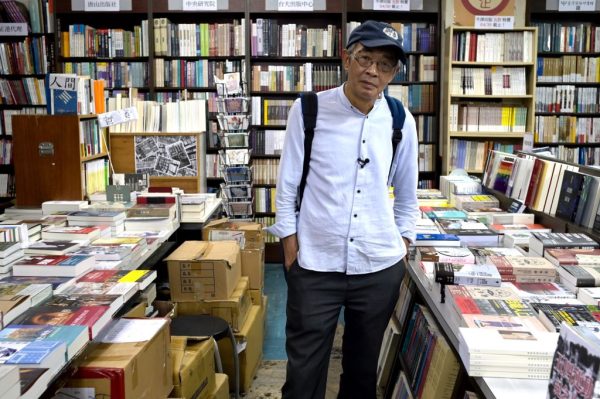
On July 3, Taiwan’s representative to the European Union, Hsieh Jhy-wey, posted on Facebook that, for a nation, having people who can write books is culture. Having people who write books and others who are able to publish them is civilization.
He said that under Chinese Communist Party rule, writing books the authorities dislike or publishing books the authorities dislike can be punished under explicit laws. However, he argued, this should not merely be called legal punishment; it is punishment directed at civilization itself.
Hsieh added that he felt deeply saddened by the news that Hong Kong publisher Lam Wing-kee—who had been persecuted and threatened by the CCP—had passed away in Taiwan. He described Lam as a truly courageous person. After Hong Kong, under what Hsieh called CCP terror rule, was no longer Lam’s home, Lam found a new home in Taiwan and continued operating his publishing business, remaining devoted to that cause until the end of his life.
Hsieh further noted that China began implementing the Law on Promoting Ethnic Unity and Progress on July 1. A spokesperson for the European Union stated that the EU is concerned about the law’s extraterritorial application and opposes the extraterritorial application of third-country legislation that violates international law.
Hsieh characterized the law as an extremely serious legal action that institutionalizes transnational repression and serves as a tool of intimidation and coercion. He said that, in addition to Chinese citizens, Tibetans, Uyghurs, and Hong Kong people, Taiwanese people are also among its targets. Taiwan’s Mainland Affairs Council has stated that the government will cooperate with like-minded countries to jointly resist threats posed by the Chinese Communist Party.
Hsieh concluded by saying that the Taiwanese government has demonstrated a refusal to yield to the CCP’s harmful actions. If opposition parties were to join in this stance, he argued, it would further highlight the contrast between Taiwan’s overall democratic values and the CCP regime’s conduct.
READ MORE:
- China’s Ethnic Unity Law Sparks Concerns Over Extraterritorial Reach
- Taiwan Officials Warn CCP’s New Ethnic Unity Law ‘Legalizes Transnational Repression’
Reporters Without Borders again urges Sweden to seek Gui Minhai’s release
Looking back at the 2015 Causeway Bay Books incident in Hong Kong, the bookstore had planned to publish books about Xi Jinping’s personal life and romantic relationships. Soon afterward, five people associated with the bookstore—shareholder Gui Minhai, shareholder Lü Bo, business manager Zhang Zhiping, bookseller Lee Bo, and store manager Lam Wing-kee—disappeared one after another in different countries and territories. It was later confirmed that all five had been detained by Chinese authorities.
The incident drew widespread international attention, with the United States, Canada, the European Union, and Japan issuing statements expressing concern and calling on Beijing to explain the disappearances and release those detained.
On Feb. 29, 2016, Hong Kong broadcaster Phoenix Television aired interview footage featuring Lam Wing-kee, Lü Bo, and Zhang Zhiping, in which all three appeared to confess to wrongdoing and stated that they had recognized their mistakes. They also implicated Gui Minhai. Between March and June 2016, Lam, Lü, Zhang, and Lee were all allowed to return to Hong Kong. Gui Minhai, however, remains in Chinese custody to this day.
Following the Causeway Bay Books incident, Lam fled to Taiwan in 2019 to avoid the potential consequences of Hong Kong’s proposed Fugitive Offenders Ordinance amendments. He later raised funds through a public crowdfunding campaign and reopened Causeway Bay Books in Taipei to continue its mission.
According to Reporters Without Borders, Chinese Foreign Minister Wang Yi is scheduled to visit Sweden and three other Nordic countries this month. Last Friday, Reporters Without Borders’s Taipei Advocacy Officer, Aleksandra Bielakowska, issued a statement noting that Gui Minhai, who has been detained by the Chinese government since 2015, is currently the only European Union citizen imprisoned in China for defending press freedom. She called on the Swedish government and its democratic allies to make every effort to secure his release.
Bielakowska described Gui’s abduction and continued imprisonment by Chinese authorities as “outrageous,” saying it raises serious questions about the Swedish government’s commitment and ability to protect its citizens abroad. She argued that Wang Yi’s official visit presents Sweden with a crucial opportunity, urging Swedish Prime Minister Ulf Kristersson, members of his cabinet, and Sweden’s allies to make clear to Beijing that bilateral relations cannot continue as usual if China refuses to release Gui Minhai.
Lam Wing-kee had warned that cross-border abductions could happen again
Lam Wing-kee’s death has once again drawn attention to the Chinese Communist Party’s suppression of freedom of expression and its practice of pursuing individuals beyond China’s borders.
The renewed focus comes as China’s Law on Promoting Ethnic Unity and Progress officially took effect on July 1. Article 63 of the law provides that organizations and individuals outside China who are deemed to undermine the unity of the People’s Republic of China or promote ethnic separatism may be held legally liable under Chinese law.
Critics in the international community have strongly condemned the legislation, arguing that it provides a legal basis for expanding the Chinese government’s campaign of transnational repression.
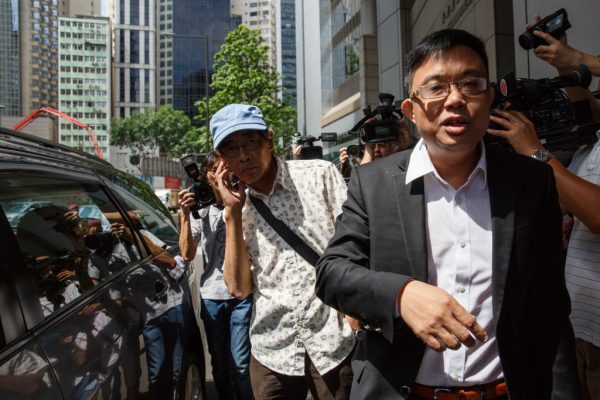
In fact, Lam Wing-kee warned as early as 2017, in an interview with Taiwan’s Liberty Times, that China’s practice of abducting people across borders could one day be repeated in Taiwan.
At the time, Lam argued that some people in Taiwan remained deeply influenced by the ideology of Chinese unification, while certain television commentators and university professors openly advocated reunification with China. He also expressed concern that, with growing numbers of Chinese nationals active in Taiwan, the Taiwanese government might find it difficult to fully monitor such activities. Combined with what he described as the influence of Chinese-backed capital over parts of Taiwan’s media, Lam warned that if cross-border abductions were ever to occur in Taiwan, “it may not be Chinese agents coming to seize people directly; there could be people in Taiwan willing to help carry it out.”
Lam believed that the threat of transnational repression had never been merely a geographical issue separated by the Taiwan Strait, but rather a cultural and ideological issue, arising from the convergence of political ideas and loyalties across borders.