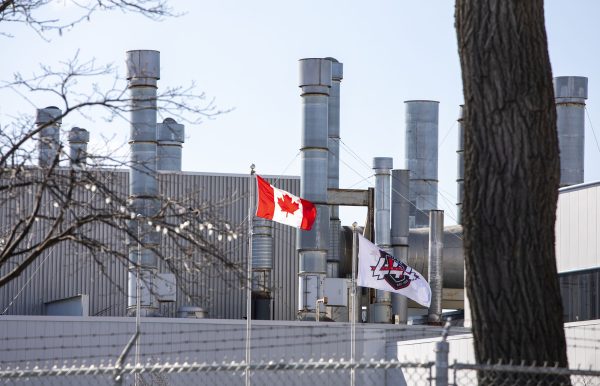
According to Global News, automaker Stellantis is in talks with a Chinese car manufacturer to produce Chinese electric vehicles at its assembly plant in Brampton, in the Greater Toronto Area. Ontario Premier Doug Ford called the move “unacceptable.” Federal Industry Minister Mélanie Joly said production at the plant must have the support of Ontario and labor unions. Industry insiders warn that the entry of Chinese-made electric vehicle “knock-down kits” into Canada could threaten local manufacturing and thousands of jobs.
Lana Payne, president of the union Unifor representing laid-off Stellantis workers, confirmed last Friday that Stellantis is exploring multiple options for the idle Brampton plant, including assembling imported kits in cooperation with Zhejiang Leapmotor Technology. Stellantis neither confirmed nor denied the report. The Brampton plant once employed about 3,000 workers but ceased production at the end of 2023.
According to Reuters, Stellantis acquired a 21 percent stake in Leapmotor in 2023 for $1.6 billion and established a joint venture, Leapmotor International, in which Stellantis holds a 51 percent stake.
Industry Minister Mélanie Joly told reporters: “We cannot ship complete vehicles to Canada in the form of parts kits for assembly. We must support the local supply chain.” She added that any new automotive investment will prioritize Canada’s supply chain, including local labor and parts suppliers.
Success
You are now signed up for our newsletter
Success
Check your email to complete sign up
In an interview with CBC News, Ontario Premier Doug Ford said such cooperation would harm Ontario auto workers. “It’s unacceptable. It’s everything against what the federal government told the auto workers here in Ontario,,” he said.
“We can’t have cheap Chinese parts and kits coming over to be assembled,” he said. “We’re dead against this.”
Stellantis Plan Sparks Job Loss Concerns
Payne said that partnering with Chinese automakers and using imported parts for knock-down kit assembly raises “serious concerns.” “These types of kit assembly plants employ very few workers and could lead to the loss of tens of thousands of direct assembly jobs and jobs in the auto parts sector.”
Knock-down kit assembly is not new. Volvo has used the method in Nova Scotia, and Volkswagen has applied it in Mexico and South America. In recent years, Chinese EV manufacturers—including Leapmotor—have used this approach to expand internationally, achieving 21 percent growth in overseas sales across regions such as Europe and Latin America.
According to the Globe and Mail, University of Waterloo mechanical and automotive engineering professor Peter Frise said the method allows China to leverage its factories and lower cost structure to expand overseas sales, especially during periods of overcapacity. However, for Brampton, it means fewer job opportunities and lower skill requirements.
The Financial Post also reported that University of Toronto history professor Dimitry Anastakis noted that the Canadian government has historically emphasized policies requiring or encouraging automakers to use locally sourced parts.
Historically, Canada has had knock-down kit plants. From 1963 to 1998, Sweden’s Volvo (now owned by China’s Zhejiang Geely Holding Group) operated a “partial knock-down” (PKD) plant in Nova Scotia, with most parts sourced from Sweden.
In his research paper, Anastakis wrote that Volvo had promised “job prosperity and industrial development,” but those promises were never fulfilled. The plant never employed more than 200 workers directly, and the PKD model did not generate significant related employment in parts or assembly.
The paper also noted that the proportion of Canadian-made components in the vehicles declined year by year. Although output increased from several thousand to about 10,000 units, it remained far below the scale of other plants during the same period.
By Li Xin