OTTAWA, Canada — On April 20, a parliamentary hearing on foreign interference brought renewed attention to alleged influence networks linked to the Chinese Communist Party (CCP), following testimony by former CIA analyst Peter Mattis. Appearing before a Canadian parliamentary committee, Mattis raised concerns about organizations operating in Canada that he said may be connected to the CCP’s United Front system, a global network aimed at influencing foreign media.
Mattis’ remarks came days before a Toronto-area fundraising initiative tied to a community organization led by Senator Yuen Pau Woo drew additional scrutiny. The organization, Canadians United Against Modern Exclusion (CUAME), which was co-led by Woo and former Conservative Senator Victor Oh, invited elected officials to attend a May 1 fundraising dinner in Scarborough.
Invitation letters describe CUAME as a “national, nonprofit, nonpartisan organization committed to defending the rights and freedoms of Canadians” and opposing what it calls “exaggerated narratives” driven by foreign interference in hopes of shaping public perception.
Influence networks in Canada
Mattis’s testimony referenced research by the Jamestown Foundation, which identified 575 organizations in Canada with documented links to United Front–associated entities, reportedly the highest density among four Western democracies examined. “These are not friendly organizations; they exist to do harm,” Mattis said during the hearing.
Success
You are now signed up for our newsletter
Success
Check your email to complete sign up
He argued that CUAME met criteria similar to those outlined in the report, noting that some of its founding members had participated in forums hosted by China News Service, which operates under the oversight of the CCP’s United Front Work Department.
“How should we view an organization whose leadership regularly participates in such forums in China?” Mattis asked, describing them as platforms that “work with propaganda and United Front systems to influence foreign audiences.”
Woo has previously rejected such claims. In public statements and Senate remarks, he described the Jamestown report as “misinformation,” “fearmongering,” and “poor-quality fiction.” Responding to detailed questions from The Bureau, Woo wrote: “Your questions contain too many incorrect assumptions, illogical inferences, and unverified conclusions for me to answer.”
Mattis placed current concerns within a broader historical context, referencing “Project Sidewinder,” a 1990s Canadian intelligence investigation that warned of infiltration by Chinese state-linked networks and organized crime. “What Cheryl Yu’s report shows is what happens when there is no pushback, no investigation, and no discussion,” Mattis said.
He further emphasized that safeguarding democratic institutions requires stronger investigative journalism, greater expertise on China across government and academia, and effective enforcement of Canada’s planned foreign influence registry. “Without consequences, Beijing will continue its activities without risk,” he warned.
Fundraising and political access
Separately, a high-profile fundraising dinner hosted in March by Canadian Prime Minister Mark Carney has also drawn attention on social media. Held at a Markham golf club, the event charged attendees up to 1,750 Canadian dollars, the maximum allowed, and was co-hosted by Liberal MP Michael Ma.
Gloria Fung, president of Canada-Hong Kong Link, said the high ticket price offers donors direct access to political leaders. “There is a series of steps through which these politicians are lobbied and guided to accept narratives promoted by donors,” she said. “I do not want any of our government officials to fall into this vicious cycle again, because it does not stop. It will not end with one fundraising dinner.”
She warned that such fundraising structures could, over time, undermine transparency and democratic accountability.
Meanwhile, Cheuk Kwan, co-chair of the Toronto Association for Democracy in China, said he was not surprised by the willingness of attendees to pay for access but remained concerned. “I am not surprised, but I am very, very concerned,” he said, adding that such events reflect intensified efforts to expand political influence in Canada.
Controversial figures
Reports have also highlighted the presence of several controversial attendees at the fundraising dinner. Among them was Jenny Qi, a leader of a Shenzhen-based community federation who has participated in Chinese political advisory bodies. According to reporting, she used the event to connect with officials and offer support for future delegations.
Business figure Winnie Liao, who has been associated with Chinese consular networks, also attended. Past reporting has noted regulatory issues related to her professional credentials.
Former Ontario Power Generation official Thomas Qu, who was involved in public commentary during the 2018 Meng Wanzhou case, was also present. His past positions have been described as aligning with Beijing’s narratives, and he has supported initiatives such as Confucius Institutes. Other attendees reportedly included representatives from organizations that have taken public positions consistent with Beijing’s policies on sensitive issues.
Foreign interference
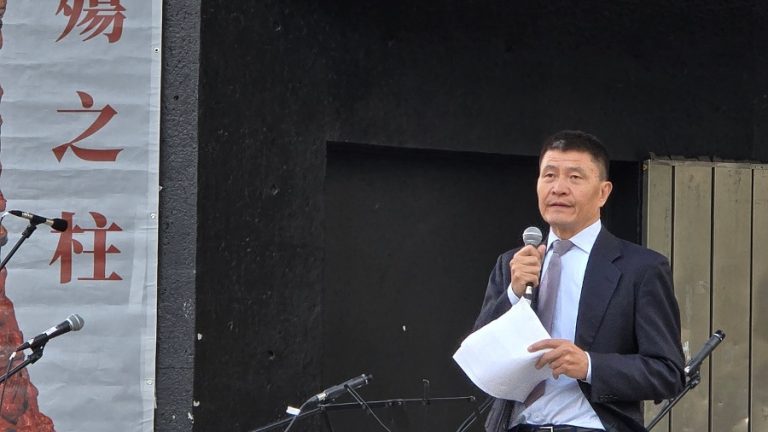
Commentator Feng Zhiqiang described the recent developments as part of a broader pattern by the CCP. “Pro-Beijing groups have mobilized in full force, like creatures emerging from hibernation,” Feng said. “Some have received praise from Chinese diplomatic institutions, others echo Beijing’s positions on sensitive issues, and some maintain cooperative ties with CCP-linked organizations.”
He added that such activities reflect coordinated efforts to expand influence at both federal and local levels. Meanwhile, fundraising activities linked to CUAME have continued, including an earlier April event in Markham attended by former MP Paul Chiang. Chiang had previously resigned following controversial remarks involving a political candidate who was later found to have been targeted by foreign interference efforts.
Canadian authorities have since confirmed that the candidate faced coordinated intimidation, including surveillance and pressure on Chinese Canadian voters.
Mattis stressed that the Jamestown report does not target ordinary citizens but calls for scrutiny of institutional ties to entities such as the Chinese People’s Political Consultative Conference and United Front Work Department. “If someone is a Canadian citizen but holds an official role in organizations tied to these United Front systems, it is reasonable in a democratic society to ask questions,” he said.
A test for Canada’s institutions
As CUAME prepares for its May 1 fundraising event, debate continues over how Canada should respond to allegations of foreign interference. Government officials have said donor information from such events will be publicly disclosed in accordance with election rules, emphasizing a commitment to transparency.
However, critics argue that recent developments, from past “cash-for-access” controversies to current fundraising networks, underscore ongoing vulnerabilities. Mattis concluded with a warning: Without meaningful consequences, efforts by Beijing-linked networks are likely to continue with minimal risk.
As Canada moves toward implementing a foreign influence registry, observers say the effectiveness of these measures will be closely watched as a test of the country’s ability to safeguard democratic institutions.
Editorial note: Views expressed in this article are the opinions of the author and do not necessarily reflect the views of Vision Times.