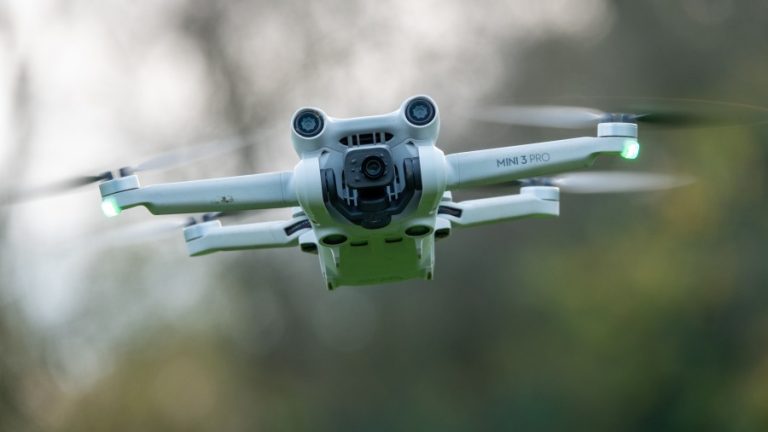
Beijing’s new drone rules, published by CCP state authorities and set to take effect May 1, designate the city’s entire administrative territory as a restricted airspace zone. Any outdoor drone flight now requires advance government approval; unauthorized launches are prohibited outright.
The regulations go further than a simple flight ban. Transporting or carrying a drone or its core components into Beijing is now illegal, regardless of how a person enters the city. Travelers arriving by high-speed rail, intercity bus, plane, or private vehicle are all subject to the restriction. Selling or renting drones and their components, whether through brick-and-mortar stores or online platforms, is also banned within Beijing.
Buyers who manage to obtain a drone through other means must register and activate it through a government-operated drone management platform before use. Violations carry fines and confiscation of the equipment. Individuals or organizations found selling drones illegally face additional penalties. The only exemptions cover counter-terrorism and public-security operations, sports training events, and other government-approved activities cleared through a security review by public security agencies.
These Beijing rules are part of a broader national tightening. Across China, drone operators are now required to transmit real-time flight data to authorities during any flight. Unauthorized launches carry a maximum penalty of 15 days’ detention.
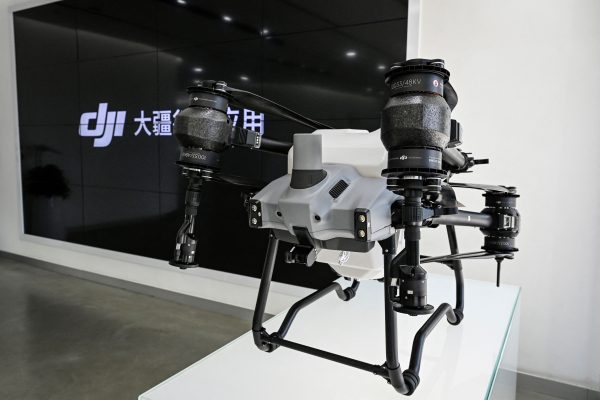
DJI cleared its Beijing shelves and cut off online orders to the capital
According to the South China Morning Post, DJI, the world’s dominant civilian drone manufacturer, began pulling its products from all Beijing stores on April 29. By 4 p.m. that day, only the company’s flagship store at the upscale China World Trade Center mall still had any inventory on display, and even there, only select models remained, sold at standard online prices with no discounts.
Success
You are now signed up for our newsletter
Success
Check your email to complete sign up
Store staff told customers that all Beijing-area drone inventory had to be cleared by April 30. Online orders to Beijing addresses were suspended simultaneously. From May 1, customers wishing to buy DJI products online can only ship to addresses outside Beijing.
Existing drone owners in Beijing who need repairs face additional obstacles. DJI’s Beijing stores will no longer handle servicing; customers must ship their devices to facilities in other provinces or visit authorized service centers elsewhere.
E-commerce platforms were equally chaotic in the hours before the deadline. JD.com was still accepting some DJI orders on the evening of April 29 for same-day delivery before midnight. On Tmall, DJI’s official flagship store showed most drone listings as unavailable to Beijing customers, with notices reading “this product does not support sales in the current region (Beijing).”
Online mockery frames the ban as a sign that Xi Jinping fears drone assassination
On X, the social media platform blocked inside China but widely used by overseas Chinese, the verdict was swift and contemptuous. Users framed the sweeping ban as a panicked response by Xi Jinping, the CCP’s general secretary and China’s top leader, to the US-Israeli operation that killed senior Iranian military and intelligence officials, widely reported to have involved precision drone strikes.
“Xi Jinping is scared to death. Genuinely terrified,” one commenter wrote. Another quipped: “What can you do? Our dear leader has a rather small gallbladder.” A third pointed out the illogic of the policy: “When Trump survived multiple assassination attempts, the U.S. didn’t respond by turning every city into a checkpoint and torturing ordinary people with extreme security theater. Why is China doing this?” Others were blunter: “America wouldn’t use a DJI drone to take out Xi anyway. What’s the logic here? Ordinary people can’t track his movements. This policy is just plain stupid.”
Some comments drew a sharper political point. “The CCP loves using technology to control ordinary people, but it panics when it realizes technology could be turned against it. After watching overseas dictators get hunted by drones, it’s banned entirely.” Another user observed with dry satisfaction: “DJI has achieved something remarkable: it’s the first company simultaneously sanctioned by both China and the United States.” And yet another: “The CCP is very good at killing off its own industries.”
DJI: a company caught between two governments
DJI was founded in 2006 by Frank Wang (Wang Tao) and is headquartered in Nanshan District, Shenzhen. The company operates offices in the US, Germany, the Netherlands, Japan, South Korea, and in Beijing, Shanghai, and Hong Kong.
As of 2025, DJI holds between 70 and 83 percent of the global civilian and commercial drone market. In recent years the company has expanded into imaging equipment and panoramic cameras.
The US military banned DJI products in August 2017, citing security concerns including the risk of built-in backdoors that could allow data to be accessed by Chinese authorities. DJI has consistently denied the allegations, but the ban has remained in place, and the company has faced escalating US legislative pressure ever since.