The Chinese Communist Party’s cognitive warfare and united front threats against Taiwan have shifted from single-point infiltration to systematic deployment, said Taiwan’s Ministry of National Defense stated on May 4, according to Taipei Times.
The ministry said it will strengthen inter-agency coordination to respond jointly and will enhance international strategic communication to build cooperation with allied countries in countering cognitive warfare narratives, in order to effectively reduce its impact on Taiwan.
From single-point infiltration to systematic deployment
According to a report by the Central News Agency (CNA), this assessment was included in the report by the Legislative Yuan’s Foreign Affairs and National Defense Committee which has invited Defense Minister Gu Lixiong to brief the lawmakers and answer questions on Wednesday. The written report was submitted to the legislature on Monday afternoon.
In its report on Chinese threats, Taiwan’s Ministry of National Defense noted that PLA joint military exercises targeting Taiwan have become increasingly routine, with the risk of “turning exercises into combat” rising.
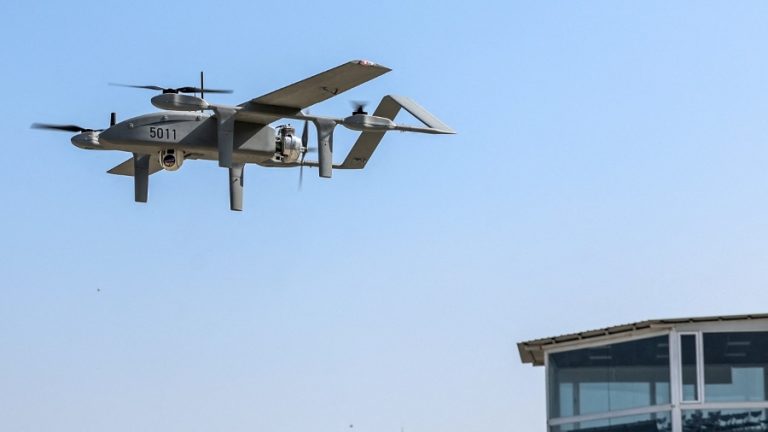
Statistics show that in 2025, various types of PLA main and auxiliary combat aircraft (including drones) conducted 3,760 sorties (compared to about 3,060 in 2024). These aircraft frequently crossed the median line of the Taiwan Strait and entered Taiwan’s southwest and eastern air defense identification zones.
Success
You are now signed up for our newsletter
Success
Check your email to complete sign up
In addition, approximately 2,640 warship sorties of various types entered operational zones in 2025 (compared to about 2,470 in 2024).
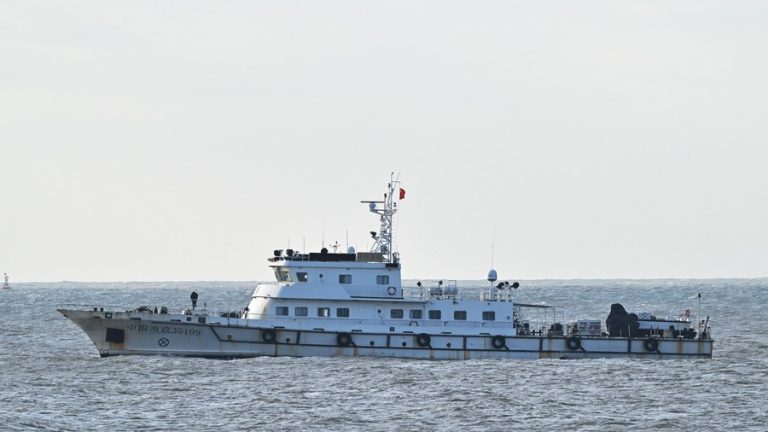
Taiwan’s Ministry of National Defense stated that, in addition to military exercises, the Chinese Communist military frequently conducts so-called law enforcement patrols around offshore islands’ restricted waters and near the median line of the Taiwan Strait.
It attempts to create the false impression of a “Taiwan Strait as internal waters” scenario, thereby denying Taiwan’s jurisdiction.
On Taiwan’s military training
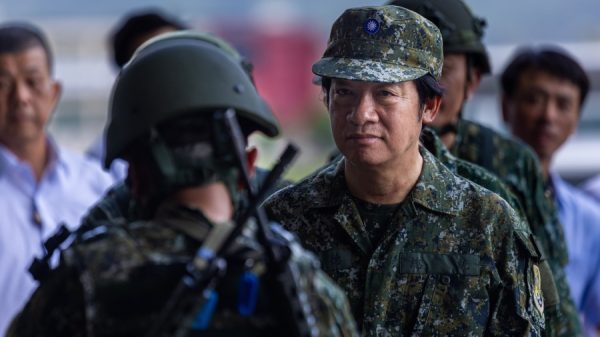
The Ministry explained that, to implement joint operations training, this year in addition to the “Han Kuang Exercise,” “Immediate Combat Readiness Drills,” and joint-service operational confrontation exercises, new activities were added between April and July, including “Joint Operations Plan Rehearsals” and live-force “Joint Defense Exercises.”
These pre-deployment rehearsals are based on joint operational plans. Through continuous exercises, Taiwan reviews command-and-staff procedures, inter-branch coordination, and joint-service mechanisms, ensuring effective cooperation between supporting and supported units.
This helps reduce operational risks and increases the probability of mission success in joint operations planning.
Countering cognitive warfare
The Ministry explained that, to effectively counter CCP cognitive warfare, it has established a big-data public opinion monitoring system to respond in a timely manner to controversial or false information. It also coordinates with fact-checking centers and issues official press releases.
In addition, Taiwan actively integrates patriotic education for military personnel and national defense education for the public.
Programs such as “Exposing Red (CCP) Traps,” “Media Literacy,” and “Security Protection and Counterintelligence Education” are produced to strengthen media literacy and threat awareness among both citizens and service members.
Public communication and morale
Furthermore, the Ministry uses multiple military-civilian communication channels to widely disseminate information on major military exercises, acquisition of new weapons systems, and the image of service members defending the nation.
By increasing public visibility of the armed forces, it aims to strengthen patriotic sentiment, gain support for defense investments, and enhance societal psychological resilience.
Taiwan’s Ministry of National Defense emphasized that “the CCP’s cognitive warfare and united front threats against Taiwan have shifted from single-point infiltration to systematic deployment.”
The ministry stated that, in addition to existing mechanisms operated by dedicated units for monitoring and countering such activities, it will strengthen inter-agency coordination, enhance cross-ministerial responses, and promote international strategic communication.
It also aims to establish cooperation with allied countries in countering cognitive warfare narratives to effectively reduce its impact on Taiwan.
The ministry further stated that it will continue to expand educational efforts, build proper counterintelligence awareness among service members, and improve internal control mechanisms to reduce the risk of information leaks, thereby safeguarding national security and preventing infiltration.

Legal revisions targeting retired officers recruited by the CCP
In recent years, the Chinese Communist Party has taken advantage of Taiwan’s democratic and free society to infiltrate Taiwan through various channels, including active-duty and retired military personnel, underground financial networks, temples, online connections, and criminal gangs.
Its methods have been diverse, including financial inducements, debt coercion, development of armed insider agents, and cognitive warfare, all aimed at obtaining sensitive information, dividing Taiwanese society, and building internal spy networks.
In recent years, multiple cases have emerged involving retired military personnel (including high-ranking generals) allegedly recruited by the CCP to establish espionage networks in Taiwan, collect national defense intelligence, or act as spokespersons for Beijing.
An April case involved retired Navy Major Lu Li-shih, who attended a PLA Navy 75th anniversary event and boarded a Chinese warship, where he reportedly shouted slogans such as “The PLA Navy is ready” and “The stronger the PLA, the safer Taiwan is,” sparking controversy.
Taiwan’s Mainland Affairs Council stated that the government will review whether Lu’s actions violated the law and will propose amendments to the Cross-Strait Relations Act to impose penalties on such retired officers, reported Taipei Times.
According to the Central News Agency, Premier Cho Jung-tai stated that “Lu Li-shih violated his duty of loyalty to the nation and betrayed public respect for the armed forces. Such defeatist rhetoric that blurs the line between friend and foe should be addressed through prompt legal amendments.”
Other infiltration cases involving PRC spouses
In addition, some PRC spouses in Taiwan have also been implicated in infiltration activities.
For example, CNA reported that Xu Chunying is suspected of maintaining long-term contact with Yang Wentao, director of the “Cross-Strait Marriage and Family Service Center” under China’s Ministry of Civil Affairs, as well as Sun Xianwang, deputy director of the “Peaceful Reunification Promotion Committee” of the Shanghai Municipal Committee of the China National Democratic Construction Association.
She allegedly received instructions to campaign for political candidates and has been indicted by prosecutors in New Taipei City under the Anti-Infiltration Act, with prosecutors seeking a severe sentence.
According to a report by Liberty Times, informed sources said Xu, who holds a Taiwanese identity card, will have her residency revoked by the authorities and lose her Taiwanese status, including access to national health insurance, although she will still be required to stand trial in Taiwan.
The Mainland Affairs Council stated that the competent authorities will review Xu’s residency status in Taiwan according to their authority.
By Li Jingyao, Vision Times