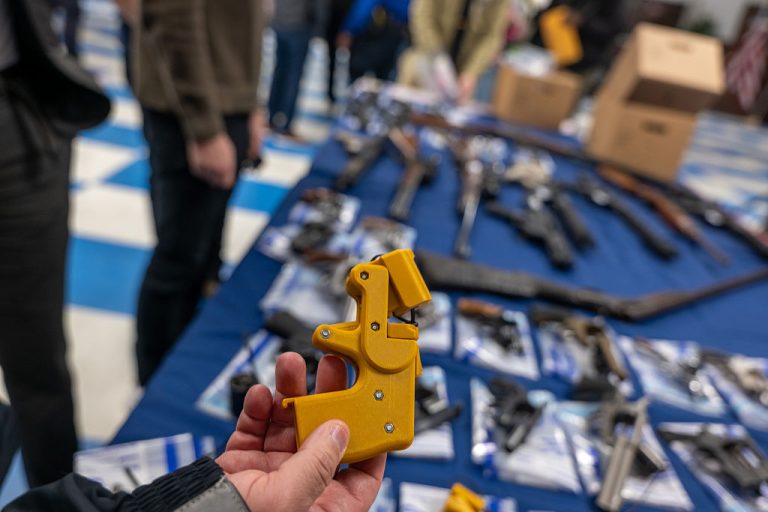
On May 7, New York Governor Kathy Hochul announced an agreement on the state’s FY 2027 budget. Among its key provisions, Hochul is seeking to fulfill a pledge she made in early January to crack down on 3D-printed ghost guns.
According to the May announcement, the state is aiming to “enact a first-in-the-nation legislation requiring the development of regulations to ensure that every 3D printer sold in the State of New York includes technology that blocks it from printing a firearm, and strengthens criminal penalties for manufacturing ghost guns.”
The proposed legislation will require firearm manufacturers to design guns in a way that would “prevent quick and easy conversion into” homemade firearms.
The state also plans to invest upwards of $352 million in gun violence prevention programs.
In January, Hochul said, “Public safety is my top priority. When I took office, I made a promise to New Yorkers to attack the gun violence epidemic head-on, and as gun technology continues to evolve, so do our strongest-in-the-nation gun laws.”
Success
You are now signed up for our newsletter
Success
Check your email to complete sign up
The legislation would make it illegal for anyone to intentionally “sell, distribute, or possess digital instructions to illegally manufacture or produce a firearm or component parts without a license.”
It also mandates that individuals report 3D-printed guns to the Criminal Gun Clearinghouse database operated by the New York Police Department (NYPD).
Superintendent of the New York State Police Steven G. James said, “As technology evolves, so do the threats we face. These proposals give law enforcement the tools we need to address the growing danger posed by 3D-printed and illegally modified firearms, while strengthening our ability to track, investigate, and prevent gun violence. Governor Hochul’s leadership ensures New York remains at the forefront of public safety, and the New York State Police stands ready to work with our partners to enforce these measures and keep our communities safe.”
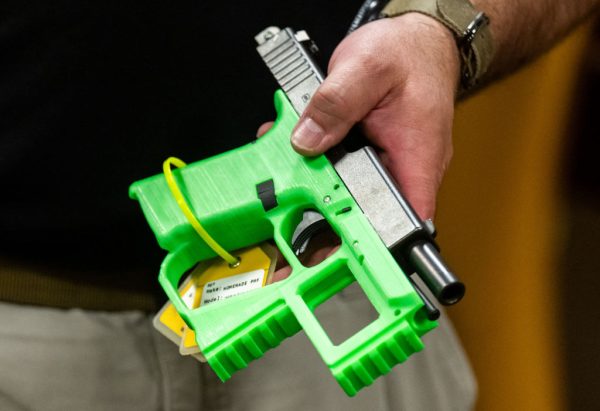
‘New York’s attack on 3D printing’
Members of the state’s 3D-printing community have come out against the legislation, arguing that it represents government overreach and would criminalize otherwise legal activities.
In an April 16 post, Rory Mir and Nathan Sheard, writing for Effecting Change, called the legislation a “reckless” proposal and said that print-blocking technology on all 3D printers is “unfeasible.”
“We, and other experts, have already pointed out that this algorithmic print blocking is simply unfeasible and will only serve to stifle competition, free expression, and privacy,” the two wrote, adding, “While most detrimental to the creative communities lawfully using these printers, every New Yorker will be impacted by this blow to innovation.”
Among their most pressing concerns is that the legislation threatens Class E felony charges for “distributing or possessing 3D-printer files that would produce firearm parts with a 3D printer or CNC machine.”
Under the legislation, it would be a felony to distribute the files to anyone who is not a licensed gunsmith. It would also be a felony to supply anyone with a 3D-printed firearm if that person is otherwise legally barred from owning a gun.
“A journalist reporting on 3D-printed guns. A researcher studying printable firearms. An artist incorporating parts into a new work commenting on gun culture. Under these provisions merely sharing a print file with any of them could result in criminal charges, even if no one involved intends to assemble a firearm,” the two wrote.
Open-source hardware company Adafruit is also pushing back against the legislation.
According to the legislation, all 3D printers sold in the state would be required to include a “firearms blueprint detection algorithm” that would refuse to print if it flags the part being printed as banned under the legislation.
In a blog post, Adafruit argued, “A firearms blueprint detection algorithm would need to identify every possible firearm component from raw STL/GCODE files, while not flagging pipes, tubes, blocks, brackets, gears, or any of the millions of legitimate shapes that happen to share geometric properties with gun parts. This is a classification problem with enormous false positive and false negative rates.”
Adafruit further argued that the legislation fails to address open-source firmware with no resources for compliance, offline machines not connected to the internet, file formats that detection algorithms cannot read, and CNC mills that Adafruit says “can machine literally any shape from any material.”
The company suggested that lawmakers should narrow the scope of the legislation to penalize intent rather than the tool itself, drop mandatory file scanning, exempt open-source and offline toolchains, and limit liability for sellers and educators, among other measures.
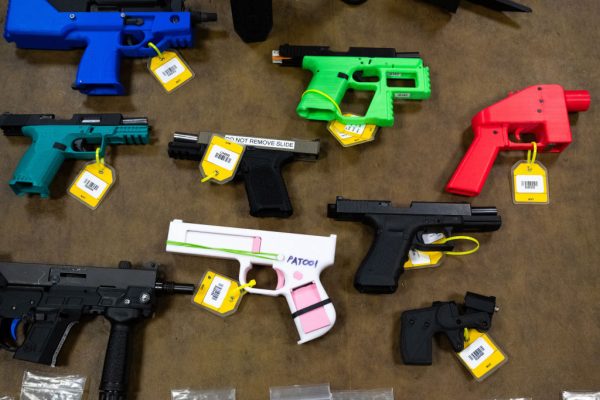
An expensive problem
According to the state’s press release, Hochul has invested $1.27 billion in gun violence initiatives since taking office.
Of the $347 million earmarked in this budget, $36 million is dedicated to the Gun Involved Violence Elimination (GIVE) initiative, which supplies resources to 28 police departments outside New York City.
More than $20 million has been allocated to support SNUG Street Outreach programs that work to reduce gun violence in the city, while another $20 million will support programs aimed at preventing violence and providing support for young people in 10 communities through Project RISE (Respond, Invest, Sustain, Empower).
Another $40.6 million is slated for youth employment programs, while the majority of the spending — $127 million — is being directed toward technology grants to modernize the state’s law enforcement systems.
According to state authorities, during the first 11 months of 2025, “communities participating in GIVE reported 477 shooting incidents with injury, the fewest reported since the state began tracking this data.”
This represents a 60 percent decline in shooting incidents compared to the same period in 2021, as well as a 15 percent year-over-year decrease.