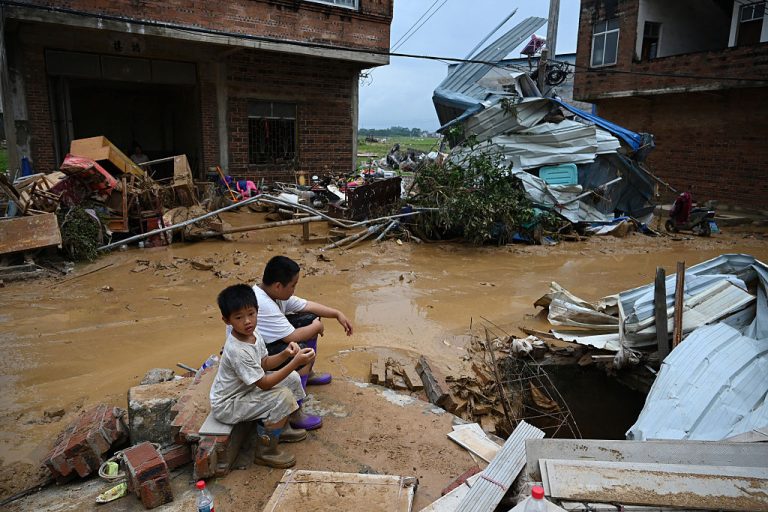
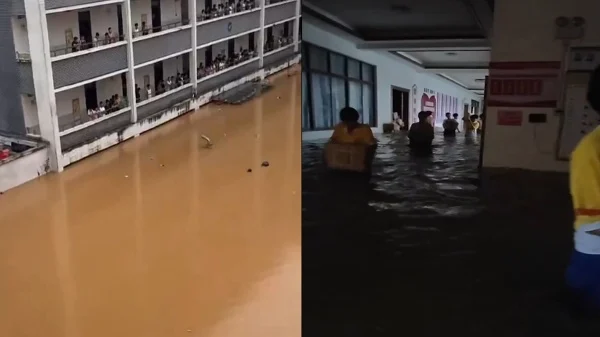
Severe flooding caused by Tropical Storm Maysak has inundated large parts of China’s Guangxi Zhuang Autonomous Region, leaving thousands of students and teachers stranded on school campuses as rising floodwaters overwhelmed cities, damaged infrastructure, and disrupted daily life. The disaster has displaced hundreds of thousands of residents, inundated homes and critical infrastructure, and has been blamed for at least six deaths in Guangxi as emergency crews continue rescue and relief operations.
The flooding has been particularly severe in the city of Guigang, where schools, hospitals, and residential areas were submerged after days of torrential rain. Though Chinese authorities have allocated emergency relief funds and deployed thousands of rescue personnel, unpredictable and surging floodwaters continue to affect communities across the region.
RELATED: China’s Tainted Diaper Scandal Deepens as More Brands Test Positive for Reproductive Toxin
Thousands stranded
According to Chinese media reports, severe flooding inundated the Guigang Education Park, trapping more than 10,000 students and staff at several schools, including Guangxi Logistics Vocational and Technical College and Guigang Senior High School.
A parent whose child attends Guigang Senior High School told Jimu News that he borrowed an inflatable boat to deliver medicine to the campus after floodwaters cut off access. He said water levels inside the school had exceeded three meters.
Success
You are now signed up for our newsletter
Success
Check your email to complete sign up
Guigang Senior High School, which had been scheduled to begin its summer vacation on July 10, reportedly had nearly 4,000 students and teachers still attending classes when floodwaters rapidly surrounded the campus. As conditions worsened, many parents turned to social media seeking assistance, while others paddled inflatable boats through floodwaters to deliver food, drinking water, medicine, and other essential supplies.
Videos circulating online also showed extensive flooding at Guangxi Logistics Vocational and Technical College, where dormitories, power, and water services were reportedly affected.
Hospitals overrun
The flooding has also disrupted medical services. Guigang Maternal and Child Health Hospital issued an urgent appeal for assistance after floodwaters hindered staff transportation. According to local media, hospital officials said medical personnel had been working continuously for more than 50 hours while caring for expectant mothers and critically ill newborns.
The hospital requested an emergency rescue boat to transport additional medical staff to the facility. Chinese media later reported that the transportation issue had been resolved.
To make matters worse, hydrological authorities reported that as of the morning of July 7, water levels at multiple rivers and monitoring stations across Guigang had risen above official warning thresholds. The Ministry of Water Resources also reported that water levels at the Guigang Hydrological Station continued to rise as heavy rainfall persisted across the region and continue to impact rescue services.
Videos verified by international media showed roads transformed into rivers, submerged vehicles, and fast-moving floodwaters sweeping through parts of the city.
A trail of destruction
The flooding followed days of intense rainfall brought by Tropical Storm Maysak, which moved inland after making landfall in southern China and Vietnam. According to Chinese authorities, tens of thousands of residents have been evacuated across Guangxi, while government agencies have deployed rescue boats, emergency personnel, and disaster relief funding to assist affected communities.
The flooding has affected schools, hospitals, transportation networks, and residential neighborhoods throughout the region. Authorities warned that continued rainfall and elevated river levels could prolong rescue and recovery efforts.
As emergency operations continue, many families remain focused on ensuring loved ones have access to food, clean drinking water, medical supplies, and safe shelter until floodwaters recede.