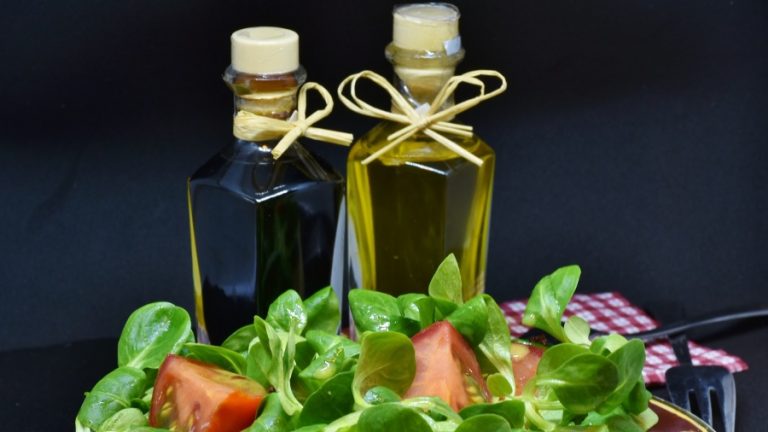
Taiwan’s Ministry of Health and Welfare has imposed its largest-ever fine on a single company under the Act Governing Food Safety and Sanitation, penalizing Central Union Oil Corp NT$165.2 million (US$5.2 million) after the firm’s soybean salad oil tested positive for excessive levels of benzopyrene, a carcinogen. The contamination has spread through the supply chains of three major food producers and now touches 401 products sold at hundreds of retailers across the island, up from 232 products identified just a day earlier.
Contamination traced to 1,300 metric tons of tainted oil
Central Union’s soybean salad oil, contaminated with benzopyrene above legal limits, entered the supply chains of Taisun Enterprise Co, Fwusow Industry Co, and Formosa Oilseed Processing Co, according to Taiwan’s Central News Agency. As of July 7, authorities had identified 18 affected product lines across 30 production batches, distributed to 360 businesses and touching at least 232 individual products; by July 8, the Food and Drug Administration had added 169 more products to the precautionary recall list, including packaged chicken breast, seafood risotto, rice burgers, and convenience-store ready meals. A total of 1,300 metric tons of the tainted oil entered the market.
Several of the affected products were made under contract by Lian Hwa Foods for well-known convenience store brands, including items sold under the Lin Tsung-ming and Fuhang names, two Taipei eateries whose products are also licensed for retail. Sauces and seasoning products from Wei Chuan and Kuang Ta Hsiang were also among those flagged.
Taiwan’s Food and Drug Administration said on July 7 that it had identified 331 affected businesses and was still tracking down 29 more. The agency set up a dedicated web page for the case, updated daily, and on the evening of July 7 published its first list of 232 affected products, including product names and expiration or shelf-life dates. Regulators had recovered 43.278 metric tons of the contaminated oil as of that afternoon.
Health minister orders full recall of downstream products
Minister of Health and Welfare Shih Chung-liang announced at a press briefing on the case that the ministry was expanding its recall order. Under existing rules, only products containing 20 percent or more of the tainted oil required mandatory removal from shelves; products below that threshold, 175 items in total, had only been subject to voluntary disclosure by manufacturers. Shih said that to reassure the public, all such products would now be pulled as well, with removal to be completed by midnight on July 8.
Success
You are now signed up for our newsletter
Success
Check your email to complete sign up
Shih explained that the first wave of recalls targeted only first-tier products, following food safety guidelines established in 2017. But the current case revealed that a substantial share of second-tier, downstream products, such as salad dressings, were made using the raw contaminated oil or oil with a high concentration of it. An expert panel convened on July 4 and issued new recommendations in response. Food safety cannot tolerate ambiguity, Shih said, and the ministry decided to order a full precautionary recall of all second-tier products, with items eligible to return to shelves only after passing inspection.
Ministry to review Taiwan’s oil safety oversight system
Shih said the episode would prompt a full review of Taiwan’s oil management system to identify possible regulatory gaps. Existing inspection and sampling protocols were not designed to catch this type of contamination, he said, and further investigation is needed to pinpoint exactly where the breakdown occurred.
He added that the government would not wait for the investigation to conclude before acting. Local health bureaus have already been told to step up post-market sampling, and the Food and Drug Administration will expand testing at refineries and throughout the oil production process, adding inspection checkpoints from raw material to finished product to ensure that all oil sold to the public meets safety standards.
Lawmaker Lin Yueh-chin said food safety concerns cross party lines, since what the public wants to know is simply whether the oil in their own kitchens is affected and whether they can get a refund. Shih responded that the ministry’s dedicated web page includes product images, along with manufacturer names and batch numbers; consumers can check their own products against the listings and return matching items, while anything not listed on the site is safe to consume.
READ MORE:
- Taiwan to Open Representative Office in Phoenix, Strengthening Taiwan–US Partnership
- Taiwan Investigates Suspected Smuggling of Nvidia AI Servers to China
Record fine follows delayed reporting
Authorities have also moved to hold individual companies accountable. According to Taipei Times, Shih said Central Union had delayed reporting the contamination and had also provided inconsistent information during the investigation into how far the tainted oil had spread.
Local governments have imposed additional penalties. The Taichung city government fined Central Union, Fwusow, and Formosa Oilseed Processing NT$3 million (US$94,000) each. Changhua County’s health bureau fined Taisun NT$6 million (US$187,000) for failing to report the contamination in a timely manner. Namchow Holdings was also fined NT$3 million (US$94,000) by the Taipei city health bureau over delayed reporting.
Benzopyrene, abbreviated BaP, is a common polycyclic aromatic hydrocarbon. It is a byproduct that forms naturally when organic material is heated at high temperatures, undergoes pyrolysis, or burns incompletely, as in combustion exhaust or charred food. The International Agency for Research on Cancer classifies benzopyrene as a Group 1 carcinogen, its highest-risk category. Prolonged or heavy exposure raises the risk of lung cancer, skin cancer, and cancers of the digestive tract, including stomach and colorectal cancer.