The power struggle between the U.S. and China has long extended beyond formal diplomacy. Behind every high-profile meeting between leaders lies a deeper effort to probe intentions, test limits, and gauge strategic resolve, especially as Sino-US relations reach a critical point.
During U.S. President Donald Trump’s interactions with Chinese leader Xi Jinping on May 14-15 in Beijing, Taiwan consistently emerged as one of the most sensitive and consequential issues shaping the relationship. Observers noted that while Beijing publicly projected confidence and strength, internal instability within China’s political and military system increasingly became difficult to ignore.
RELATED: Trump’s Warning Against ‘Taiwan Independence’ Seen as Tactical Play in Talks With Beijing: Analysts
Taiwan remains central to Xi’s priorities
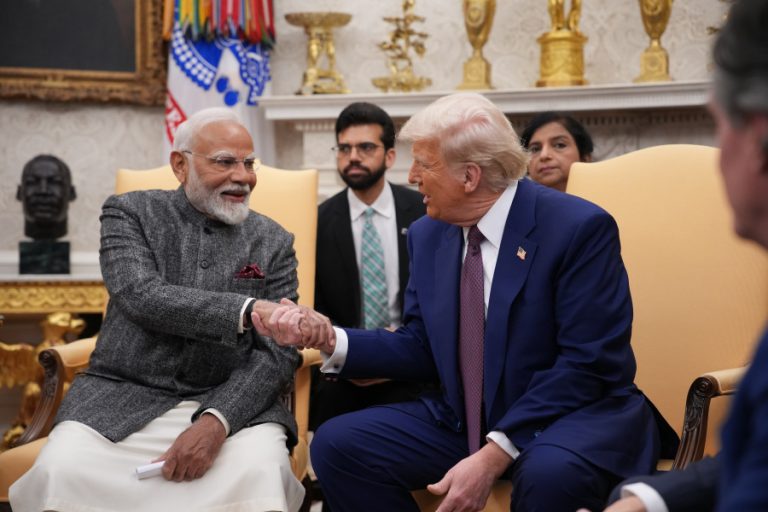
According to multiple reports, Trump’s visit to China was marked by unusually strict security precautions. From tightly-controlled travel arrangements to careful handling of food and logistics, the atmosphere reflected the deep lack of trust between Washington and Beijing despite the diplomatic pageantry.
In a Fox News interview with Bret Baier following the summit, Trump said Xi “very much wants Taiwan” and reiterated that he hoped both sides would “cool down,” while declining to clearly state how the U.S. would respond in the event of conflict. Trump also said, “I want them to cool down. I want China to cool down,” but noted that, “I’m not looking to have somebody go independent and, you know, we’re supposed to travel 9,500 miles to fight a war.”
Success
You are now signed up for our newsletter
Success
Check your email to complete sign up
The remarks reflected Trump’s longstanding view that Taiwan remains deeply tied not only to Beijing’s foreign policy ambitions but also to the Chinese Communist Party’s (CCP) internal political legitimacy.
Analysts have increasingly argued that Taiwan has become a central issue for Xi as China faces mounting economic pressure, slowing growth, demographic challenges, and rising domestic dissatisfaction. Though Taiwan operates as a sovereign nation, Beijing views it as a “breakaway province,” and has vowed to reclaim the self-ruling island by any means necessary.
PLA instability fuels questions
At the same time, ongoing turmoil within China’s military establishment has raised doubts about Beijing’s actual preparedness for conflict. In recent years, China has carried out sweeping investigations and purges involving the PLA Rocket Force and senior military leadership. A series of top generals and defense officials have either disappeared from public view, been removed from office, or faced corruption probes.
RELATED: Two Former Chinese Defense Ministers Face Life Behind Bars in Growing Military Crackdown
The PLA’s recent corruption scandals and leadership purges have fueled growing speculation among analysts about Beijing’s confidence in the military’s operational readiness despite increasingly aggressive rhetoric toward Taiwan. Trump, meanwhile, maintained deliberate ambiguity on Taiwan during post-summit interviews, declining to publicly spell out how the U.S. would respond in the event of conflict.
The answer reflected a form of strategic ambiguity that has long shaped U.S. policy toward Taiwan. Rather than offering absolute clarity, Washington has historically sought to deter both Chinese military aggression and unilateral moves toward formal Taiwanese independence by maintaining uncertainty over how it would respond militarily.
For Beijing, analysts say unpredictability itself can become a source of strategic pressure because the costs of miscalculation could be enormous.
US policy on Taiwan
During Trump’s presidency, Washington significantly expanded arms sales to Taiwan while also deepening unofficial diplomatic engagement with Taipei. Trump frequently emphasized that major U.S. weapons packages for Taiwan remained under consideration, reinforcing concerns in Beijing about growing military cooperation between Washington and Taipei.
RELATED: Retired US General: Taiwan Should Not Be Used as a Negotiating Bargaining Chip
At the same time, broader U.S. strategy increasingly focused on reducing dependence on supply chains vulnerable to conflict in the Taiwan Strait, particularly semiconductor production. Taiwan Semiconductor Manufacturing Company (TSMC), the world’s leading chipmaker, accelerated major investments in the United States during this period. Analysts viewed the move as part of Washington’s long-term effort to secure critical technology production outside of potential conflict zones.
In recent months, Washington also strengthened coordination with regional allies such as Japan and India, reflecting broader concerns over China’s expanding military ambitions in the Indo-Pacific.
Cross-strait tensions remain unresolved
Despite repeated military exercises and escalating rhetoric from Beijing, questions remain over whether China is truly prepared to absorb the enormous political, economic, and military risks that a Taiwan conflict would bring.
For Xi, projecting strength on Taiwan has become increasingly important domestically. For Washington, maintaining stability in the Taiwan Strait has become increasingly tied to broader concerns over regional security, global supply chains, and the credibility of U.S. alliances in the Indo-Pacific. Yet analysts warn that in highly centralized political systems, major strategic failures can rapidly threaten stability.
That dynamic has contributed to the current state of U.S.-China relations surrounding Taiwan: A prolonged period of confrontation, signaling, and strategic testing, but without either side fully crossing the threshold into open conflict.
Editorial note: Views expressed in this article are the opinions of the author and do not necessarily reflect the views of Vision Times.