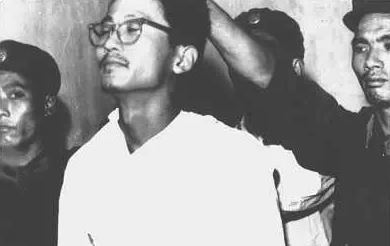
In 1942, Mao Zedong launched a campaign of mass terror inside the Party’s own wartime base at Yan’an, in northwest China’s Shaanxi Province, targeting intellectuals who wrote critically about conditions inside the revolution. The late historian Gao Hua documented the campaign in meticulous detail. One of its victims, a young scholar named Wang Shiwei, was held for years, subjected to staged denunciation sessions, and eventually killed with a cleaver on the banks of the Yellow River. His fate laid bare the moral logic the CCP has operated on ever since: a regime that recognizes no law, no conscience, and no authority capable of calling it to account.
How the CCP built a privileged ruling class inside its ‘egalitarian’ wartime base
In the late 1930s and early 1940s, thousands of idealistic young Chinese made the punishing journey to Yan’an on foot. They came fleeing Japanese occupation, fired by Communist promises of equality and national salvation. They found a rigid hierarchy that would have been recognizable to any imperial bureaucrat.
Wang Shiwei, a scholar and translator assigned to the Party’s Central Research Institute, was one of them. Armed with the moral directness of the writer Lu Xun, the founding figure of modern Chinese literature, Wang wrote a series of essays published in the base area journal Valley Rain, the Liberation Daily, and on public wall posters. The most celebrated, “Wild Lily,” became a devastating indictment of life inside the revolution.
Wang documented a system of structured privilege that the CCP’s egalitarian slogans concealed. Yan’an had developed a class of senior cadres served by their own private kitchens, insulated from the hardships endured by rank-and-file members and students. Clothing was allocated in three grades, food in five. While junior members and students survived on two bowls of thin gruel a day, the upper ranks ate well. Sick comrades could not get a bowl of noodle soup.
Wang’s most scathing passages targeted the moral indifference of the leadership to the human cost of the war they were directing. While soldiers bled out on the anti-Japanese front, Yan’an’s Central Auditorium hosted all-night dances for the Party elite. The poem he quoted to describe those evenings, with its imagery of aristocratic ease and silken steps, was a deliberate provocation: the Party’s leaders, he implied, had adopted the habits of the feudal ruling class they claimed to be dismantling.
Success
You are now signed up for our newsletter
Success
Check your email to complete sign up
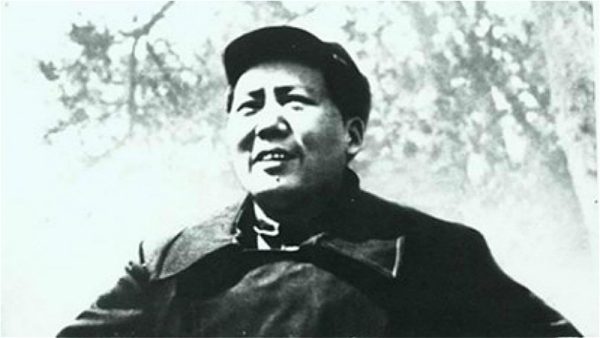
Mao declared himself answerable to no law and no conscience
Mao Zedong’s response to the ferment was not self-examination. His standard reassurance, repeated often during the period, was a five-character phrase that translates roughly as: “The sky will not fall. Nothing will collapse.”
Wang Shiwei pressed on the phrase with lethal precision. “Yes,” he wrote, “the sky will not fall. But will our work and our cause suffer no damage because of that? This is something the ‘great teachers’ rarely think about, if they ever think about it at all.”
The phrase carried a weight that Wang grasped more fully than most. In Chinese cultural tradition, “heaven,” or tian, encompasses far more than the sky above. It signifies the moral order of the universe: natural law, conscience, cause and effect, the principle that actions carry consequences. Classical Chinese thought held that rulers who violated heaven’s mandate would eventually fall; the phrase “heaven sees what the people see” encodes this belief. To say that heaven would not fall was, in this tradition, to claim exemption from every moral reckoning.
Mao was announcing a position, not making a prediction. As a committed materialist who recognized no authority above political power, he had already discarded the concept of a moral order that might constrain him. He later revealed this in a remark to the American journalist Edgar Snow, comparing himself to a Buddhist monk carrying an umbrella: without hair (fa, a homophone of the Chinese word for “law”) above him and without heaven (tian) below, he was answerable to nothing. The pun, delivered with evident satisfaction, was Mao’s self-portrait.
As long as the gun was in his hand and power was absolute, the corruption of the leadership class, the hunger of the students, and the debauchery of the elite were tolerable costs. Justice and the welfare of ordinary people were irrelevant variables. Mao had made himself the heaven he refused to fear. History and truth, in his worldview, were written by whoever held coercive power; no God, no moral law, and no tradition of accountability could reach him. The privileges enjoyed by senior officials were a deliberate instrument of control, binding the bureaucratic class to the regime by material interest. As long as the ruling coalition stayed intact and the machinery of violence kept turning, the anger of those at the bottom posed no real threat. Tens of thousands of young lives were a rounding error.
Wang Shiwei’s fatal mistake was to apply ordinary human moral standards to an institution that had already abolished them. He believed that naming the darkness would help prevent it from spreading. He had not understood that the Party was producing that darkness, not suffering from it. Appealing to conscience in front of a regime that had publicly discarded the concept was, as the author puts it, a death sentence written in advance.
Wang Shiwei was tortured, denounced, and secretly executed
Wang’s essays, and the wave of sympathy they generated among Yan’an’s young population, enraged Mao. He authorized the “Rescue Campaign,” orchestrated by Kang Sheng, his secret police chief and the architect of the Party’s internal terror apparatus. Ostensibly designed to root out enemy agents, the campaign was a mechanism for mass confession through torture. Li Rui, who served for a period as Mao’s personal secretary and later became one of the Party’s most prominent internal critics, recalled that within just over ten days, more than 1,400 people in Yan’an were beaten into confessing to being spies.
Wang Shiwei was given multiple labels: Trotskyite, Nationalist spy, counter-revolutionary. He was held for years, subjected to repeated struggle sessions, and stripped of any remaining standing. In the spring of 1947, as CCP forces retreated from Yan’an ahead of Nationalist military pressure, the Party’s security organs made a decision. With approval from Kang Sheng, acting with Mao’s tacit consent, more than a hundred prisoners classified as serious offenders were executed in secret on the banks of the Yellow River in Xing County, Shanxi Province. Wang Shiwei was killed with a cleaver. His body was thrown into a dry well.
A young man who had traveled to Yan’an to help save his country was murdered by the cause he had joined, killed with an implement more suited to a slaughterhouse than an execution, and buried in secret. He died without ever fighting the Japanese enemy he had come to resist.
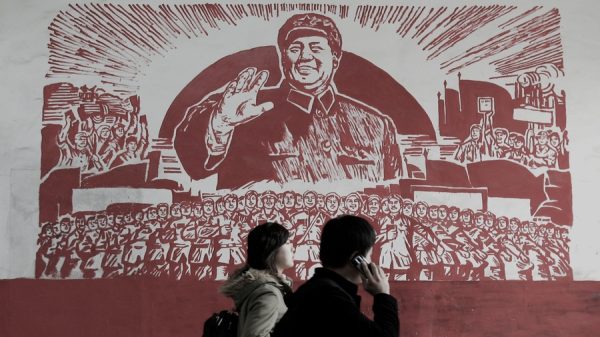
How the CCP has silenced every generation of critics since Yan’an
The Anti-Rightist Campaign of 1957 replicated the Yan’an model at national scale, destroying hundreds of thousands of intellectuals who had accepted Mao’s invitation to criticize the Party. The Cultural Revolution extended it to nearly every institution in Chinese society. The massacre of June 4, 1989, applied it to students who believed the Party might be capable of reform. Today, the offense of “maliciously commenting on the central leadership,” a criminal category enshrined in Party regulations, sends people to prison for expressing in private what Wang Shiwei expressed in print eighty years ago.
The structure of privilege Wang documented in Yan’an has metastasized. The leadership class still eats from its own kitchens, protected from the consequences of the policies it imposes on everyone else. The official ideology still insists on equality while stratified access to healthcare, education, and security is visible to anyone who looks. The security apparatus still processes dissent into confessions. The language of “rectification” and “struggle” survives in updated form.
The men at the top still believe, as Mao believed, that heaven will not fall. The surveillance machinery, the economic leverage over hundreds of millions of people, and the monopoly on organized violence have given successive leaders the same confidence Mao carried into those Yan’an dance halls: that the suffering below them is manageable data, and that no reckoning will arrive.
The executions on the Yellow River bank in 1947 were hidden from history for decades. They did not stay hidden. The names of those who ordered them are in the record. Wang Shiwei asked whether the cause would suffer damage even if the sky stayed up. The damage accumulates through the rot that privilege and impunity introduce into every institution they touch, and eventually the structure fails. He was killed for saying so. The history of the eighty years since his death has confirmed his argument at every stage.