Taiwan’s opposition parties have jointly called for a special legislative briefing on May 21 (Thursday) following growing concerns that recent developments surrounding the Trump-Xi summit could affect Washington’s longstanding security commitments to Taiwan.
Lawmakers from the Kuomintang and the Taiwan People’s Party proposed inviting Premier Cho Jung-tai, along with officials from Taiwan’s Mainland Affairs Council, Ministry of National Defense, Ministry of Foreign Affairs, and Ministry of Economic Affairs, to deliver a special report on the implications of the recent Trump-Xi meeting for cross-strait relations, national security, diplomacy, and trade.
RELATED: Retired US General: Taiwan Should Not Be Used as a Negotiating Bargaining Chip
Concerns over shifting US signals
According to the opposition-backed motion, Trump and Xi reportedly reached several substantive agreements during the summit, while uncertainty surrounding a proposed second round of U.S. arms sales to Taiwan, worth up to $14 billion, has fueled concerns in Taipei.
The proposal warned that signs of possible changes in America’s commitment to defending Taiwan could leave the self-ruling island vulnerable amid growing U.S.-China geopolitical competition.
Success
You are now signed up for our newsletter
Success
Check your email to complete sign up
Opposition lawmakers also argued that Trump’s tendency to frame Taiwan’s security in terms of American economic and strategic interests could accelerate global supply chain diversification away from Taiwan, potentially damaging the island’s technology and export sectors.
The motion was advanced to the next legislative stage after cross-party consultations.
DPP accuses opposition of weakening Taiwan’s defenses
The ruling Democratic Progressive Party said it did not oppose deeper discussion of cross-strait security issues, but argued that Taiwan’s most immediate security challenge stems from domestic political battles over defense spending.
DPP caucus secretary-general Fan Yun accused opposition lawmakers of undermining Taiwan’s military readiness by significantly cutting defense-related budgets and weakening domestic defense development programs.
According to Fan, the reductions affected at least five critical areas, including air defense operations, drone and unmanned vessel development, artificial intelligence systems, wartime industrial production capacity, and broader asymmetric warfare capabilities. She also claimed planned components of Taiwan’s “Shield of Taiwan” defense system had been weakened after cuts targeting command-and-control infrastructure.
Fan further argued that lessons from the wars in Ukraine and the Middle East have demonstrated the growing strategic importance of drones and autonomous systems.
Washington’s stance fuel anxiety in Taipei
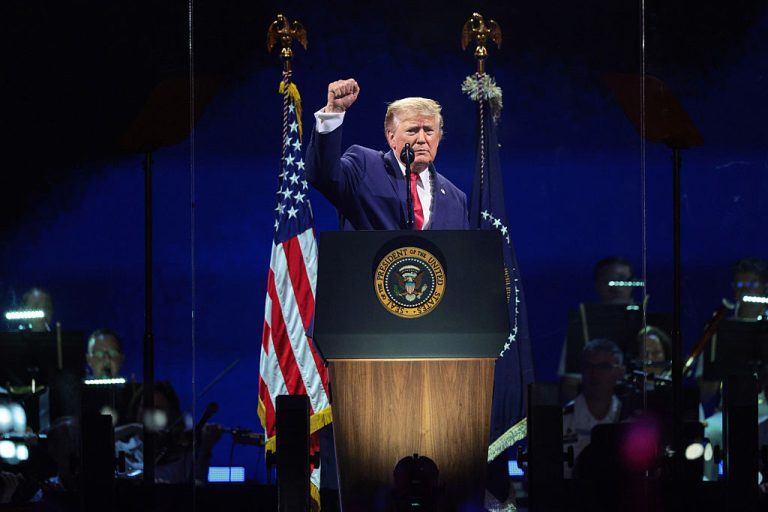
Concerns intensified after Trump repeatedly referenced Taiwan following the summit. During his return flight to Washington, Trump revived his criticism of Taiwan’s semiconductor dominance, saying Taiwan had “taken” America’s chip industry, though he argued the situation was the result of failed U.S. leadership rather than Taiwan itself.
Trump also stated in an interview that arms sales to Taiwan were part of broader negotiations with China and warned that “moving toward independence is a very dangerous thing,” adding that he did not want Taiwan moving toward independence. The comments sparked renewed debate over whether Taiwan could become part of a larger U.S.-China bargaining process.
When asked whether he would speak with Taiwanese President Lai Ching-te before making decisions regarding future arms sales, Trump said that he’d talk to him before adding that he and Xi had “a very good conversation” and that “we’ll handle that Taiwan issue.”
CNN anchor Paula Newton noted that Trump’s use of the phrase “Taiwan problem” echoed Beijing’s official political language, adding that direct communication between sitting U.S. and Taiwanese presidents has not occurred since Washington shifted diplomatic recognition from Taipei to Beijing in 1979.
US policy toward Taiwan
Despite the concerns, several analysts argued that Washington has not fundamentally altered its Taiwan policy. Following the summit, Secretary of State Marco Rubio told reporters on several occasions that U.S. policy toward Taiwan “has not changed.”
Researchers from the Global Taiwan Institute and scholars including Oxford University researcher Yi-Chuan Chiu said the available signals from Washington do not indicate that the United States has abandoned Taiwan, or is using the self-ruling island as a bargaining chip in negotiations with Beijing.
Wu Szu-chih, assistant professor at Taipei University of Marine Technology and a specialist in Taiwanese political studies, said concerns about Trump potentially using Taiwan to further Washington’s interests are understandable, but noted that the broader U.S. strategic position appears intact. Meanwhile, Su Tzu-yun said Taiwan should remain cautiously optimistic regarding future arms sales, noting that many pending systems are defensive in nature.
Still, Su stressed that Taiwan cannot rely solely on foreign support and must continue strengthening its own defense capabilities. “A bird in one’s hand is worth more than two in the forest,” he said.